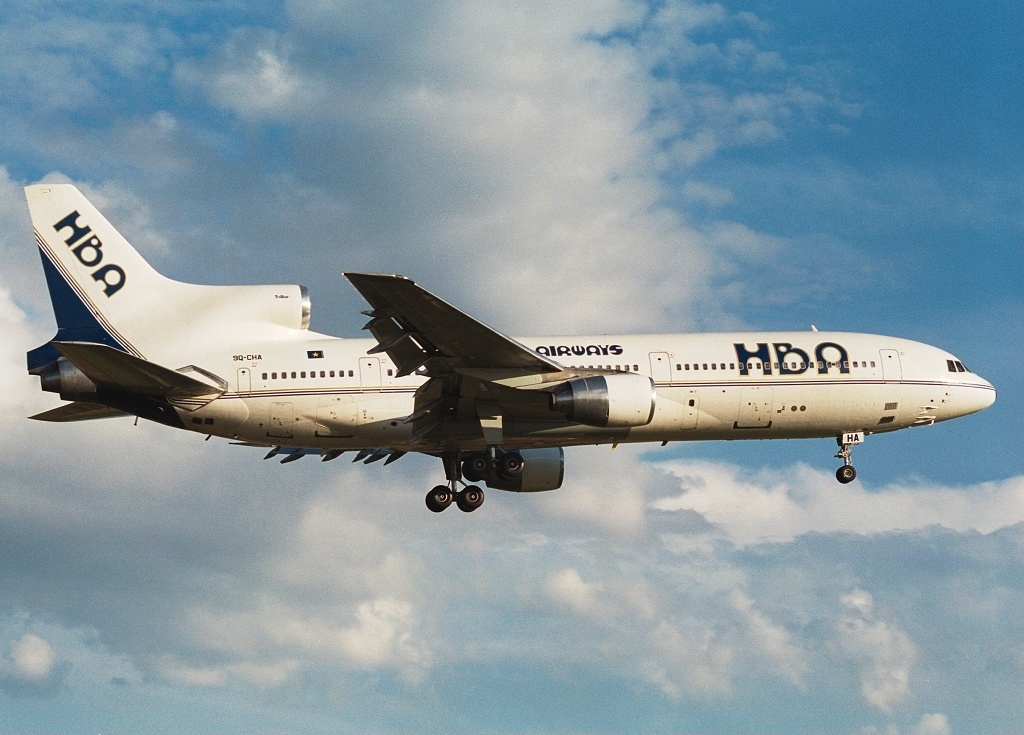
L-1011-500
Lockheed
Historical Context & Origins
The Lockheed L-1011 Tristar, an innovative wide-body trijet, was born in the 1960s for the wide-body aircraft market. However, the original version lacked the intercontinental range needed for emerging global routes.
This shortcoming prompted Lockheed to develop the L-1011-500, a long-range variant to compete with Boeing and McDonnell Douglas. Its first flight occurred in 1978, introducing an exceptionally advanced aircraft to civil aviation.
Architecture & Technological Design
The L-1011-500 was a major redesign. The fuselage was shortened by 4.10 meters, optimizing weight for long range. The wings received 1.35 meter wingtips and were redesigned for greater aerodynamic efficiency, increasing lift and reducing drag.
The propulsive heart consisted of three Rolls-Royce RB211-524B4 engines, more powerful and efficient. These thrusters and increased fuel capacity ensured impressive range, allowing direct transatlantic and transpacific flights.
A crucial innovation was the Active Control System (ACS), pioneering of its kind. By managing the control surfaces, it reduced structural loads and vibrations, improving comfort and enabling a reduction in overall weight.
Onboard Specifications
- ◆Active Control System (ACS): Reduction of structural loads and improvement of comfort through active management of surfaces.
- ◆Autoland Category IIIc: Automatic landing capability in near-zero visibility, raising safety standards.
- ◆Advanced Digitalization of Avionics: The extensive integration of digital electronics prefigured modern "glass cockpits".
Operational Career & Operators
Despite its technological superiority, production of the L-1011-500 was limited to only 50 examples. However, it stood out for exceptional reliability and passenger comfort over long distances.
Airlines such as British Airways, Delta Air Lines, TWA and TAP Air Portugal operated the L-1011-500 on the most demanding international routes. It was praised for its silence, stability and advanced automatic landing capabilities.
Competition and Lockheed's decision to withdraw from the commercial market prevented the L-1011-500 from the commercial success its engineering deserved.
Legacy & Cultural Impact
The L-1011-500 remains a symbol of Lockheed engineering and a precursor to many current technologies. Its Active Control System and digital avionics were a bridge to future fly-by-wire systems.
Today it is admired by enthusiasts as an "engineers' plane", often considered technically superior to its contemporaries. Its elegance, performance and robustness make it an icon of 70s aeronautical design.
It represents a fascinating “what if” in the history of commercial aviation, with untapped potential. Its story highlights the joint importance of innovation and commercial strategy in the success of an aircraft.
Telemetria Specs (HUD)
Hangar Trivia & Curiosità
- 💡The L-1011-500 was one of the first airliners designed with an 'Active Control L-1011 (ACLA)' system, an early form of fly-by-wire that could optimize wing efficiency and reduce drag.
- 💡It featured a highly advanced automatic landing system, certified for Category IIIc (zero visibility) operations, a capability rarely matched by its contemporaries.
- 💡Despite its technological prowess, the L-1011 program, including the -500 variant, led to significant financial losses for Lockheed, contributing to their eventual exit from the commercial aircraft market.
Archivio Avvistamenti Spotter
Immagini scattate dalla community in tutto il mondo