L-1011-200
Lockheed
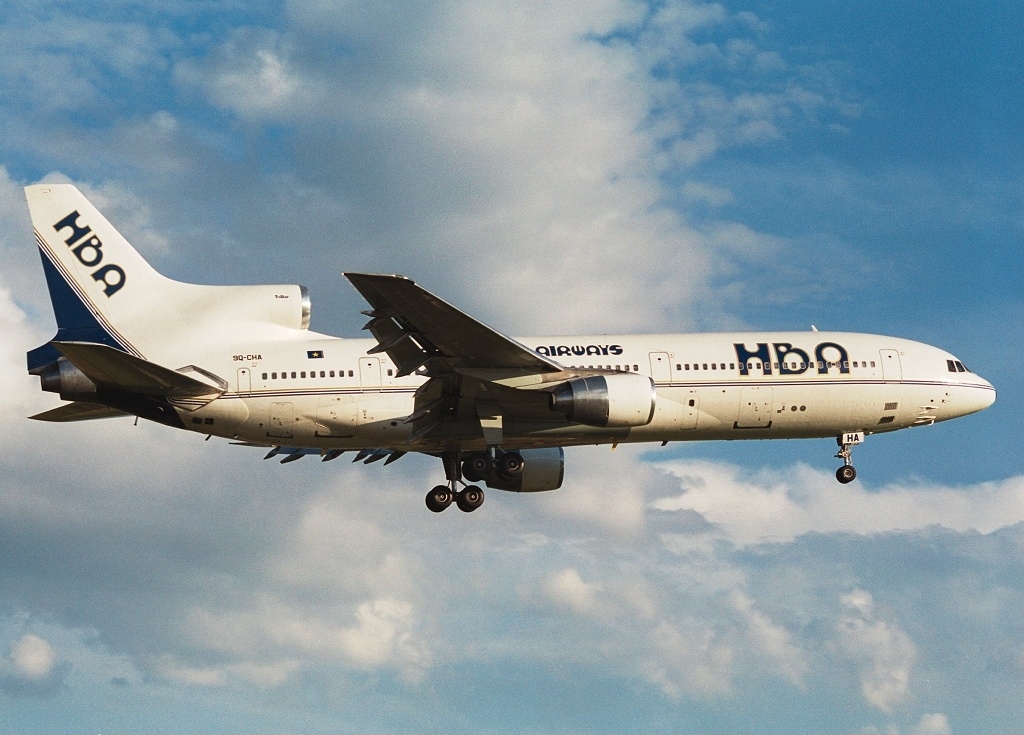
Historical Context & Origins
The Lockheed L-1011 Tristar emerged in the 1960s as a response to the growing demand for medium- to long-range wide-body aircraft, in an era of fervent aeronautical innovation. Designed to compete directly with the McDonnell Douglas DC-10, the Tristar immediately stood out for its philosophy oriented towards passenger comfort and the implementation of cutting-edge technologies. Its three-engine configuration was a strategic choice to maximize reliability and performance.
The L-1011-200 model, whose first flight took place in 1976, represented a significant evolution of the original L-1011-100 series. This variant was developed to meet the needs of airlines that needed greater autonomy and improved performance, especially for routes that required flight capability in "hot and high" conditions. The key upgrade was to propulsion.
The distinctive feature of the L-1011-200 was the adoption of the Rolls-Royce RB211-524B engines, an upgraded and more efficient version compared to the RB211-22B installed on the -100 series. These new engines provided greater thrust, allowing the aircraft to operate over longer distances with an increased payload, thus greatly expanding its range and operational capabilities.
Architecture & Technological Design
The architecture of the Lockheed L-1011-200 maintained the elegant twin-aisle fuselage and trijet configuration that had made the Tristar famous. The tail engine was uniquely integrated into the fuselage via an S-duct, an engineering solution that reduced drag and cabin noise, contributing to exceptionally quiet and smooth flight.
The technological design of the L-1011 was cutting edge for its time, with sophisticated flight control systems. The Tristar was among the first airliners to implement a Direct Lift Control (DLC) system, which allowed pilots more precise control of the rate of descent, significantly improving stability during landing approach and making it exceptionally smooth.
The introduction of the Rolls-Royce RB211-524B engines not only increased thrust to 222.4 kN (50,000 lbf) per engine, but also improved overall efficiency. This allowed the -200 to have greater range than the -100, making it suitable for a wider range of international routes and demonstrating Lockheed's commitment to continually evolving the Tristar's performance.
Onboard Specifications
- ◆Autoland Category IIIb: Fully automated landing capability in extremely low visibility conditions, leading the industry in safety and automation.
- ◆Direct Lift Control (DLC): An innovative system that allowed direct changes to lift via spoilers, offering superior control and smoother landings.
- ◆Lower Galley: Galley and passenger service areas positioned in the lower fuselage deck, freeing up valuable space in the main cabin for increased comfort and seating.
Operational Career & Operators
The operational career of the Lockheed L-1011-200, although not as extensive as that of the DC-10 due to commercial difficulties and the limited overall production of the Tristar, was characterized by high reliability and the loyalty of some major operators. Its ability to operate on medium-long haul routes made it a valuable asset for companies seeking a balance between range and comfort.
Among the main carriers to adopt the L-1011-200, the airline Saudia stood out, which became one of the largest operators of this variant. Saudia made full use of the -200's capabilities for its international routes, particularly appreciating its robustness and ability to operate in hot climates. Other significant operators included British Airways and TAP Air Portugal, who benefited from its performance and high standard of comfort offered to passengers.
Despite the commercial success of the DC-10, the L-1011-200 earned an enviable reputation for its safety and excellent flying experience. Passengers appreciated the space and quietness of the cabin, while pilots praised its easy handling and state-of-the-art control systems, which made every flight a precision-engineered experience.
Legacy & Cultural Impact
The legacy of the Lockheed L-1011 Tristar, including the -200 variant, is that of an engineering masterpiece that, despite market challenges, has left an indelible mark on aviation. Considered by many experts and enthusiasts to be technologically superior to its direct competitor, the Tristar introduced innovations that shaped the development of future aircraft, such as Category IIIb autoland and DLC.
The Tristar remains an icon of a golden age of aviation, a symbol of Lockheed's technological ambitions. Its reputation as an extremely safe and comfortable aircraft persists to this day, cementing its place in history as one of the most beloved airliners by anyone who has had the pleasure of flying or working on it.
Although Lockheed withdrew from the commercial aircraft market due to losses from the Tristar program, the L-1011-200 and its variants are remembered for pushing the limits of innovation. His influence can be seen in subsequent generations of aircraft, and his story continues to fascinate aviation enthusiasts, who consider him a gentle giant and a precursor to many of the comforts and safety that we take for granted today.
Telemetria Specs (HUD)
Hangar Trivia & Curiosità
- 💡The L-1011 was one of the first wide-body aircraft to feature a highly advanced 'Autoland' system, enabling fully automatic landings even in adverse weather conditions.
- 💡The -200 variant was specifically developed to improve performance in hot and high conditions, making it popular with airlines operating in regions like the Middle East.
- 💡Despite its technological prowess and passenger comfort, the L-1011 program ultimately contributed significantly to Lockheed's decision to exit the commercial aircraft manufacturing business.
Archivio Avvistamenti Spotter
Immagini scattate dalla community in tutto il mondo