L-100 Hercules
Lockheed
Historical Context & Origins
The Lockheed L-100 Hercules has deep roots in the legendary military C-130 Hercules, an iconic tactical transport aircraft that revolutionized air logistics. Born out of the need for a robust and versatile aircraft for the US military, the C-130 had established itself as an unprecedented success in global operational scenarios, from humanitarian relief missions to the most hostile theaters of war.
This resounding success and the demonstrated reliability of the C-130 pushed Lockheed to see vast potential in the civilian market as well. The world industry needed an aerial "workhorse", capable of operating in extreme conditions and reaching places inaccessible to traditional civil transport aircraft, carrying heavy and bulky loads.
The first flight of the L-100 prototype, a slightly modified, non-pressurized commercial version of the C-130E, occurred on April 20, 1964. This event marked the official entry of the Hercules into the civil sector, with the aim of offering commercial operators the same exceptional load capacities and renowned STOL (Short Take-Off and Landing) qualities as its military counterpart.
Architecture & Technological Design
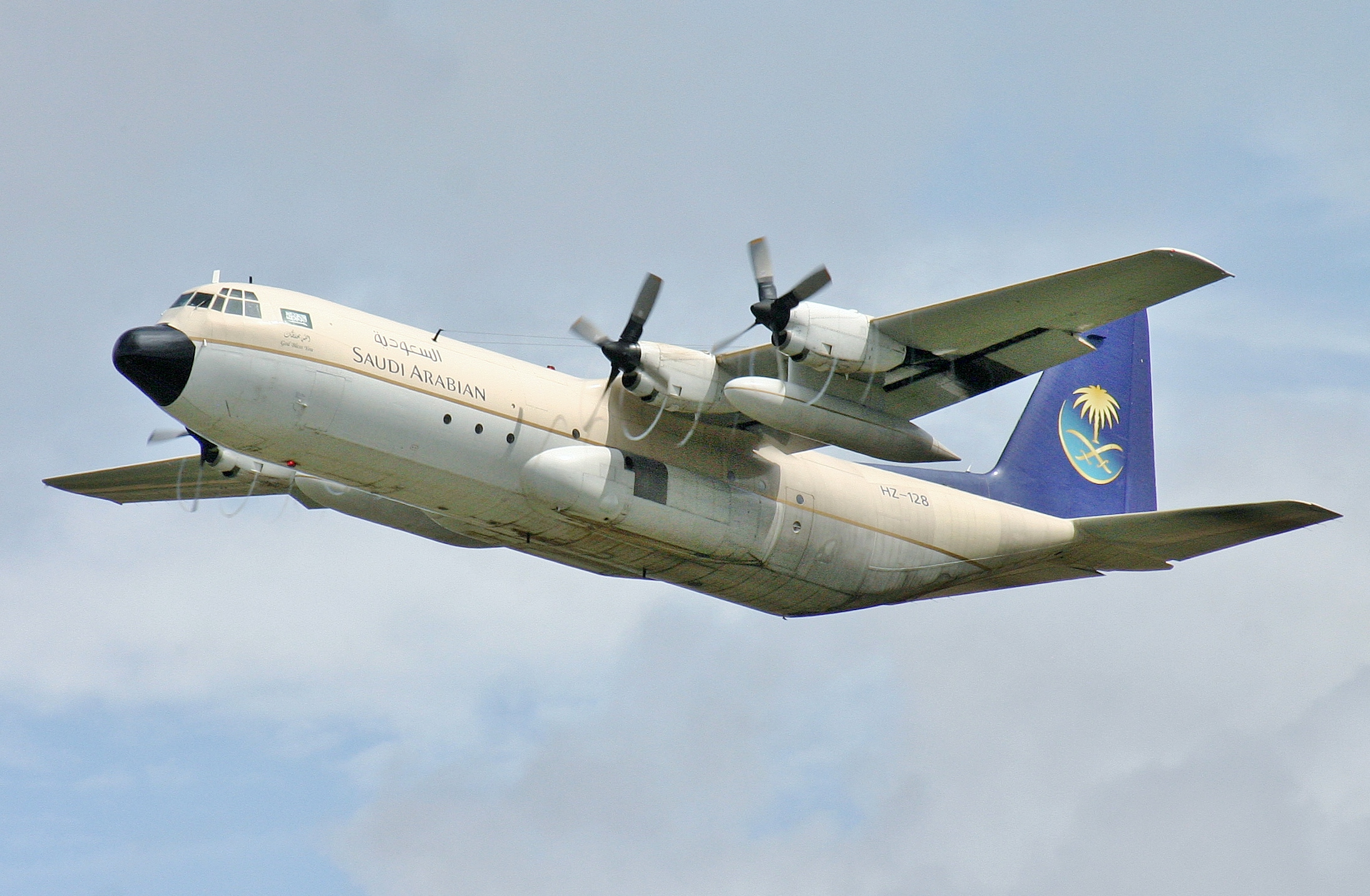
The architecture of the L-100 Hercules is a testament to functional engineering and inherent ruggedness. Its distinctive design, with a high wing and four turboprop configuration, ensures excellent lift and the ability to operate effectively even from short, unprepared runways, often in remote and challenging environments.
One of the most innovative and distinctive features is the integrated rear loading ramp, which lowers to allow direct and easy access to the load compartment. This revolutionary solution allows you to quickly load bulky cargo, vehicles, heavy machinery and even standard containers, making the L-100 extremely versatile for myriad applications.
The reinforced landing gear, designed to withstand landings and take-offs on uneven surfaces, and the considerable ground clearance contribute to its extraordinary operational capability. It's not just about flying, it's about taking cargo where no other civil aircraft can, with a design philosophy that prioritizes resilience and operational efficiency.
Onboard Specifications
- ◆Powerful Engine: Four Allison 501-D22 turboprops, derived from military T56s, known for their reliability and robustness.
- ◆Massive Load Capacity: Can carry over 20,000 kg of payload, including standard cargo pallets, vehicles or large equipment.
- ◆Advanced STOL Features: Excellent short take-off and landing (STOL) performance even from semi-prepared or makeshift runways, a fundamental attribute.
Operational Career & Operators
The L-100 Hercules has enjoyed an operational career of exceptional longevity and diversity, becoming a mainstay for countless industries. It has been extensively employed in oil exploration and mining operations, transporting heavy equipment and personnel to remote fields in every corner of the globe, from Alaska to the Sahara Desert.
Its unsurpassed ability to operate from unpaved runways has made it indispensable for humanitarian and rescue missions, bringing vital aid to areas affected by natural disasters or conflicts. Specialized cargo carriers and logistics companies have relied on the L-100 for its flexibility and exceptional cost-effectiveness in transporting oversized cargo.
With versions including the L-100-20 and L-100-30, featuring lengthened fuselages to further increase cargo volume, the aircraft has continued to evolve. Its fame has grown exponentially among operators needing an aircraft capable of "going anywhere" and "carry anything", earning the trust of operators such as Safair and Lynden Air Cargo.
Legacy & Cultural Impact
The L-100 Hercules is not just an airplane; it is an icon of cargo aviation, a symbol of unparalleled reliability and versatility. Its legacy is deeply rooted in its ability to bridge the gap between military logistics and the more extreme demands of commercial transportation, often operating in conditions that other aircraft could not even dream of dealing with.
Even with the advent of more modern cargo aircraft, the civilian Hercules continues to prove its worth, with many examples still active and operational after decades of tireless service. Its robustness and ease of maintenance have contributed to guaranteeing a prolonged operational life, a rare example of longevity in the aeronautical panorama.
The L-100's cultural impact extends far beyond its functional role; it has become a benchmark for cargo aviation, admired for its resilience and ability to overcome challenges. The civilian "fat Albert" remains a living witness to aeronautical engineering that shaped the way the world moves goods and people, a true silent hero of the skies.
Telemetria Specs (HUD)
Hangar Trivia & Curiosità
- 💡A differenza del suo fratello militare, l'L-100 non presenta i distintivi serbatoi di carburante esterni sotto le ali.
- 💡È spesso soprannominato un 'cavallo da lavoro' per la sua affidabilità in ambienti impegnativi, dai deserti alle regioni artiche.
- 💡Diversi modelli di L-100, come l'L-100-20 e l'L-100-30, presentavano fusoliere allungate per aumentare il volume di carico.
Archivio Avvistamenti Spotter
Immagini scattate dalla community in tutto il mondo