Ju 86
Junkers
Historical Context & Origins
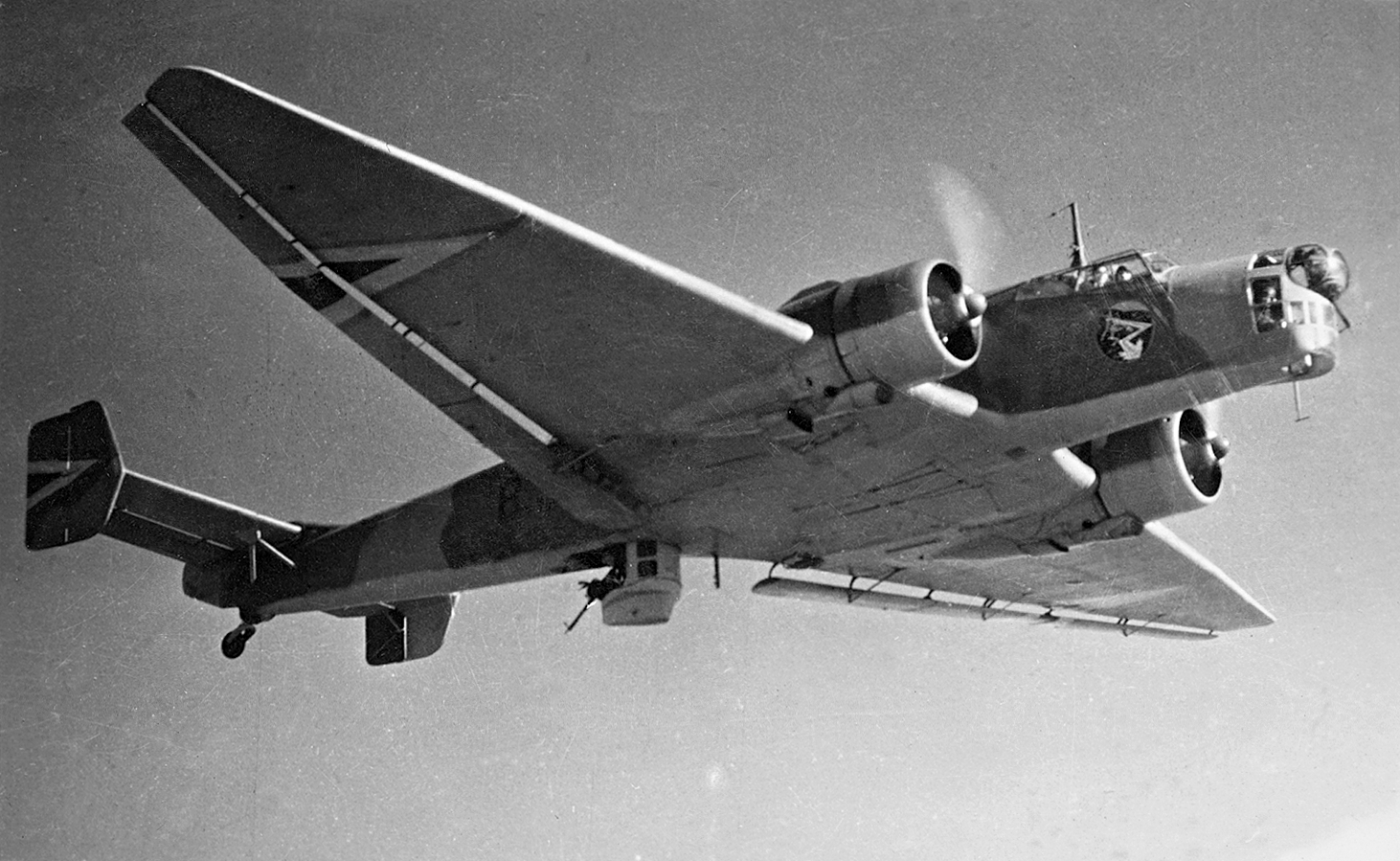
In the 1930s, Germany was in the midst of rearmament, often masking military progress behind civilian facades. In this context of technological and political ferment, the Junkers Flugzeug- und Motorenwerke gave life to an ambitious project: an aircraft destined to simultaneously fulfill the role of elegant airliner and robust medium bomber. The Junkers Ju 86, whose first flight took place in 1935, perfectly embodied this dual strategic need.
This aircraft was designed to compete both in the commercial aviation market, where Lufthansa was a primary customer, and in the nascent German air force, the Luftwaffe. Although it was flanked by a formidable competitor such as the Heinkel He 111, the Ju 86 stood out for some bold and typically Junkers design choices, aiming for operational efficiency and reliability in every scenario.
Architecture & Technological Design
The architecture of the Ju 86 was intrinsically "Junkers" in every fiber of its corrugated duralumin skin, a distinctive signature of the Dessau company that guaranteed rigidity and structural resistance. Designed as a twin-engine, low-wing monoplane, it offered a robust and reliable configuration, designed to operate in a variety of conditions. Its multi-spar structure made it incredibly resistant to stress, a valuable quality for both civilian transport and bombing missions.
One of the most fascinating peculiarities was the initial adoption of diesel engines, the Junkers Jumo 205, which promised reduced consumption and greater autonomy. This innovative choice, although later partially abandoned in favor of more powerful radial petrol engines such as the BMW 132 or the Bramo 323 for the more demanding military versions, highlighted a search for efficiency that was ahead of its time.
Onboard Specifications
- ◆Junkers Jumo 205 Diesel Engines: A bold innovation for its time, offering remarkable fuel efficiency and range, albeit with a compromise on raw power.
- ◆Corrugated duralumin skin: A distinctive Junkers element, it guaranteed exceptional structural rigidity and resistance to fatigue, crucial for a versatile aircraft.
- ◆Civil/Military Convertible Configuration: Designed from the ground up to be rapidly adaptable from passenger aircraft to medium bomber, providing strategic operational flexibility.
Operational Career & Operators
The operational career of the Ju 86 was a journey of adaptation and specialization. Initially deployed by Lufthansa on European routes and by Airways of South Africa, it demonstrated good reliability. In the early stages of the Luftwaffe, it operated as a bomber, but was soon surpassed in performance and load capacity by the more agile He 111, limiting its direct use in front-line roles.
However, the Ju 86 found its true calling in the Ju 86P and Ju 86R variants, which were developed for high-altitude reconnaissance. Equipped with supercharged engines and pressurized cabins, these planes could operate at altitudes above 12,000 meters, making them virtually immune to interception by Allied fighters until well beyond the middle of the war. Several countries such as Sweden, Chile and Hungary operated it, highlighting its versatility.
Legacy & Cultural Impact
Although it did not achieve the iconic fame of other wartime bombers, the Junkers Ju 86 left a significant legacy, particularly as a pioneer of high-altitude strategic reconnaissance. Its P and R versions were among the first aircraft to demonstrate the importance of stratospheric operations, influencing the development of future spy planes.
The Ju 86 represents an emblematic example of German engineering of the 1930s: robust, adaptable and capable of bold innovations, such as the use of diesel engines. Its history is a testament to the frenetic technological evolution of that decade and its ability to transform a basic design into a strategic asset, even in unanticipated roles, cementing its place in aviation history.
Telemetria Specs (HUD)
Hangar Trivia & Curiosità
- 💡The Ju 86 was one of the few aircraft designed simultaneously for both military (bomber) and civil (passenger transport) roles from its inception.
- 💡The Ju 86P and R high-altitude variants could operate above 12,000 meters (over 40,000 feet), making them virtually immune to interception by most Allied fighters for a period.
- 💡Some civil Ju 86s were operated by Lufthansa, while military versions were exported to countries including Sweden, Hungary, Portugal, and Chile.
Archivio Avvistamenti Spotter
Immagini scattate dalla community in tutto il mondo