Jetstream 41
British Aerospace
Historical Context & Origins
The British Aerospace Jetstream 41, with its first flight in 1991, emerged as a bold response to the growing needs of the turn-of-the-century regional aviation market. Its genesis has its roots in the proven Jetstream 31 and 32 family, twin-engine turboprop aircraft that had already demonstrated efficiency and reliability. The goal was ambitious: to offer greater capacity and superior performance, while maintaining the low operating costs that had made its predecessors popular.
The idea behind the J41 was to compete directly with larger regional aircraft, such as the ATR 42 and de Havilland Canada Dash 8, but without requiring development from scratch. British Aerospace chose an evolutionary approach, extending the fuselage and introducing significant improvements. This strategy made it possible to reduce development times and costs, while taking advantage of the familiarity of the crews and the existing logistics chain.
The need for a 30-seat aircraft was clear: many regional routes required more capacity than the 19 seats of the Jetstream 31/32, but not enough to justify larger, more expensive regional jets. The J41 positioned itself in this strategic niche, promising to effectively connect smaller airports with main hubs, optimizing passenger flows and airline profitability.
Architecture & Technological Design
The Jetstream 41's architecture was an ode to pragmatic engineering, focusing on optimizing an existing design to maximize performance. The most obvious modification was the lengthening of the fuselage by 4.88 meters, allowing the insertion of further rows of seats and an enlarged luggage compartment. This spatial increase was crucial to achieving the desired passenger capacity.
To compensate for the increased weight and new aerodynamic needs, completely redesigned wings were introduced, with a larger span and a new aerodynamic section. This innovation, combined with specific structural reinforcements, guaranteed excellent flight performance and greater efficiency. The redesign of the wings was not just a question of size, but also of profile to optimize behavior at different speeds and altitudes.
At the heart of its propulsion system beat two powerful Garrett TPE331-14GR/HR turboprop engines, capable of delivering 1,650 shp (shaft horsepower) each. These engines, combined with five-bladed Dowty propellers, offered exceptional take-off thrust and high cruising speed, making the J41 competitive even on longer hauls. The efficiency of the engines was a key point for operating costs.
Onboard Specifications
- ◆Capacity increased to 29-30 passengers, making it ideal for medium density regional routes.
- ◆Garrett TPE331-14GR/HR 1,650 shp engines, synonymous with power and reliability.
- ◆Advanced Collins Pro Line II digital avionics, with EFIS (Electronic Flight Instrument System) for greater situational awareness.
Operational Career & Operators
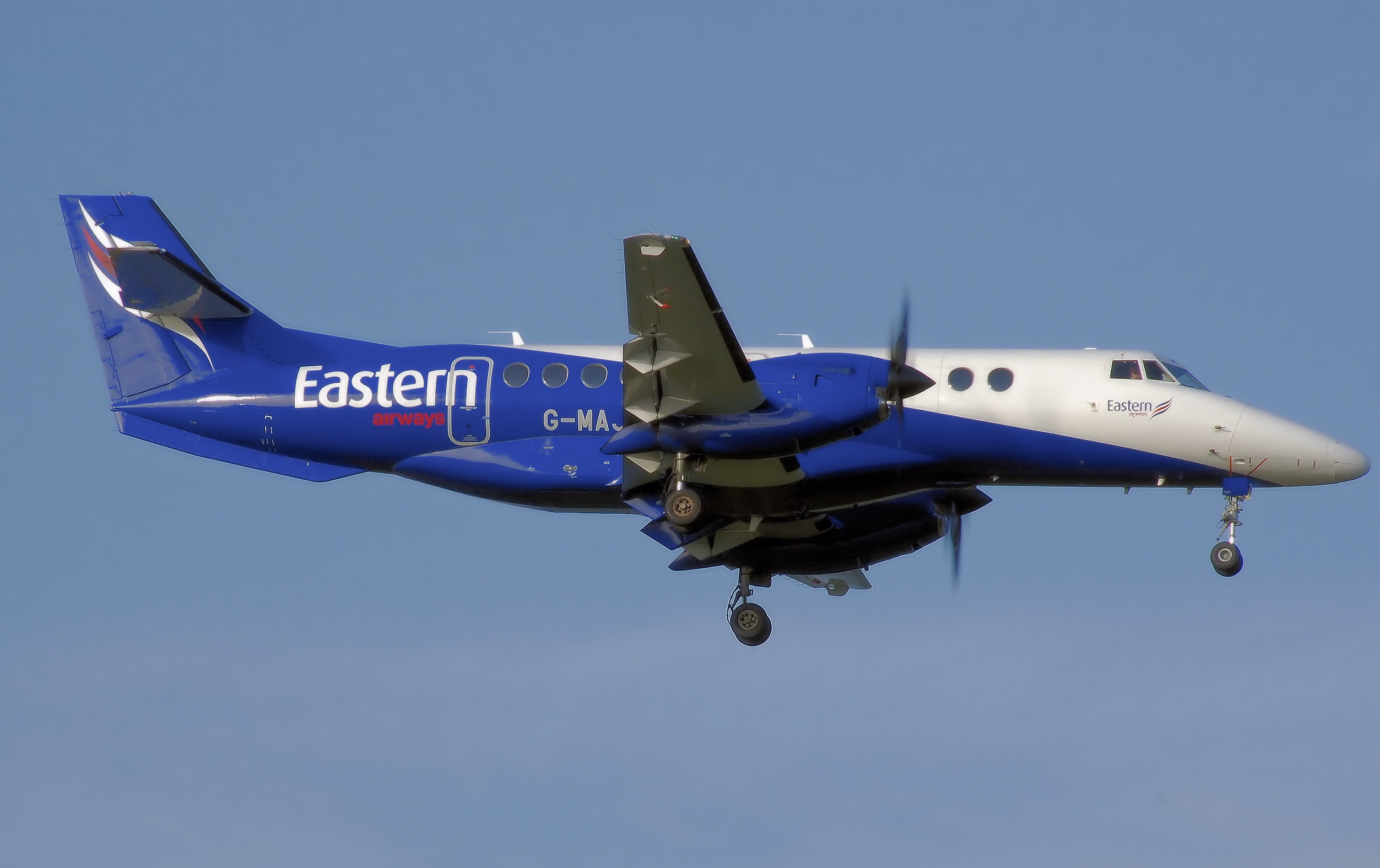
The Jetstream 41 quickly established itself as a workhorse for numerous regional airlines around the world. Its combination of speed, passenger comfort (thanks to a spacious cabin for its class) and operational robustness made it an attractive choice. Airlines such as Eastern Airways in the United Kingdom, United Express in the United States and several operators in Europe, Africa and Asia, integrated it into their fleets.
The versatility of the J41 was a strong point: it was able to operate effectively both from major airfields with complete infrastructure, and from shorter, less equipped runways, typical of regional operations. This operational flexibility helped consolidate its presence on a wide range of routes, connecting isolated communities and facilitating business and tourist travel to underserved areas.
Despite initial success, production of the J41 was relatively short, ceasing in 1997 after approximately 100 examples built. This was partly due to strategic changes within British Aerospace and increasing competition in the turboprop and early regional jet segment. However, his presence in the sky persisted for decades, testifying to the solidity of his project.
Legacy & Cultural Impact
The British Aerospace Jetstream 41 has left a significant legacy in the regional aviation landscape as an example of engineering excellence and adaptability. It demonstrated how an evolutionary design can extend the life and effectiveness of an existing platform, while offering improved capabilities and performance. Its impact is measurable not only in terms of passengers carried, but also in the connectivity it has provided to countless regions.
Although production has ended, many J41s continue to fly today in cargo or smaller operator roles, a testament to their durability and rugged design. It helped shape perceptions of regional air travel, demonstrating that efficiency and comfort were not the exclusive preserve of larger jetliners. Its history is an important chapter in the evolution of turboprop aircraft.
The Jetstream 41 represents a bridge between the golden era of turboprops and the rise of regional jets, embodying a period of great innovation and competition. Its ability to extend the life of the Jetstream line ensured that British Aerospace's legacy in this market segment continued to thrive for a significant time, cementing its place in British and world aviation history.
Telemetria Specs (HUD)
Hangar Trivia & Curiosità
- 💡È una versione significativamente allungata e aggiornata delle precedenti serie Jetstream 31/32, caratterizzata da una fusoliera più lunga e motori più potenti.
- 💡Tra il 1991 e il 1997 furono costruite solo 104 unità del Jetstream 41 prima che la produzione cessasse.
- 💡L'aereo è alimentato da due motori turboelica Garrett TPE331-14GR-801E.
Archivio Avvistamenti Spotter
Immagini scattate dalla community in tutto il mondo