Jetstream 31
British Aerospace
Historical Context & Origins
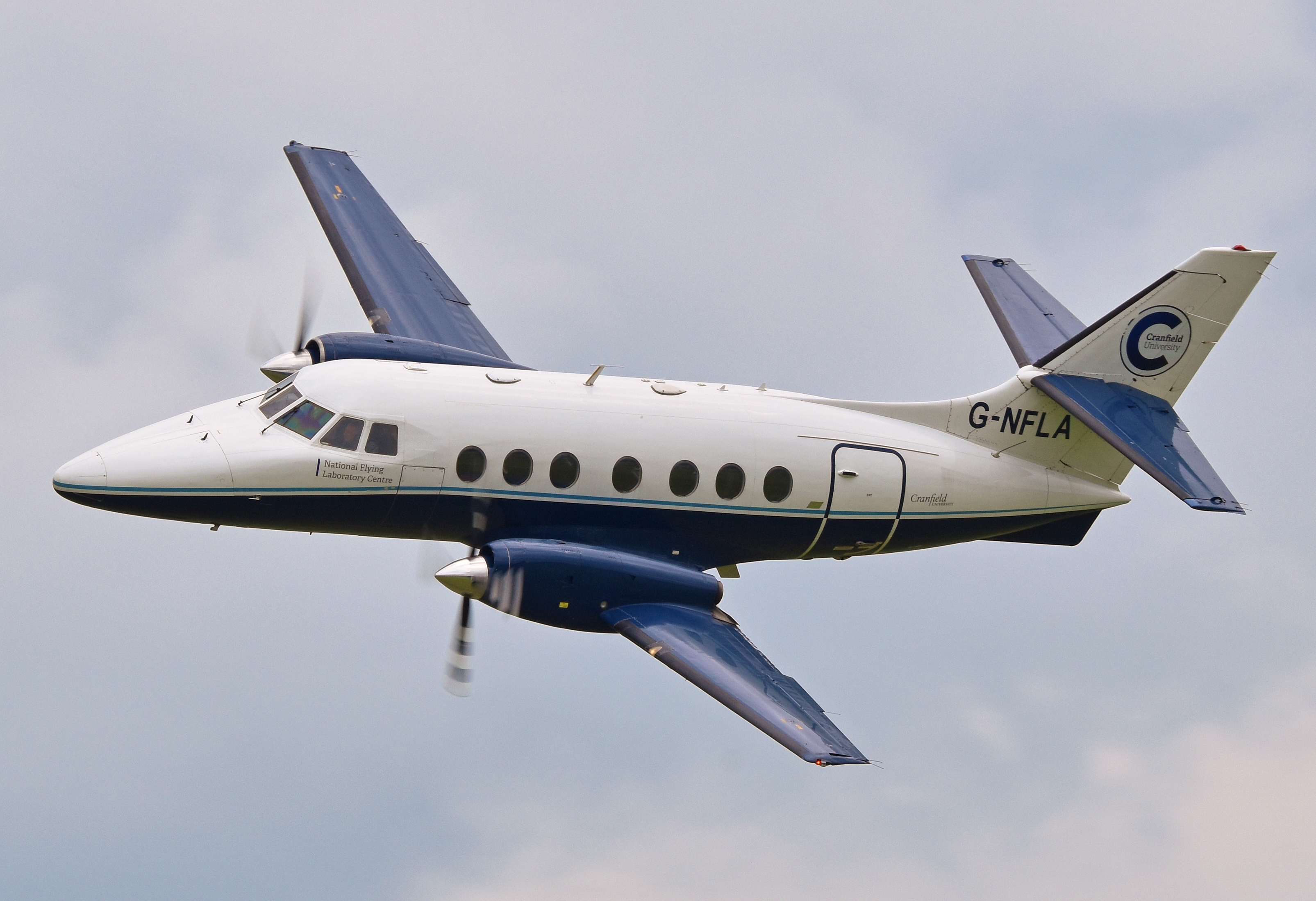
The British Aerospace Jetstream 31 has its roots in an ambitious 1960s design, the Handley Page HP.137 Jetstream. Conceived as a luxury turboprop for business and regional aviation, the original design encountered considerable economic and technical difficulties, leading to the bankruptcy of the historic Handley Page in 1970. Despite the hardships, the design's inherent potential was too significant to abandon entirely.
After a period of uncertainty, the project was acquired by Scottish Aviation, who continued the development and production of the Jetstream. When Scottish Aviation was absorbed in 1977 by the newly formed British Aerospace (BAe) consortium, the aircraft received a second and crucial opportunity. BAe recognized the growing need for a modern regional transport aircraft and decided to revive and significantly upgrade the existing design.
This forward-thinking vision led to the birth of the Jetstream 31, a deeply revised and technologically advanced version of its predecessor. The prototype's first flight occurred on March 28, 1980, marking the beginning of a new era for this elegant turboprop, destined to leave an indelible mark on global regional aviation.
Architecture & Technological Design
The Jetstream 31 represented a notable evolution from the original model, with meticulous attention to efficiency and passenger comfort. Its aerodynamic architecture, characterized by a low wing and a T-shaped empennage, was carefully refined to ensure optimal performance in terms of speed, maneuverability and fuel consumption. The design combined elegance and the robustness necessary for intensive use.
The technological heart of the Jetstream 31 was its two powerful Garrett TPE331-10 turboprop engines, which delivered significant power and dramatically improved reliability and efficiency compared to units fitted to previous models. This propulsion choice, combined with constant speed propellers, allowed the aircraft to reach a competitive cruising speed and to operate effectively from even relatively short runways.
The cabin interior was designed to comfortably accommodate 19 passengers, an ideal number for medium-density regional routes. Cabin pressurisation, combined with careful sound insulation, ensured a superior travel experience, reducing passenger and crew fatigue during extended flights, a key factor for commercial success in an increasingly demanding market segment.
Onboard Specifications
- ◆Garrett TPE331-10 turboprop engines: Twin units of approximately 1,020 shp (shaft horsepower) each, renowned for their reliability and excellent power-to-weight ratio.
- ◆Advanced (for the time) digital avionics: Featuring a partial glass cockpit with integrated navigation, communications and flight management systems, significantly improving the pilot's situational awareness.
- ◆Optimized wing structure: Characterized by high aerodynamic efficiency and reinforced to withstand the stresses of regional flight, ensuring good performance both in cruise and during the delicate short take-off and landing (STOL) phases.
Operational Career & Operators
The Jetstream 31 quickly established itself as a favorite choice for regional airlines around the world, thanks to its proven reliability, remarkable operational efficiency and ability to seamlessly connect smaller communities. Its main operators include major carriers such as American Eagle, Eastern Airways and Trans States Airlines in the United States, which used it extensively to expand their regional route networks.
In addition to passenger transport, the surprising versatility of the Jetstream 31 made it suitable for several other configurations and roles. It was successfully used as a light cargo aircraft, for high-level corporate transport and even for special and surveillance missions, demonstrating the inherent flexibility of its adaptive design. Its structural robustness and relatively low operating costs made it a valuable asset for operators with the most diverse needs.
Its presence was truly global, soaring across the skies of North America, Europe, Australia and beyond, contributing significantly to the development and connectivity of regional links on an international scale. Many examples have continued to fly for decades, testifying to the intrinsic robustness of the design and the superior quality of its construction, often exceeding initial expectations in terms of operational life.
Legacy & Cultural Impact
The legacy of the Jetstream 31 is deep and lasting in the aviation landscape. It has played a crucial role in shaping modern regional aviation, providing a reliable and efficient air bridge between large hubs and smaller, more remote cities, tangibly supporting the economic and social development of numerous areas. It proved that an originally well-conceived design can be continuously updated and adapted to the changing needs of a constantly evolving market.
Its unquestionable success paved the way for the further development and expansion of the Jetstream family, culminating in the larger and more powerful Jetstream 41, which capitalized on its highly regarded predecessor's excellent reputation for reliability and performance. This is testament to British Aerospace's foresight in revitalizing a project with initially untapped potential into an enduring commercial and operational success.
Even today, the Jetstream 31 is fondly remembered by aviation enthusiasts and industry professionals for its distinctive silhouette, solid performance and long history of faithful service. It embodies the resilience and ingenuity of British aeronautical engineering and the ability to transform a complex legacy into a successful and impactful chapter in the fascinating history of regional flight.
Telemetria Specs (HUD)
Hangar Trivia & Curiosità
- 💡The Jetstream 31 was an evolution of the Handley Page Jetstream, with British Aerospace acquiring the design rights after Handley Page went bankrupt, leading to the re-engineering and successful production of the '31' variant.
- 💡Beyond its primary role as a regional airliner, the Jetstream 31 and its derivatives have been employed by various military forces, including the Royal Air Force for multi-engine pilot training (as the Jetstream T1) and the US Navy (as the C-12J for VIP transport).
- 💡Over 380 Jetstream 31/32 aircraft were built during its production run, with a significant number operating in North America, particularly with commuter airlines linking smaller communities to major hubs across the continent.
Archivio Avvistamenti Spotter
Immagini scattate dalla community in tutto il mondo