Il-62
Costruttore Sconosciuto
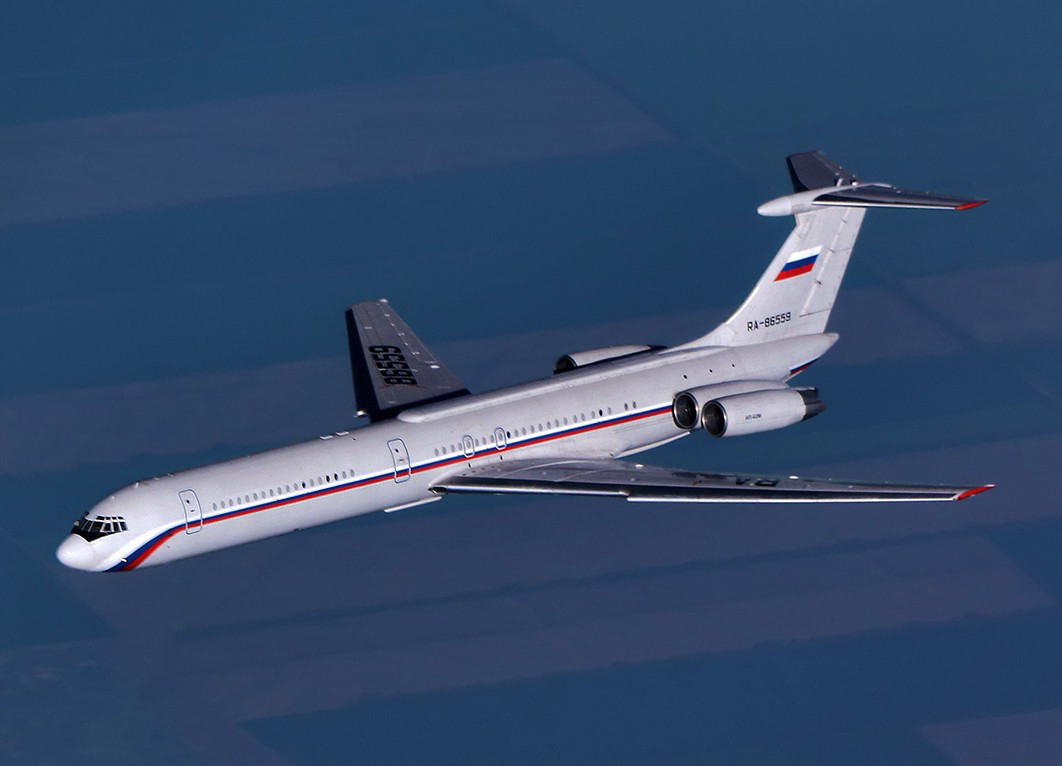
Historical Context & Origins
The Ilyushin Il-62, with its first flight in 1963, emerged as a bold and necessary response by the Soviet Union to the need for a long-range airliner capable of competing with its Western counterparts. Designed by the Ilyushin Design Bureau, it aimed to replace the Tu-114 turboprop and establish a Soviet presence in the growing global market for intercontinental jets, a symbol of the USSR's engineering and technological might during the Cold War.
The birth of the Il-62 was driven by the demand for non-stop transcontinental flights, a crucial requirement for connecting Moscow to more distant world capitals. The project developed in parallel with Western giants such as the Boeing 707 and the Vickers VC10, seeking to offer a unique combination of autonomy, capacity and performance, while still having a distinctly Soviet feel.
Architecture & Technological Design
The Il-62 design is immediately recognizable by its tail-mounted four-engine configuration, arranged in two closely spaced pairs on the sides of the fuselage. This choice, shared with the Vickers VC10, freed the wing from engine pods, improving aerodynamics and reducing cabin noise, but posed unique challenges in weight distribution and structural balance.
Another distinctive innovation was the composite swept-wing, or "cranked-wing", which featured a variable swept angle across the span. This advanced design helped optimize transonic performance and efficiency at high cruise speeds, giving the Il-62 remarkable stability and excellent penetration through turbulence.
Onboard Specifications
- ◆Four-engine rear configuration: Distinctive feature that improved wing aerodynamics and reduced cabin noise for passengers.
- ◆Composite swept-wing ("cranked-wing"): Advanced design that optimized high-speed performance and aerodynamic efficiency.
- ◆Rear auxiliary retractable landing gear ("ski tail"): A small retractable landing gear that extended from the rear of the fuselage to prevent tipping backwards onto the ground, given the concentration of weight at the tail.
Operational Career & Operators
The Il-62 quickly became the workhorse of Aeroflot, the Soviet flag carrier, for all its long-haul routes, inaugurating direct connections between Moscow and cities such as New York, Montreal, Tokyo and Havana. Its robustness and reliability made it indispensable, operating in extreme climatic conditions and on less prepared slopes.
In addition to Aeroflot, the Il-62 was widely used by numerous Eastern Bloc airlines and "friendly" USSR nations, including LOT Polish Airlines, Cubana de Aviación, Interflug (East Germany) and Chosonminhang (now Air Koryo). Its elegant and powerful silhouette became a familiar image at airports around the world, symbolizing the Soviet presence in international skies.
Legacy & Cultural Impact
The Ilyushin Il-62 left an indelible mark on aviation history, not only as a technically advanced aircraft for its time, but also as a tangible symbol of Soviet engineering. It allowed the USSR to compete effectively in the intercontinental air transport sector, demonstrating capability and ambition.
Its long operational career, with some examples still active decades after their first flight, testifies to the solidity and durability of its design. The Il-62 remains an icon, a timeless classic that carried millions of passengers and played a crucial role in connecting the world, overcoming political and geographical barriers with its majestic presence in the skies.
Telemetria Specs (HUD)
Hangar Trivia & Curiosità
- 💡È stato il primo jet di linea sovietico a lungo raggio, progettato per voli intercontinentali.
- 💡Possiede un caratteristico carrello di atterraggio ausiliario retrattile nella coda, che si estende a terra per prevenire il 'tail-sitting' dovuto al peso dei motori posteriori.
- 💡Oltre a servire Aeroflot, è stato ampiamente esportato e utilizzato da compagnie aeree in oltre 30 paesi, inclusi Cuba e la Corea del Nord, ed è ancora in servizio con alcuni operatori.
Archivio Avvistamenti Spotter
Immagini scattate dalla community in tutto il mondo