Il-18
Costruttore Sconosciuto
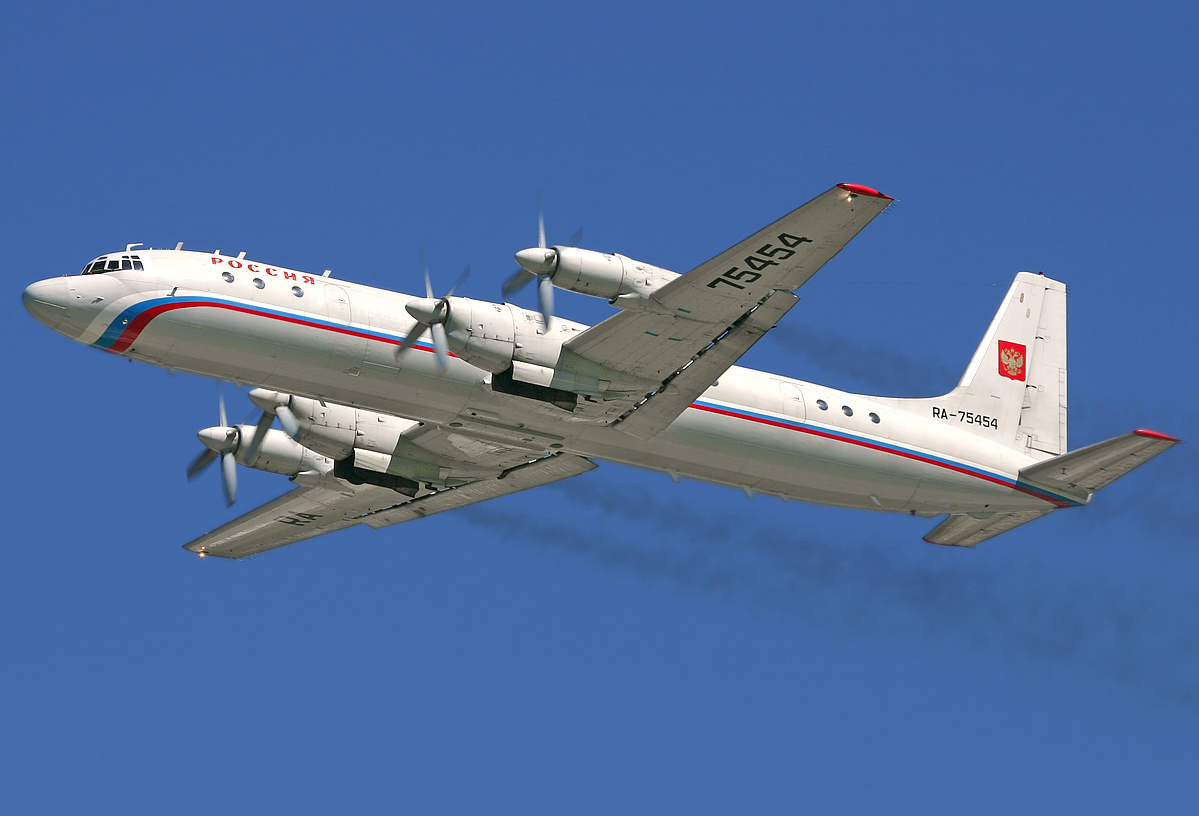
Historical Context & Origins
Post-war, the Soviet Union needed a modern passenger plane to connect its vast regions. The goal was an efficient and reliable aircraft for medium-long range routes, capable of operating in different conditions.
Sergei Ilyushin's design bureau responded with the Il-18. This turboprop represented an optimal compromise between speed, efficiency and operating costs, in an era of technological transition towards jets.
The first flight occurred on July 4, 1957, marking the beginning of a new era for Soviet civil aviation. The Il-18 was conceived as a workhorse, crucial to Aeroflot's fleet expansion and national needs.
Architecture & Technological Design
The Il-18 stood out as an elegant four-engine low-wing turboprop, a configuration that guaranteed stability and excellent performance. Its rugged structure was designed for exceptional durability, withstanding thousands of flight cycles in often challenging environments.
It was equipped with four powerful Kuznetsov NK-4 turboprops or, later, the even more efficient Ivchenko AI-20. These engines offered the necessary thrust for take-offs even from imperfectly equipped runways, maintaining low fuel consumption.
The cabin, fully pressurized and soundproofed, offered remarkable comfort for its passengers at the time. The functional and practical interior design focused on safety and versatility of seating configurations.
Onboard Specifications
- ◆Kuznetsov NK-4 / Ivchenko AI-20 turboprop engines: Power and high operational efficiency.
- ◆Variable passenger capacity: Typically between 65 and 120 passengers, depending on configuration.
- ◆Extended range: Up to 6,500 km, ideal for Soviet transcontinental routes.
- ◆Robust and metallic structure: Guaranteed reliability and long operational life in difficult conditions.
- ◆Advanced cabin pressurization system: For comfortable flight at high altitude.
Operational Career & Operators
The Il-18 quickly entered service with Aeroflot, becoming the backbone of domestic and international routes for decades. Its reliability in extreme climates, from Siberian cold to desert heat, made it irreplaceable.
It was exported to numerous Soviet customer countries, including carriers such as LOT Polish Airlines, Cubana de Aviación and Tarom. It was used not only for passenger transport, but also in cargo versions or for special missions, demonstrating considerable versatility.
Her long and illustrious operational career is testament to her excellent design and solid construction. Even today, some specialized versions of the Il-18 continue to fly in military or cargo transport roles, highlighting its inherent ruggedness.
Legacy & Cultural Impact
The Ilyushin Il-18 was not just a plane; it was a symbol of Soviet aeronautical engineering and its global ambition. He helped democratize air travel, making it accessible to millions of people across the vastness of the USSR and beyond its borders.
Despite being a turboprop in an era that was embracing the jet, the Il-18 demonstrated the effectiveness and durability of this technology. Its longevity has influenced generations of engineers, leaving an indelible mark on the history of commercial aviation.
Today, the Il-18 is a recognized icon, whose silhouette is familiar to enthusiasts. Examples preserved in museums or still operational tell the story of an aircraft that has stood the test of time, embodying the values of reliability and ingenuity.
Telemetria Specs (HUD)
Hangar Trivia & Curiosità
- 💡Despite its age, a small number of Il-18s are still operational today, primarily in military or special mission roles, showcasing its robust design.
- 💡The Il-18 was one of the first Soviet aircraft to achieve global recognition, being widely exported to over 20 countries across Europe, Asia, and Africa.
- 💡Its distinct whistling sound, produced by its turboprop engines, earned it the nickname 'Whistling Wind' (Свистящий Ветер - Svistyashchiy Veter) among some pilots and enthusiasts.
Archivio Avvistamenti Spotter
Immagini scattate dalla community in tutto il mondo