Il-114
Costruttore Sconosciuto
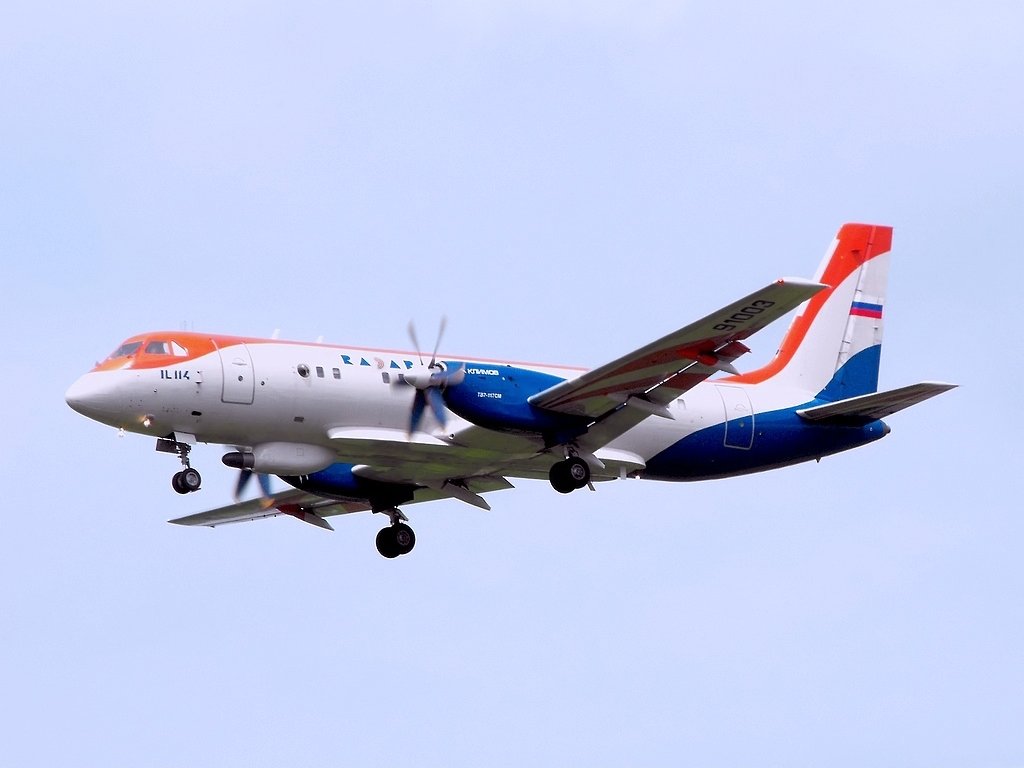
Historical Context & Origins
The Ilyushin Il-114 was born in the context of the end of the Soviet Union, conceived as a modern successor to the glorious but obsolete Antonov An-24. Its development, which began in the mid-1980s, responded to the need for an efficient, reliable regional aircraft capable of operating on less well-equipped runways, typical of the vast regions of Russia.
The design aimed to combine the robust operational qualities of its predecessors with cutting-edge technology and an unprecedented focus on fuel efficiency. The first flight, which took place on 29 March 1990, marked a crucial, almost symbolic moment, at the dawn of profound geopolitical changes that would heavily influence his career.
The post-Soviet transition, with its economic turbulence and industry fragmentation, posed immense challenges to the production of the Il-114. Despite the initial enthusiasm, the program faced fierce competition from Western manufacturers, who were more advantaged in terms of financing and access to global markets.
Architecture & Technological Design
The Il-114 is a twin-engine turboprop, characterized by a high wing and a T-shaped empennage, a configuration chosen to maximize performance on short and unprepared runways. Its robust structure was designed to ensure reliability in often extreme operating conditions, a trademark of Soviet aeronautical engineering.
Initially equipped with the Klimov TV7-117S engines, and later with improved versions such as the TV7-117SM (and in some variants also Pratt & Whitney Canada PW127H), the aircraft was designed for fuel efficiency and significant noise reduction. Its standard configuration provided a transport capacity of 52-64 passengers.
The cockpit, featuring advanced digital avionics for its time, represented a leap forward over previous analog systems. This modernization not only improved flight safety and efficiency, but also reduced the workload for pilots, bringing the Il-114 into line with emerging international standards.
Onboard Specifications
- ◆Advanced digital avionics systems: For precise flight management and reduced operational complexity.
- ◆Structural strength for unprepared runways: Allowed operation from regional airports with limited infrastructure.
- ◆Low-noise six-bladed propellers: Contributed to passenger comfort and reduced noise impact.
Operational Career & Operators
The operational career of the Il-114 was marked by limited production and use mainly concentrated in Russia and CIS nations. Carriers such as Vyborg Airlines and especially Uzbekistan Airways were among the few operators to integrate the Il-114 into their fleet.
Despite its promising characteristics, the aircraft has struggled to achieve significant production volumes due to economic difficulties and the changing procurement strategy of Russian airlines, often turning to more established Western models.
In recent years, however, the program has experienced something of a renaissance with the development of the Il-114-300 variant. This modernized design aims to meet the needs of a Russian regional market increasingly focused on production autonomy, with the aim of restarting series production and providing a domestic alternative to foreign turboprops.
Legacy & Cultural Impact
The Ilyushin Il-114 represents much more than just an aircraft; it is a symbol of the resilience and ambitions of the Russian aviation industry in a period of profound transformation. Its existence is testament to the attempt to keep alive an indigenous design and manufacturing capacity despite adversity.
Its cultural impact lies in its intrinsic mission: to ensure connectivity for Russia's remote regions, playing a crucial role in keeping the vast nation united. Although it did not reach the diffusion of other models, it demonstrated the potential to serve those routes where larger or less robust aircraft could not operate.
Today, with the renewed push towards the production of the Il-114-300, the legacy of the Il-114 takes on new meaning. It symbolizes a return to commitment to domestic regional aviation, a critical step toward technological sovereignty, and a future in which Russian engineering continues to connect people and territories across the skies.
Telemetria Specs (HUD)
Hangar Trivia & Curiosità
- 💡It was specifically designed to operate from unpaved runways and airfields with limited ground infrastructure, a common requirement in remote regions of the Soviet Union.
- 💡The aircraft's development and initial production faced significant challenges and delays following the collapse of the Soviet Union and subsequent economic turmoil in the 1990s.
- 💡A significantly modernized version, the Il-114-300, is currently undergoing flight tests in Russia, with plans to restart series production to replace imported regional aircraft.
Archivio Avvistamenti Spotter
Immagini scattate dalla community in tutto il mondo