HS 748
Hawker Siddeley
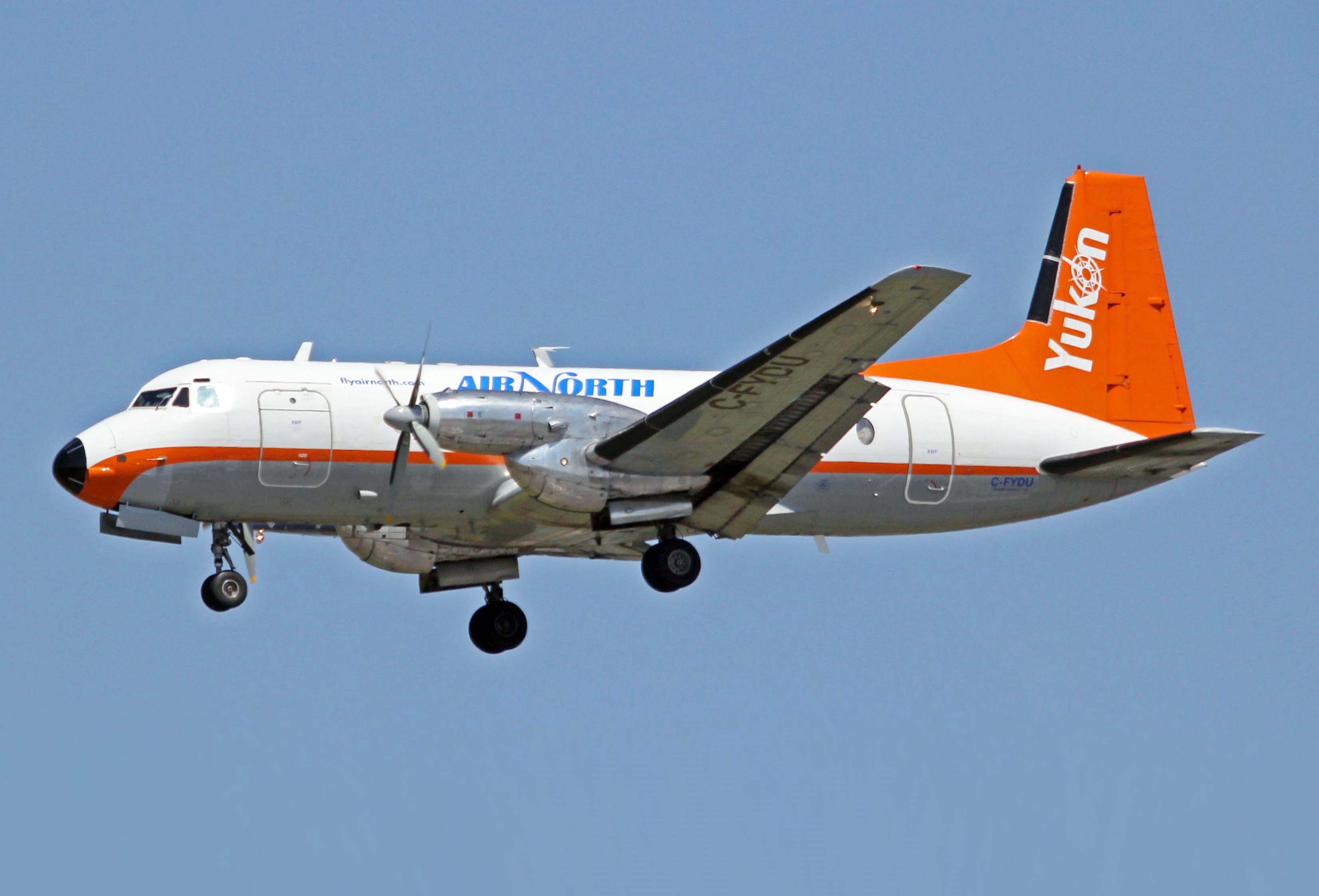
Historical Context & Origins
The post-war aeronautical landscape, particularly in the late 1950s, demanded a new type of aircraft: robust, versatile and economically efficient. The primary need was to identify a worthy successor to the legendary Douglas DC-3, capable of serving regional routes and operating from airports with unprepared or short runways. Avro, part of the then nascent Hawker Siddeley Group, took on this challenge with the Avro 748 project.
Launched in 1957, the Avro 748 was conceived as a regional transport turboprop airliner, specifically designed to deal with the most demanding operating conditions. The goal was to ensure operational reliability and low maintenance costs, crucial elements for the expansion of air transport in areas of the world with limited infrastructure. The first flight of the prototype occurred on 24 June 1960, a moment that marked the beginning of an extraordinary aeronautical career.
Architecture & Technological Design
The Hawker Siddeley HS 748 (as it was later renamed) featured an intrinsically functional and instantly recognizable design. Its high wing configuration was not an aesthetic choice, but a pragmatic one: it guaranteed excellent ground clearance for the propellers, facilitating operations on unpaved surfaces, and offered easy access to the cargo compartment. Robustness was a priority, evident in the strengthened landing gear and overall structure.
The beating heart of this aircraft were the two Rolls-Royce Dart turboprop engines, engines already extensively tested and universally appreciated for their power and unparalleled reliability. This engine choice gave the HS 748 exceptional performance in terms of take-off and cruising speed, together with remarkable efficiency for its category. Sound engineering and structural simplicity made it an easy-to-maintain aircraft, even in remote locations and with limited resources.
Onboard Specifications
- ◆Rolls-Royce Dart engines: Powerful and reliable turboprops, synonymous with robustness and operational longevity in all climatic and environmental conditions.
- ◆High wing and rugged landing gear: Ideal for operations on semi-prepared, dirt or grass runways, maximizing versatility and access capability.
- ◆Fatigue-proof and pressurized structure: Designed for high flight cycles, ensuring exceptional service life and, in later versions, superior comfort for passengers.
Operational Career & Operators
The HS 748 quickly established itself as a global success, adopted by a wide variety of operators, both civilian and military, in over 50 countries worldwide. Prestigious airlines such as British Airways, the Brazilian VASP and LAN Chile used it extensively for regional passenger connections. Its remarkable flexibility also allowed it to be used in cargo transport roles, maritime patrol, navigation aid calibration and even as a VIP aircraft.
Its well-deserved reputation as a "workhorse" is attested to by its extraordinary operational longevity. Numerous examples have accumulated tens of thousands of flight hours, operating tirelessly in extreme environments, from African deserts to Arctic regions, from South-East Asia to the rugged Andean peaks. Even today, over 60 years since its debut, a small number of HS 748s continue to serve, an eloquent testimony to its build quality and inherent robustness.
Legacy & Cultural Impact
The Hawker Siddeley HS 748 has left a significant legacy in regional aviation. Far from being a flashy aircraft, it became a true symbol of reliability, practicality and efficiency. It has played an irreplaceable role in connecting remote communities, opening up new trade and tourism routes, and substantially contributing to the economic development of entire geographic regions.
Its influence goes far beyond cold operational statistics. The HS 748 is remembered with affection and respect by pilots, technicians and passengers for its tireless ability to carry out its task, day after day, with commendable tenacity. It represents a glorious chapter in British aeronautical engineering, a prime example of how design aimed at pure functionality can generate global commercial success and a deep and lasting cultural impact.
Telemetria Specs (HUD)
Hangar Trivia & Curiosità
- 💡It was initially designed by Avro as the Avro 748, before Avro became part of Hawker Siddeley.
- 💡A significant military variant was the Andover (HS 780), designed for tactical transport and paradropping, featuring a unique 'kneeling' landing gear.
- 💡The aircraft was also license-produced in India by Hindustan Aeronautics Limited (HAL) as the HAL 748, with numerous units built for the Indian Air Force and commercial operators.
Archivio Avvistamenti Spotter
Immagini scattate dalla community in tutto il mondo