He 70 Blitz
Heinkel
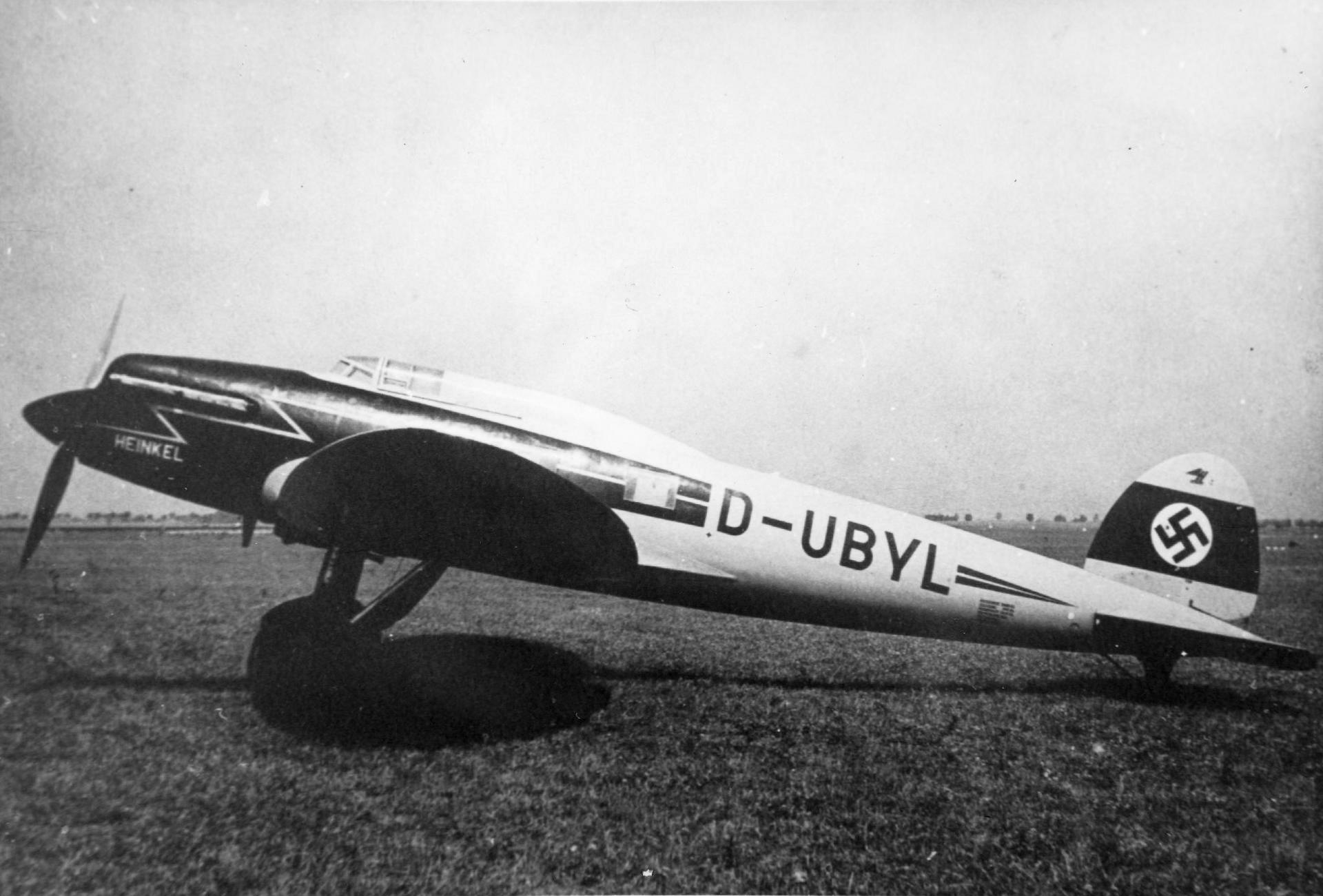
Historical Context & Origins
Nato in un'epoca di fervore tecnologico e strategico per la Germania, l'Heinkel He 70 Blitz fece il suo primo volo nel 1932, emergendo come un simbolo delle ambizioni aeronautiche tedesche. After the severe restrictions imposed by the Treaty of Versailles on military aviation, German engineering concentrated on the development of high-performance civilian aircraft capable of being rapidly converted for military use.
The He 70 was originally conceived by Heinkel Flugzeugwerke as an ultra-fast postal and passenger aircraft for Lufthansa, capable of exceeding the speed of its British and US competitors. This goal of extreme speed for the time led to revolutionary aerodynamic and structural solutions, laying the foundation for future generations of military aircraft.
Architecture & Technological Design
The Heinkel He 70 design was a remarkable leap forward for the early 1930s. It was a low-wing monoplane characterized by an exceptionally elegant and aerodynamic silhouette, with a streamlined fuselage and an elliptical profile wing, a distinctive feature that optimized its efficiency. This innovative shape contributed decisively to its extraordinary speed performance.
Its structure was cutting-edge, employing a fully metallic light alloy monocoque construction, a method that ensured strength and lightness. The engine, generally a liquid-cooled BMW VI V12, provided the power needed to reach the record speeds that made it famous, making it one of the fastest aircraft in the civilian world at the time of its debut.
Onboard Specifications
- ◆Heinkel-type elliptical wing: A revolutionary aerodynamic design that reduced induced drag and increased efficiency.
- ◆Fully Retractable Landing Gear: One of the first effective implementations of this technology to maximize speed.
- ◆Lightweight alloy monocoque construction: An advanced construction technique that offered a superior strength-to-weight ratio.
Operational Career & Operators
The He 70 earned the nickname "Blitz" due to its incredible speed performance, setting eight world records in 1933 for payload flight. Lufthansa used it on express routes, such as the one between Berlin and Hamburg, drastically reducing travel times and demonstrating its reliability and speed in civil service.
However, its speed and robustness made it immediately attractive to the emerging Luftwaffe. It was quickly adapted for military roles, serving as a fast reconnaissance aircraft, light bomber and VIP transport. It was employed in the Spanish Civil War with the Condor Legion, where it demonstrated its vulnerability against enemy fighters when used in offensive roles, despite its superior speed.
- ◆*Hungary** also acquired several units, using them mainly for reconnaissance. Although it was soon overtaken by more modern fighter aircraft, the He 70 played a crucial role in the early stages of World War II as a strategic reconnaissance aircraft, before being relegated to liaison and training duties.
Legacy & Cultural Impact
The Heinkel He 70 Blitz represents a seminal chapter in aviation history, a pioneer of high-speed design that influenced subsequent generations of airplanes. Its elliptical wing, in particular, found application in other famous German aircraft, including the famous Junkers Ju 87 Stuka dive bomber.
The "Blitz" symbolized the post-Versailles renaissance of German aeronautical engineering and its capacity for innovation. Although its front-line military career was relatively short, the He 70 left a lasting legacy as an example of how aerodynamic design and advanced construction techniques could push the limits of speed and performance in aviation.
Telemetria Specs (HUD)
Hangar Trivia & Curiosità
- 💡It was nicknamed "Blitz" (Lightning) due to its exceptional speed, making it one of the fastest single-engine aircraft of its time.
- 💡The aircraft's innovative elliptical wing design, developed by Siegfried Günter, was later famously adopted by the Supermarine Spitfire.
- 💡Despite its military service, the He 70 also saw civilian use, setting eight world speed and distance records for landplanes with payloads in 1933.
Archivio Avvistamenti Spotter
Immagini scattate dalla community in tutto il mondo