Goose (G-21)
Grumman
Historical Context & Origins
The Grumman G-21 Goose, affectionately known as the "Goose", was born from a very specific need in the aeronautical landscape of the 1930s. It was 1936 when a group of wealthy "commuters" from New York, who wanted to reach their coastal or island properties without having to change means of transport, commissioned an amphibian passenger transport plane from Grumman that could land both on water and on land.
The company, already famous for its robust military aircraft, promptly responded to the challenge, designing an aircraft that combined operational versatility with reliability. The first flight of the prototype took place on 29 May 1937, inaugurating a new era for private and corporate transport along the coasts and between islands, thanks to its extraordinary ability to adapt to different operational contexts.
Architecture & Technological Design
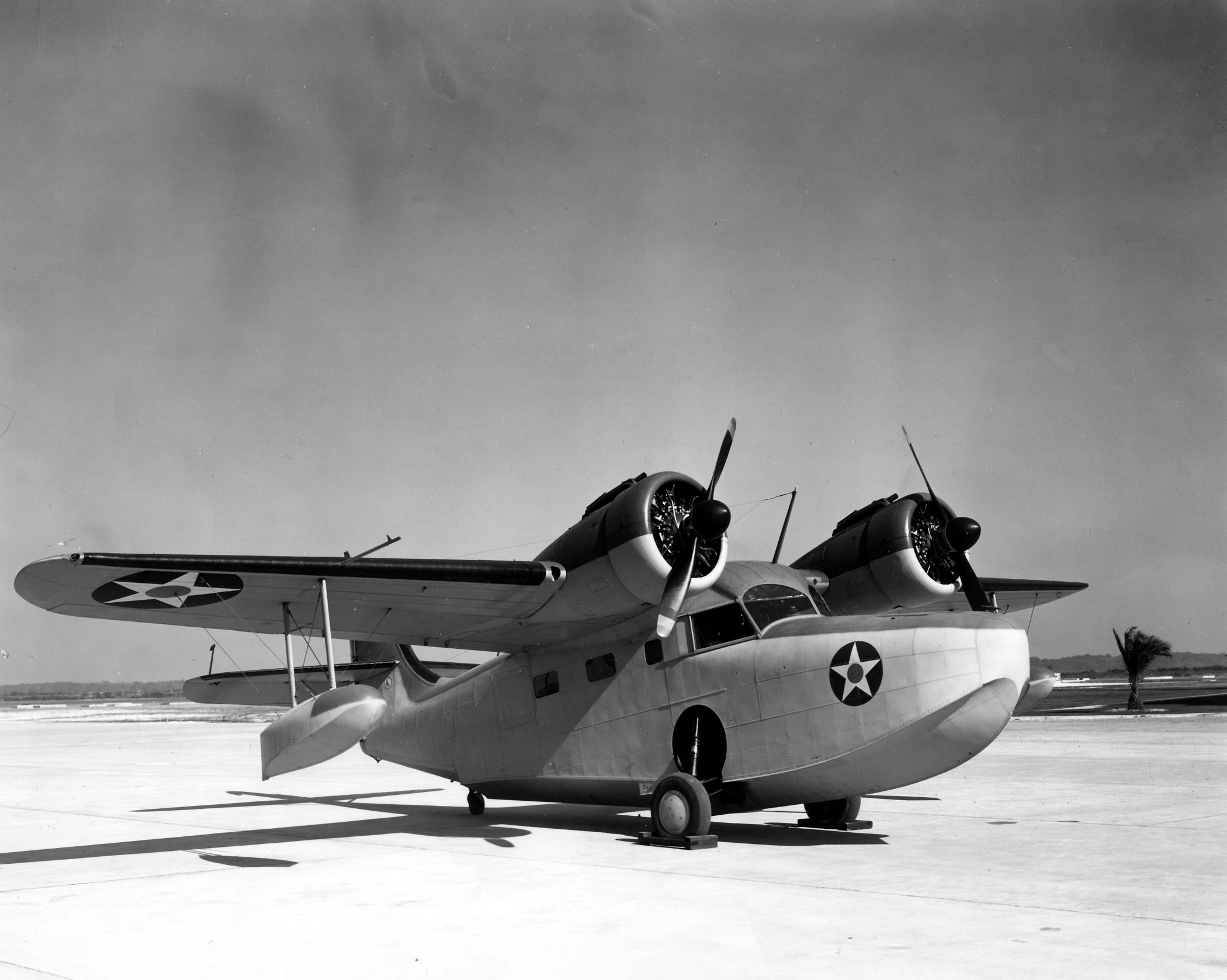
The Grumman Goose stood out for its all-metal structure, a distinctive feature of Grumman's construction philosophy, which guaranteed exceptional strength and resistance, essential for an aircraft intended to operate in marine environments. This solid construction made it suitable both for civilian luxury and, later, for rigorous military uses.
The high-wing design housed two Pratt & Whitney R-985 Wasp Junior radial engines, which provided the power needed for short takeoffs from both land runways and water surfaces. The fuselage, conceived as a hydrodynamic hull, allowed excellent buoyancy and stability in water, while its aerodynamic profile contributed to surprisingly efficient flight performance.
Onboard Specifications
- ◆Al-clad alloy construction: Advanced material for its time, offering high corrosion resistance in saline environments, crucial to the aircraft's durability.
- ◆Innovative Retractable Landing Gear: The robustly designed landing gear legs retract completely into the side fuselage struts, minimizing drag and optimizing in-flight performance.
- ◆Optimized hull design: The lower hull was meticulously designed to ensure excellent hydrodynamic performance when floating and taking off from the water, while maintaining an efficient aerodynamic profile in flight.
Operational Career & Operators
Although initially conceived for the civilian market as a luxury amphibious aircraft, the Goose found a crucial role during World War II. Its multi-role capabilities made it invaluable to the Allied armed forces, serving as a light transport aircraft, anti-submarine patrol aircraft and search and rescue (SAR) aircraft.
The US Navy employed it under the designation JRF, while the Royal Air Force (RAF) and Royal Canadian Air Force (RCAF) used it extensively. After the war, many examples returned to civil service, becoming real workhorses for the transport of passengers and goods in remote regions, on islands and as air taxis in coastal areas, demonstrating extraordinary operational longevity.
Legacy & Cultural Impact
The Grumman Goose isn't just a piece of aviation history; he has become a true cultural icon. Its unmistakable shape and versatility have made it the protagonist of numerous films and television series, consolidating its image in the collective imagination as a symbol of adventure and access to remote places.
Even today, several examples of Goose continue to fly, a testament to the exceptional engineering and durability of the original Grumman design. Its legacy inspired subsequent Grumman amphibians, such as the Mallard and Albatross, but none matched the charm and history of the legendary Grumman G-21 Goose, a true pioneer of amphibious aviation.
Telemetria Specs (HUD)
Hangar Trivia & Curiosità
- 💡The G-21 Goose was Grumman's first monoplane designed specifically for commercial airline service, marking a significant step for the company.
- 💡Despite its age, a substantial number of Grumman Gooses remain airworthy and actively flown today, particularly in remote areas like Alaska and the Caribbean.
- 💡The Goose has frequently appeared in popular culture, notably in TV series like 'Tales of the Gold Monkey' and 'Magnum P.I.', showcasing its classic appeal.
Archivio Avvistamenti Spotter
Immagini scattate dalla community in tutto il mondo