G-73 Mallard
Grumman
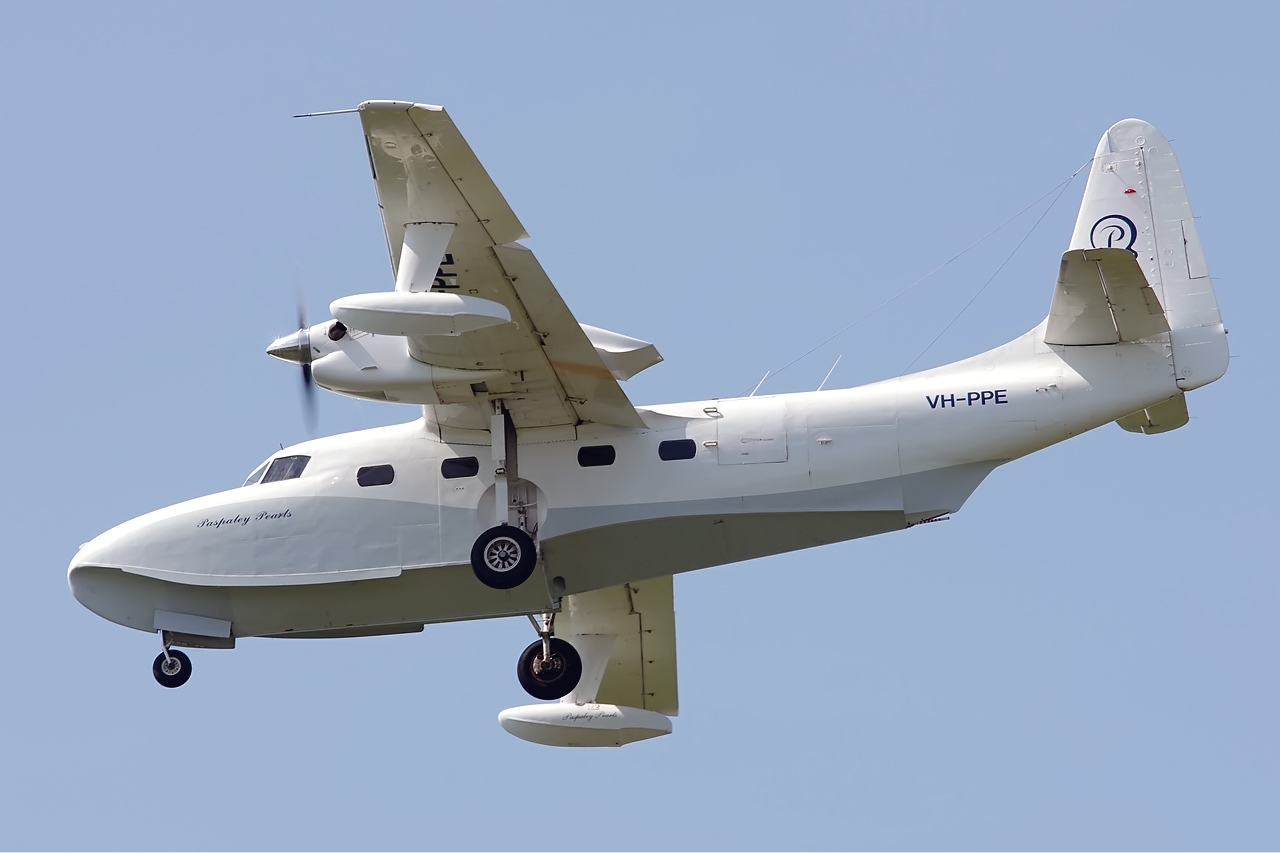
Historical Context & Origins
In the bustling post-World War II landscape, Grumman Aircraft Engineering Corporation, renowned for its rugged military aircraft, turned its attention to the promising civilian market. There was a growing demand for executive transport aircraft that could serve remote areas, islands and lakes, offering luxury and operational versatility. The G-73 Mallard was their ingenious answer to this need, embodying the solid engineering and reliability for which the brand was famous.
The Mallard's first flight occurred in 1946, positioning it as the evolved successor to the highly regarded Grumman Widgeon and Goose amphibians. It was designed from the beginning to offer superior comfort and excellent performance, targeting wealthy users and charter companies who needed an aircraft capable of operating both from land and water with maximum efficiency and safety, opening new frontiers for private and corporate transport.
Architecture & Technological Design
The architecture of the Grumman G-73 Mallard is a masterpiece of amphibious design: a twin-engine, high-wing monoplane, constructed entirely of metal for exceptional strength and longevity. Its distinctive hull-type fuselage, optimized for seaflying and marine performance, integrated seamlessly with robust retractable landing gear, allowing it unmatched operational flexibility on conventional runways and water surfaces.
Powered by two powerful Pratt & Whitney R-1340 Wasp radial engines of 600 hp each, (or later converted with modern turboprops such as the PT6A), the Mallard boasted powerful and reliable propulsion. This configuration gave it not only excellent flight performance, but also the robustness necessary for take-offs and landings on unprepared surfaces, making it a true "workhorse" for the most demanding executive aviation.
Onboard Specifications
- ◆Intrinsic Amphibious Platform: Unique ability to operate from paved runways, grass fields and bodies of water, ensuring unparalleled access to remote and otherwise inaccessible destinations.
- ◆Luxury Configurable Interior: Spacious cabin designed for maximum comfort of 8-10 passengers, with customizable options for executive layouts, lavatories, kitchenettes and large luggage compartments.
- ◆Highly Durable Construction: Designed to withstand frequent operations in marine environments and adverse weather conditions, with a legendary reputation for minimal structural maintenance and long-lasting operation.
Operational Career & Operators
The Mallard quickly established itself as the flagship amphibian for executive transport and charter operations, particularly popular in coastal and lake regions of North America and the Caribbean. It became an icon for historic operators such as Chalk's Ocean Airways, which used it for decades for connections between Florida and the Bahamas, consolidating its reputation as an extremely reliable and long-lived aircraft in passenger service.
Its ability to land and take off from almost anywhere made it invaluable for accessing private properties, exclusive resorts and offshore oil platforms. Although production ended in 1951 with just 59 built, a surprising number of Mallards remain in active service around the world today, demonstrating the superior quality of its engineering and its extraordinary inherent durability.
Legacy & Cultural Impact
The Grumman G-73 Mallard was not just an airplane; it became a symbol of luxury, freedom and adventure in the post-war era, representing a golden age of personal air travel and functional elegance. Its unmistakable silhouette, with its elegant lines and robust design, has made it an instantly recognizable icon, loved by aviation enthusiasts and collectors of historic aircraft.
The Mallard's legacy extends far beyond its operational role, influencing subsequent generations of executive and amphibious aircraft. It demonstrated unequivocally that it was possible to combine elegance, comfort and extraordinary operational capabilities in a single, harmonious package. Even today, every flight of a Mallard is a living tribute to an era when aeronautical engineering challenged the limits, creating extraordinary and timeless machines.
Telemetria Specs (HUD)
Hangar Trivia & Curiosità
- 💡Often referred to as 'The Cadillac of the Air' due to its luxurious appointments and smooth flight characteristics, appealing to wealthy individuals and corporations.
- 💡Despite being a piston-powered design from the mid-20th century, a remarkably high percentage of the original 59 Mallards produced are still airworthy today, a testament to their durability.
- 💡It was one of Grumman's last and most successful piston-engined amphibian designs, building upon the company's strong legacy in seaplane development.
Archivio Avvistamenti Spotter
Immagini scattate dalla community in tutto il mondo