G.212
Fiat
Historical Context & Origins
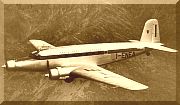
The Fiat G.212 emerges as a powerful symbol of the rebirth of the Italian aeronautical industry in the difficult post-war period. Designed and built by the prestigious Fiat Aviazione, this aircraft represented a natural evolution of the previous and already tested Fiat G.12, a three-engine transport aircraft that had demonstrated its robustness during the conflict. The need to reconnect a devastated Italy and restore civil air routes prompted the creation of a larger and more capable aircraft.
The idea behind the G.212 was to provide a reliable and versatile transport aircraft, capable of meeting the growing civil and military needs of the time. The project, led by engineer Giuseppe Gabrielli, aimed to significantly improve load capacity, autonomy and comfort, laying the foundations for a new standard in the Italian air transport sector.
The first flight, which occurred in 1947, marked not only the beginning of the operational life of the G.212, but also a declaration of Italian resilience and ingenuity. In a period of scarce resources and great challenges, Fiat managed to conceive and build an aircraft that demonstrated the desire to look forward, towards a future of aeronautical reconstruction and progress.
Architecture & Technological Design
The Fiat G.212 adopted a high-wing triple-engine configuration, a design choice that guaranteed exceptional operational safety and considerable flexibility of use. This architecture in fact allowed crucial propulsive redundancy for long-range flights and for operations on less well-equipped runways, a fundamental feature in the post-war context.
The all-metal construction, with a circular-section fuselage and machined skin, gave the aircraft superior structural strength and greater durability over time. The three engines were Alfa Romeo 128 R.C.18, nine-cylinder air-cooled radial engines, each capable of producing 860 HP (632 kW). This combined power ensured solid flight performance and impressive lift capacity.
The high-wing design not only facilitated loading and unloading of cargo due to its proximity to the ground, but also offered excellent visibility for passengers, making travel more enjoyable. The cabin was spacious and designed to accommodate a significant number of passengers or a considerable volume of cargo, highlighting its "packhorse" nature of the air.
Onboard Specifications
- ◆Load capacity up to 34 passengers or 4,000 kg of cargo, making it extremely versatile.
- ◆Operating autonomy of approximately 1,800 km, essential for regional and international routes.
- ◆Cruising speed of 300 km/h, combined with excellent engine reliability.
Operational Career & Operators
Despite its promising concept, production of the Fiat G.212 was rather limited, with only three examples built. The main operator was Avio Linee Italiane (ALI), one of the historic Italian airlines, which used these aircraft to connect the main cities of the peninsula and some European destinations. The G.212 stood out as a valuable tool for the transport of passengers and goods.
The aircraft were used to re-establish vital air connections, actively contributing to the economic and social reconstruction of Italy. Although the number was small, their presence in the skies represented a tangible sign of normalization and resumption of essential services in a period of great logistical challenges. Their robustness and reliability made them popular with crews and airlines.
An example of the G.212 was also acquired by the Italian Air Force, where it was used for transport and connection tasks, demonstrating its versatility and confidence in its operational capabilities. This highlights the multifaceted role that the G.212 was destined to play, going beyond the mere civil function to also serve strategic needs.
Legacy & Cultural Impact
The Fiat G.212, although produced in few examples, occupies a significant place in the history of Italian aviation. It represents a bridge between the pre-war era, with its derivation from the G.12, and the technological advancement that would characterize the following decades. It was a tangible symbol of Italian ability to innovate and rebuild even in extreme circumstances.
Its presence in the post-war skies was a testament to Italian ingenuity and determination to restore a viable aviation industry. It demonstrated that, despite the difficulties, Italy was still capable of designing and building complex and functional aircraft. The G.212 helped keep Fiat's engineering and manufacturing know-how alive at a critical moment.
In summary, the Fiat G.212 was not just a transport aircraft; it was an emblem of Italian post-war resilience. His legacy lies in demonstrating that innovation and perseverance can overcome adversity, paving the way for future generations of aircraft and maintaining Italy as a relevant player in the global aviation landscape.
Telemetria Specs (HUD)
Hangar Trivia & Curiosità
- 💡It was nicknamed 'Tri-motore' (Three-engine) due to its distinctive engine configuration, characteristic of many Italian designs of its era.
- 💡Despite its 1947 first flight, its design roots were firmly in the pre-war era, being an evolution of the successful Fiat G.12.
- 💡Only a very limited number of G.212s were produced (around 6-9 units), as more modern aircraft types became available post-World War II.
Archivio Avvistamenti Spotter
Immagini scattate dalla community in tutto il mondo