Flamingo
de Havilland
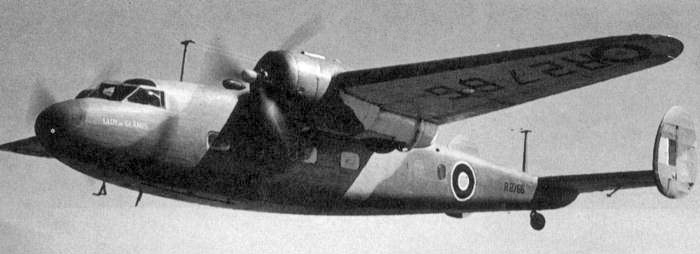
Historical Context & Origins
In the vibrant pre-war aviation landscape, characterized by a growing demand for efficient and safe civil air transport, the de Havilland Aircraft Company stood out with a bold move. Traditionally renowned for its wooden aircraft, the British company was about to design a revolutionary aircraft: the DH.95 Flamingo, its first all-metal monoplane.
The year of the first flight, 1939, marked a turning point. The Flamingo was born out of the British need to compete directly with dominant American designs, such as the Douglas DC-3 and the Lockheed Electra/Lodestar. The goal was to create modern, fast and robust passenger transport for European and imperial routes.
Architecture & Technological Design
The de Havilland Flamingo represented an engineering breakthrough for the company, adopting an all-light alloy monocoque construction. This advanced architecture not only ensured greater strength and durability, but also allowed for cleaner lines and better aerodynamics, clearly distinguishing it from its wooden predecessors.
The design featured a cantilever medium wing and a hydraulically retractable landing gear, cutting-edge solutions that contributed significantly to its performance. Equipped with two Bristol Perseus XII nine-cylinder radial engines of 930 hp each, the Flamingo promised competitive cruising speeds and high operational reliability.
Onboard Specifications
- ◆Spacious and optimized passenger cabin: Designed to accommodate up to 17 passengers with superior comfort thanks to advanced sound insulation and an efficient heating system for its time.
- ◆De Havilland variable pitch constant speed propellers: A crucial technology that improved propulsive efficiency in different phases of flight, from climb to cruise, optimizing fuel consumption and performance.
- ◆Advanced flight and navigation instruments: Equipped with radio equipment and instrument flight instruments, essential for safe operations in adverse weather conditions.
Operational Career & Operators
Despite its potential as an elite civilian transport, the de Havilland Flamingo's operational career was profoundly affected by the outbreak of World War II. Only 14 examples were built, well below initial expectations for widespread commercial use.
Most civilian Flamingos, originally intended for operators such as British Overseas Airways Corporation (BOAC), were quickly requisitioned by the Royal Air Force (RAF). Here they were mainly employed in VIP transport, rapid liaison and communications roles, demonstrating their reliability and speed in a war context.
Legacy & Cultural Impact
Despite limited production and its rapid transition to military service, the de Havilland Flamingo left a significant technical legacy. It represented a milestone for de Havilland, confirming his ability to master metal construction, a skill that would be critical to the company's future successes, including pioneering jets such as the Comet and Vampire.
The Flamingo was a vital testing ground for new techniques and materials, acting as a bridge between the era of wooden aircraft and that of modern metal aircraft. Although it did not achieve the fame of other contemporaries, its design and technology make it an important chapter in the history of British aviation, a symbol of ambition and innovation in an era of profound transformation.
Telemetria Specs (HUD)
Hangar Trivia & Curiosità
- 💡It was de Havilland's first all-metal airliner design, marking a significant departure from their earlier, predominantly wooden aircraft construction.
- 💡Only 14 Flamingos were ever built, as wartime priorities shifted production focus towards military aircraft, notably the legendary Mosquito.
- 💡Despite its limited numbers, it performed crucial roles during WWII, including VIP transport and air ambulance duties for the Royal Air Force.
Archivio Avvistamenti Spotter
Immagini scattate dalla community in tutto il mondo