FH-227
Fairchild
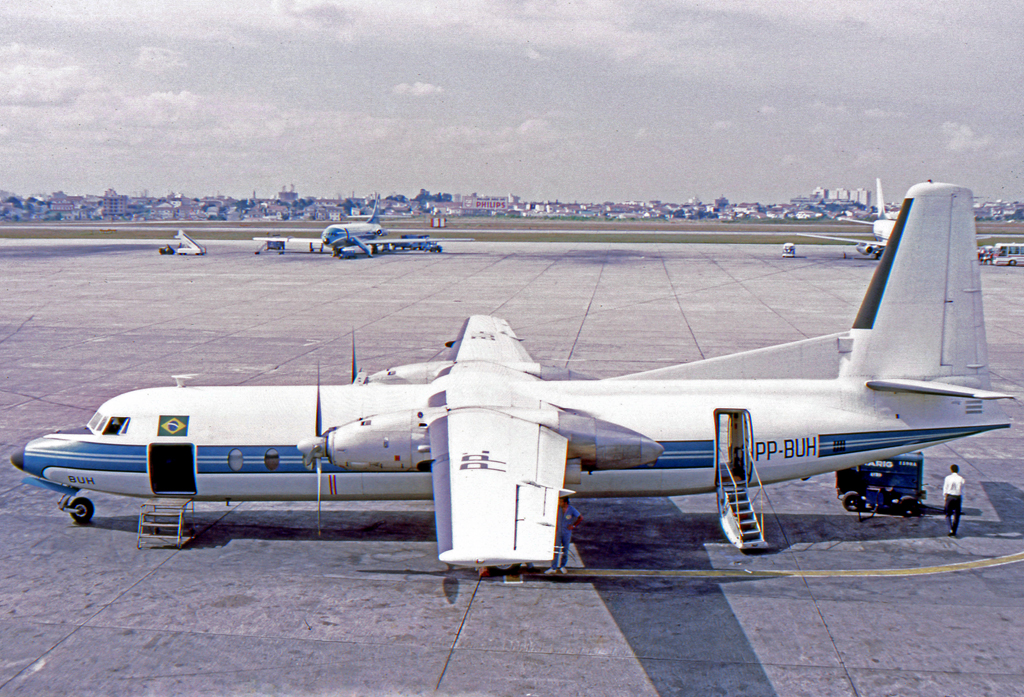
Historical Context & Origins
The Fairchild FH-227 made its first flight in 1966, emerging into an era of rapid expansion for regional air transport. Its genesis is deeply linked to the success of the Fokker F-27 Friendship, an aircraft that Fairchild already produced under license in the United States.
Fairchild Aircraft, with the experience gained in producing its own F-27, identified a clear need for an aircraft with greater capacity and greater economic efficiency. This vision led to the development of an extended variant, designed to optimize passenger and cargo transport on regional routes and from airports with limited infrastructure.
The FH-227 was not a simple clone, but a revision aimed at maximizing profitability and operational versatility. The goal was an aircraft that could consolidate Fairchild's presence in the dynamic regional turboprop market, offering significant added value to carriers.
Architecture & Technological Design
The heart of the FH-227 lay in its high-wing twin-engine turboprop architecture, a configuration already proven for its robustness and versatility. The most distinctive modification was the introduction of a 1.83 meter lengthened fuselage compared to the original F-27, significantly increasing internal capacity.
This extension allowed the aircraft to seat between 44 and 52 passengers, making it more competitive and attractive to airlines looking to increase payload. To compensate for the new aerodynamic dynamics, the vertical empennage underwent a redesign, with an increase in its surface area to ensure optimal stability and control.
The aircraft was powered by two Rolls-Royce Dart turboprop engines, typically in Mk 532-7R or Mk 536-7R variants. These engines were renowned for their reliability and ability to operate effectively in various environmental conditions, providing the power needed for takeoffs and landings even on short runways.
Onboard Specifications
- ◆Extended fuselage for increased passenger and cargo carrying capacity.
- ◆Increased vertical empennage surface area for improved directional stability.
- ◆Honeywell avionics and flight instruments advanced for the time, optimized for regional operations.
Operational Career & Operators
The Fairchild FH-227 quickly established itself as a workhorse for numerous regional airlines in North America and beyond. Its structural strength and innate reliability made it ideal for intensive operations and for use on secondary airports, often with limited infrastructure.
Major operators include carriers such as Allegheny Airlines, Piedmont Airlines and Mohawk Airlines, which used it extensively to connect smaller cities to larger hubs. Its ability to operate from short runways and cost-effectiveness made it a valuable asset for the expansion of regional networks in the 1970s and 1980s.
Sadly, the FH-227 is also known for the crash of Uruguayan Air Force Flight 571 in 1972, the tragic event that inspired the book and movie "Alive." This accident, which occurred in the Andes, unintentionally highlighted the structural resilience of the aircraft, with the tail section remaining relatively intact providing shelter for survivors.
Legacy & Cultural Impact
The FH-227 played a crucial role in the history of regional aviation, bridging the gap between smaller piston-powered aircraft and nascent regional jets. It demonstrated the economic and operational viability of stretched turboprops, influencing subsequent designs in the market segment.
Its long operational career, often serving airlines that would later merge or transform, is testimony to its intrinsic design validity. Although most have been retired from passenger service, some examples continue to fly in cargo or special roles, a tribute to their durability and versatility.
Beyond its technical and commercial impact, the FH-227 occupies a peculiar place in the collective memory due to the events in the Andes. His story is a warning about the power of nature, but also a symbol of the human capacity for resistance, inextricably linked to that dramatic episode.
Telemetria Specs (HUD)
Hangar Trivia & Curiosità
- 💡Condivideva un alto grado di comunanza con il Fokker F27 Friendship, semplificando la manutenzione e la fornitura di pezzi di ricambio per gli operatori già familiarizzati con l'F27.
- 💡La fusoliera estesa dell'FH-227 aggiungeva 1,83 metri (6 piedi) al design originale dell'F27, consentendo più file di sedili.
- 💡Un incidente notevole coinvolse il volo Mohawk Airlines 40 nel 1967, che fu il primo dirottamento di un aereo commerciale registrato negli Stati Uniti, coinvolgendo un FH-227.
Archivio Avvistamenti Spotter
Immagini scattate dalla community in tutto il mondo