FC-2
Fairchild
Historical Context & Origins
In the fervent post-war climate of the 1920s, aviation began its transition from a bold military enterprise to a promising commercial sector. The need for reliable and versatile aircraft for the transport of passengers, cargo and, in particular, for the then emerging aerial photography, was pressing. In this dynamic landscape, Sherman Fairchild's vision emerged.
Fairchild, a pioneer in the field of photogrammetry, recognized the need for an aircraft specifically designed to operate efficiently and safely even in difficult conditions. His desire for a robust, stable aircraft with excellent visibility for aerial mapping operations led to the development of the Fairchild FC-1, a promising but yet to be refined prototype.
The Fairchild FC-2, which made its first flight in 1926, represented a significant evolution of the initial concept. This model wasn't just an incremental improvement; it was a critical step toward creating an era-defining utility aircraft, embodying American ingenuity and the drive for aeronautical innovation.
Architecture & Technological Design
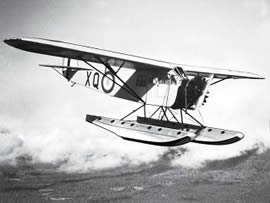
The FC-2 was distinguished by its cutting-edge high-wing monoplane architecture, a configuration that ensured inherent stability and exceptional panoramic visibility, essential qualities for aerial photography and exploration. The cabin, completely enclosed, represented a significant step forward in terms of comfort and protection for crew and passengers compared to the open biplanes of the time.
Its construction combined robustness and practicality: wooden wings covered in fabric and a fuselage made of welded steel tubes, also covered in fabric. This construction choice not only provided resistance, but also facilitated field repairs. One of the most celebrated innovations was the ability of the wings to fold backwards, dramatically reducing the bulk for storage and transportation, making it incredibly versatile.
The adoption of radial engines, such as the famous 200 horsepower Wright J-5 Whirlwind**, ensured crucial reliability for operations in remote areas and sufficient power for considerable payloads. Questo connubio di design intelligente e meccanica robusta rese l'FC-2 un pioniere dell'aviazione commerciale e un vero cavallo da battaglia.
Onboard Specifications
- ◆Patented folding wings for easy storage and transportation.
- ◆Heated and ventilated closed cabin, a rare comfort for the time.
- ◆Large side and bottom glass surfaces, ideal for aerial photography.
Operational Career & Operators
The Fairchild FC-2 quickly established itself as the go-to aircraft for a wide range of applications, cementing its reputation as the ultimate bush plane. It was used intensively in the icy expanses of Canada and Alaska, where its robustness and STOL (Short Take-Off and Landing) capabilities made it indispensable for the delivery of mail, supplies and the transport of pioneers and prospectors.
Multiple embryonic airlines and private operators made it the centerpiece of their fleets. Operators such as Canadian Colonial Airways and, for a short time, the nascent Pan American Airways, used the FC-2 to pioneer new routes and test the limits of commercial aviation. It was also essential for government agencies and private companies dealing with geological surveys and cartography.
Its unrivaled ability to operate from improvised runways and its reliability in extreme conditions made it an irreplaceable partner for exploration and infrastructure development in wilderness regions. The FC-2 not only flew; actively contributed to shaping the geography of North America.
Legacy & Cultural Impact
The Fairchild FC-2's legacy transcends its remarkable operational career. This plane was not simply a means of transportation; it was a catalyst for innovation and a symbol of the promising golden age of aviation. Its success unequivocally demonstrated the commercial viability of high-wing monoplanes and the importance of versatility in aeronautical design.
His innovations, such as the folding wings and the enclosed cabin, profoundly influenced subsequent generations of utility and light transport aircraft. The FC-2 set new standards of comfort and operability, helping to make air travel no longer perceived as a daredevil venture, but as a practical and reliable mode of transportation.
Even today, the Fairchild FC-2 is remembered as a true pioneer, an aircraft that opened skies and mapped unknown lands. Its story is a seminal chapter in the narrative of aeronautical development, a symbol of astute engineering and courage, which laid the foundation for modern aviation.
Telemetria Specs (HUD)
Hangar Trivia & Curiosità
- 💡One FC-2 played a crucial role in the Wilkins-Detroit Arctic Expedition (1926-1928), achieving notable early polar aviation flights.
- 💡It was among the first utility aircraft to widely feature an enclosed passenger cabin, a significant advancement for passenger comfort and protection.
- 💡The FC-2's design directly led to several successful subsequent models, including the FC-2W2 and the Model 71, enhancing Fairchild's reputation.
Archivio Avvistamenti Spotter
Immagini scattate dalla community in tutto il mondo