F27 Friendship
Fokker
Historical Context & Origins
The post-war era saw a pressing need for the replacement of the venerable Douglas DC-3, a workhorse of civil aviation but now outdated. In this scenario, the Dutch company Fokker saw the opportunity to develop a modern, reliable regional aircraft capable of operating from airports with limited infrastructure.
The project, initially called P.27, took shape by focusing on operational efficiency and structural robustness. Its first flight occurred on November 24, 1955, marking the beginning of a new era for regional air transport and setting the stage for unprecedented commercial success.
The name “Friendship” was chosen to evoke a sense of international connection and accessibility, reflecting the aircraft's mission to connect communities and countries. This symbol of friendship flew for the first time with innovative turbine propulsion, a revolution for short-haul flights.
Architecture & Technological Design
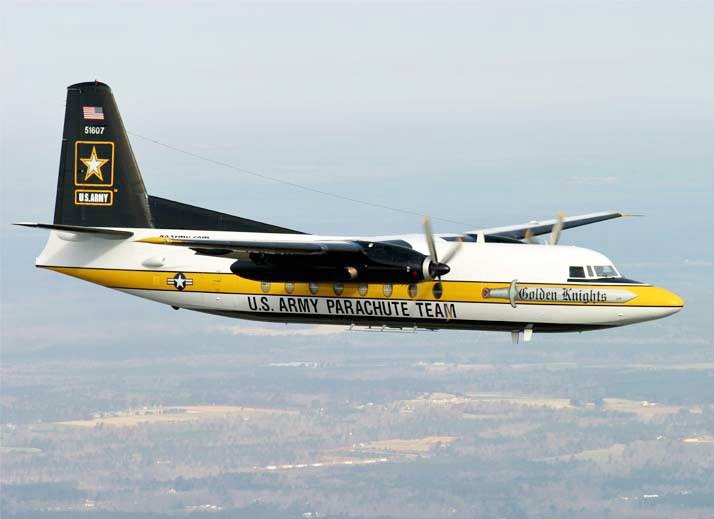
The Fokker F27 was distinguished by its high wing architecture, a configuration that offered numerous advantages. This design choice guaranteed excellent visibility for passengers and, above all, considerable height from the ground for the engines and propellers, ideal for operation on unpaved or semi-prepared runways.
At the heart of its design were Rolls-Royce Dart turboprop engines, cutting-edge engines that ensured excellent reliability, quieter operation and less vibration than piston engines of the time. This engine significantly contributed to efficiency and on-board comfort, making it attractive to airlines and passengers.
The pressurized fuselage (in later versions) and the robust light alloy structure made the Friendship an extremely durable and versatile aircraft. It was designed for short and frequent flight cycles, resisting wear and tear and ensuring competitive maintenance costs.
Onboard Specifications
- ◆Structural strength for semi-prepared runways: Reinforced chassis and heavy-duty landing gear for maximum operational versatility.
- ◆Rolls-Royce Dart Engines: Turbopropellants that offered reliability, efficiency and low noise/vibration levels for the time.
- ◆High-wing configuration: Benefits for passenger visibility, propeller clearance and STOL (Short Take-Off and Landing) capability.
Operational Career & Operators
The Fokker F27 Friendship quickly became a global success, operating with over 130 airlines in more than 60 countries. Its reliability and versatility made it ideal for a wide range of roles, from regional passenger transport and cargo to special and military missions.
It has served the most diverse latitudes, from Scandinavian routes to African and Asian skies, connecting remote communities and supporting economic development. Its operational longevity is testament to its build quality, with many examples having flown for over 50 years.
Its operators include legacy companies such as Aer Lingus, Braathens SAFE and various branches of the US Air Force under license such as Fairchild F-27. Its global presence has made it a familiar face at many airports, a symbol of connectivity and progress.
Legacy & Cultural Impact
The Fokker F27 Friendship was not just a successful aircraft; he was a pioneer who shaped the future of regional air transport. It demonstrated the feasibility and efficiency of turboprops for short-haul flights, paving the way for future generations of similar aircraft.
His legacy culminated in the development of the Fokker 50, a modernized and improved version that continued to keep the Fokker name alive in the aviation landscape. The F27 represents a fundamental chapter in the history of civil aviation, an example of cutting-edge Dutch engineering.
Even today, its design and operating philosophy influence regional aircraft design. Friendship remains a symbol of reliability, innovation and the ability to unite the world, embodying its name on every flight.
Telemetria Specs (HUD)
Hangar Trivia & Curiosità
- 💡The F27 was the most successful Western European turboprop airliner before the advent of the ATR 42/72 series.
- 💡It featured a 'fail-safe' structural design philosophy, employing multiple load paths to prevent catastrophic failure from a single crack or defect.
- 💡A significant number of F27s were built under license in the United States by Fairchild Hiller, known as the FH-227.
Archivio Avvistamenti Spotter
Immagini scattate dalla community in tutto il mondo