F.VIIb-3m
Fokker
Historical Context & Origins
The Fokker F.VIIb-3m, with its first flight in 1928, emerged as a pillar in the golden age of aviation, a period of bold exploration and rapid technological innovation. Developed by the brilliant Anthony Fokker, this aircraft represented the quintessence of Dutch engineering, focused on robustness and reliability for nascent trade routes and epic long-range crossings.
The F.VII series had already proven its worth, but the "b-3m" variant introduced a three-engine configuration that would become synonymous with safety and capability. This configuration not only increased available thrust, but also offered a crucial safety margin, allowing the aircraft to continue flying even in the event of an engine failure, a vital feature for flights over vast expanses of water or inhospitable terrain.
The F.VIIb-3m was positioned as the ideal answer to the growing demands of air transport, offering an unprecedented combination of range, payload capacity and fault tolerance. It was the means chosen to demonstrate to the world the revolutionary possibilities of aviation, transforming what was an undertaking of a brave few into an accessible reality for the future.
Architecture & Technological Design
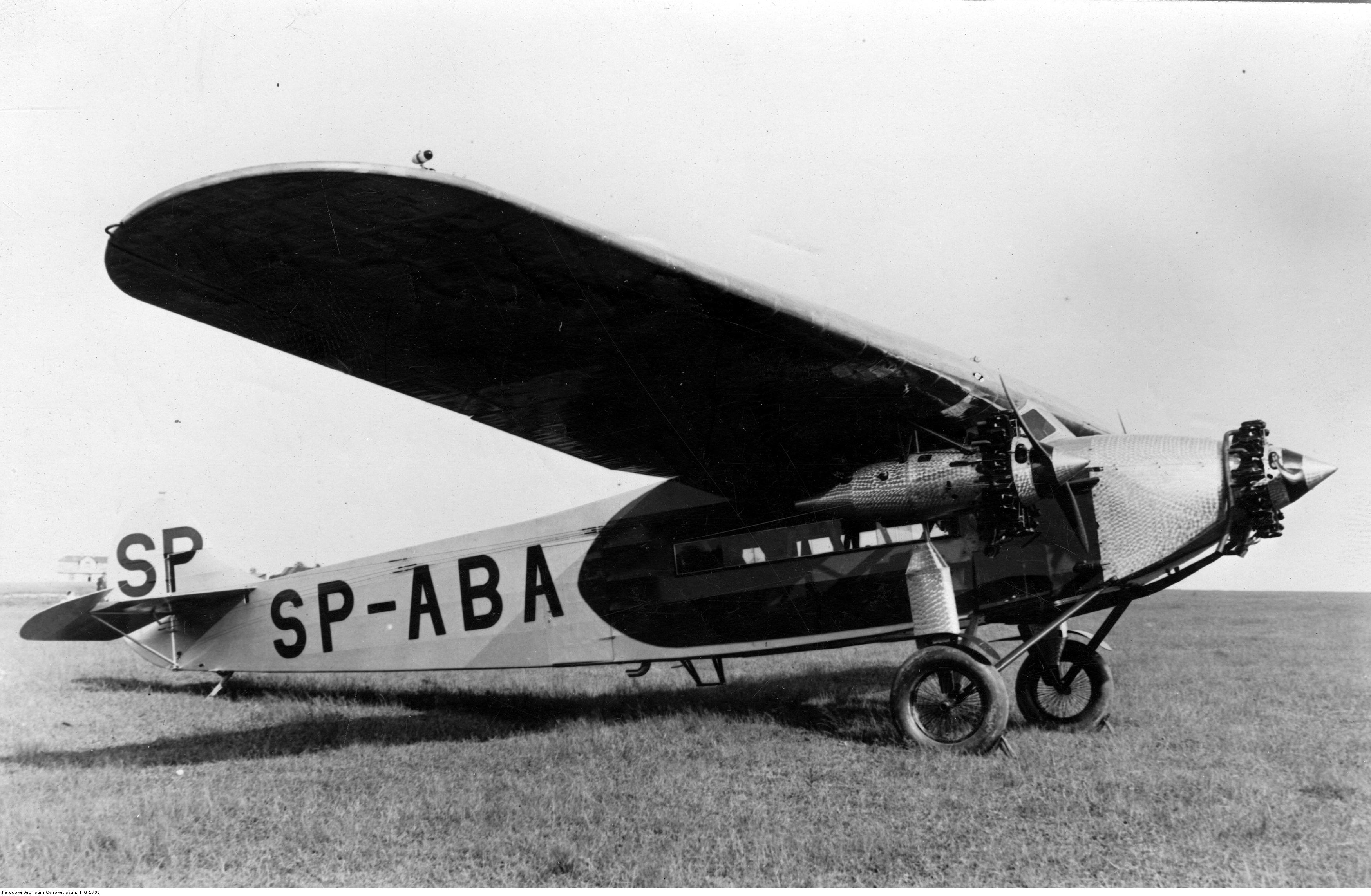
The design of the Fokker F.VIIb-3m was a masterpiece of engineering pragmatism, characterized by a cantilever high-wing monoplane structure, entirely made of wood and covered in canvas. This construction, while appearing rudimentary to modern eyes, offered an exceptional combination of lightness, strength and ease of repair, crucial elements for operation at often rudimentary airports.
The propulsion configuration was its distinctive feature: three radial engines, one installed in the nose and two mounted on wing nacelles, provided the necessary power. This engine redundancy was a revolutionary design choice, ensuring safety in flight that single- or twin-engine biplanes of the time could not offer, especially on long-duration missions over oceans or deserts.
The fixed and robust landing gear was designed to withstand unpaved surfaces, reflecting the pioneering nature of commercial aviation at the time. The attention to detail, from the fluid dynamics of the wings to the internal layout of the cabin, although spartan, set the stage for future developments in airliner design.
Onboard Specifications
- ◆Wright J-5 "Whirlwind" radial engines: Celebrated for their reliability and performance, essential for transoceanic flights.
- ◆"Monomoplano" structure in wood and canvas: An engineering balance between lightness, robustness and ease of maintenance.
- ◆Radio systems and primitive navigation instruments: Essential for long-range routes and for dealing with adverse weather conditions.
Operational Career & Operators
The Fokker F.VIIb-3m became a true legend thanks to its record-breaking feats and adoption by the world's major airlines. It was the aircraft featured in Charles Kingsford Smith's famous flight across the Pacific aboard the "Southern Cross" in 1928, an epic feat that demonstrated its long-range capabilities and intrinsic robustness in extreme conditions.
Many pioneering airlines, including KLM (Royal Dutch Airlines), Pan American World Airways and Western Air Express, quickly added it to their fleets. The reliability of its three engines and its ability to carry passengers or cargo made it ideal for establishing the first international commercial air routes, connecting continents and overcoming geographical barriers.
These planes weren't just transportation; they were vectors of progress, helping to shape the public perception of aviation as a safe and viable means of travel. Their use in countless reconnaissance, postal and passenger flights cemented their reputation as tireless and revolutionary machines.
Legacy & Cultural Impact
The Fokker F.VIIb-3m was not just an aircraft, but a symbol of an era of extraordinary aeronautical achievements. Its three-engine architecture set a precedent for safety and reliability in long-range flight, influencing generations of aircraft designers and builders. It demonstrated that commercial air travel was not only possible, but destined to become an everyday reality.
Its presence in the skies around the world, from one end of the oceans to the other, inspired millions of people and fueled the dream of flight. His pioneering exploits helped lay the foundation for the development of airports, navigation technologies, and supporting infrastructure that we take for granted today.
Ultimately, the F.VIIb-3m left a lasting legacy, not only as a successful aircraft, but as an icon that embodied the spirit of innovation and boldness of the golden age of aviation. His story is a fundamental chapter in the narrative of how humanity conquered the heavens, making him a true winged giant of history.
Telemetria Specs (HUD)
Hangar Trivia & Curiosità
- 💡A Fokker F.VIIb-3m named "Southern Cross" (VH-USU), piloted by Charles Kingsford Smith, made the first trans-Pacific flight in 1928, from California to Australia.
- 💡Admiral Richard Byrd used a modified F.VIIb-3m, the "America", for his attempted transatlantic flight in 1927 and later for the first flight over the South Pole in 1929.
- 💡Despite its Dutch origins, many Fokker Trimotors were built under license in the USA, contributing significantly to the early development of American air transport routes alongside the Ford Trimotor.
Archivio Avvistamenti Spotter
Immagini scattate dalla community in tutto il mondo