F.VII
Fokker
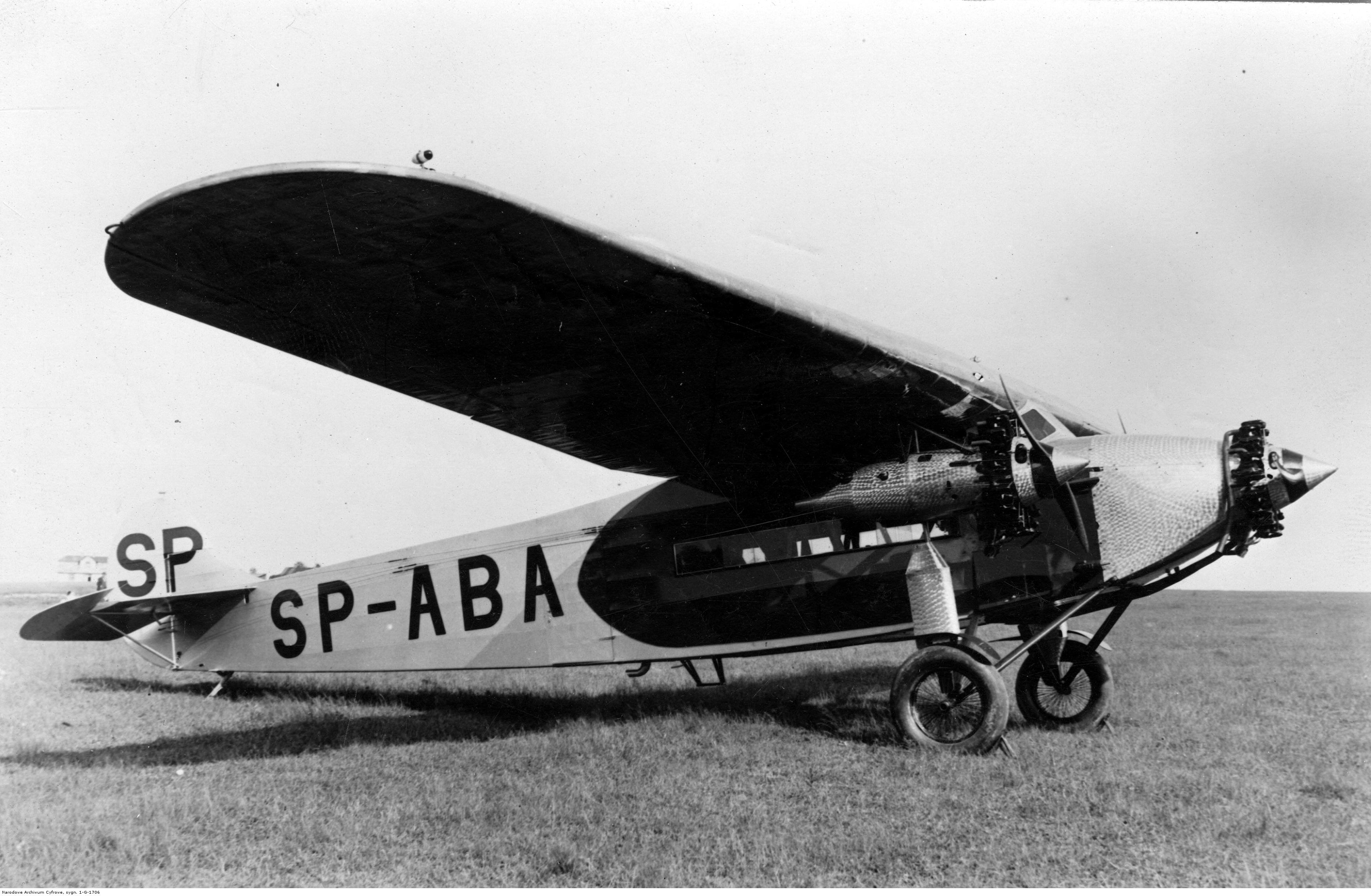
Historical Context & Origins
In the turbulent aftermath of the First World War, civil aviation took its first steps, looking for reliable aircraft for the transport of passengers and cargo. It was in this scenario of fervent innovation that the aeronautical industry, and in particular Fokker, established itself as a protagonist.
The Fokker F.VII, whose single-engine prototype made its first flight in 1924, was born as a response to the growing need for more efficient and safe air transport. However, it was its subsequent evolution in the F.VIIa and above all F.VIIb/3m (trimotor) versions that cemented its legend, embodying a pioneering vision of air transport.
Architecture & Technological Design
The design of the F.VII reflected the philosophy of Anthony Fokker: robustness, simplicity and excellent aerodynamics. The fuselage was made with the proven Fokker technique of welded steel tubes covered in canvas, ensuring resistance and ease of repair even in remote sites.
The distinctly cantilevered wings were constructed of wood and covered in plywood, an innovative approach that eliminated the need for external tie rods. This configuration not only reduced drag, but also offered superior visibility and clean aesthetics.
The real technological revolution manifested itself with the F.VIIb/3m version. The addition of two additional engines under the wings (in addition to the central or front one) not only increased power and load capacity, but offered unparalleled safety redundancy, crucial for the long and daring flights of the time.
Onboard Specifications
- ◆Tri-engine configuration: Provided revolutionary safety and unprecedented reliability for long-range flights.
- ◆Enclosed and Heated Passenger Cabin: Offered superior comfort, a luxury for its time, transforming the travel experience.
- ◆Modular and Robust Structure: Facilitated maintenance, field repairs and adaptation to different operational configurations.
Operational Career & Operators
The Fokker F.VIIb/3m quickly became the workhorse of nascent airlines around the world. Pioneering carriers such as KLM, Western Air Express and Pan American World Airways employed it extensively to pioneer crucial trade routes.
Its reliability was put to the test in legendary feats: from the first overflight of the North Pole by Richard E. Byrd in 1926, to Amelia Earhart's famous Atlantic flight in 1928 (albeit as a passenger). These exploits demonstrated his exceptional capabilities under extreme conditions.
Legacy & Cultural Impact
The Fokker F.VII, particularly its three-engine configuration, was not just an airplane; it was a catalyst of progress. It became an iconic symbol of the golden age of aviation, unequivocally demonstrating the feasibility of long-distance commercial air transport.
Its introduction set new standards in terms of safety, reliability and comfort, paving the way for the global expansion of airline routes. The legacy of the Fokker F.VII lies in its transformation of the airplane from an adventurer's vehicle to an essential tool for international trade and travel.
Telemetria Specs (HUD)
Hangar Trivia & Curiosità
- 💡The Fokker F.VII gained fame in its tri-motor configuration (F.VIIb/3m), which became a standard for early airliners, significantly enhancing safety and payload capacity over single-engine designs.
- 💡It was instrumental in several pioneering long-distance flights, including Richard E. Byrd's alleged flight over the North Pole in 1926 and Charles Kingsford Smith's first trans-Pacific flight in 1928 aboard the 'Southern Cross'.
- 💡The F.VII was adopted by numerous early airlines worldwide, including KLM and Pan American Airways, becoming a workhorse that helped establish commercial air routes.
Archivio Avvistamenti Spotter
Immagini scattate dalla community in tutto il mondo