F.IV
Fokker
Historical Context & Origins
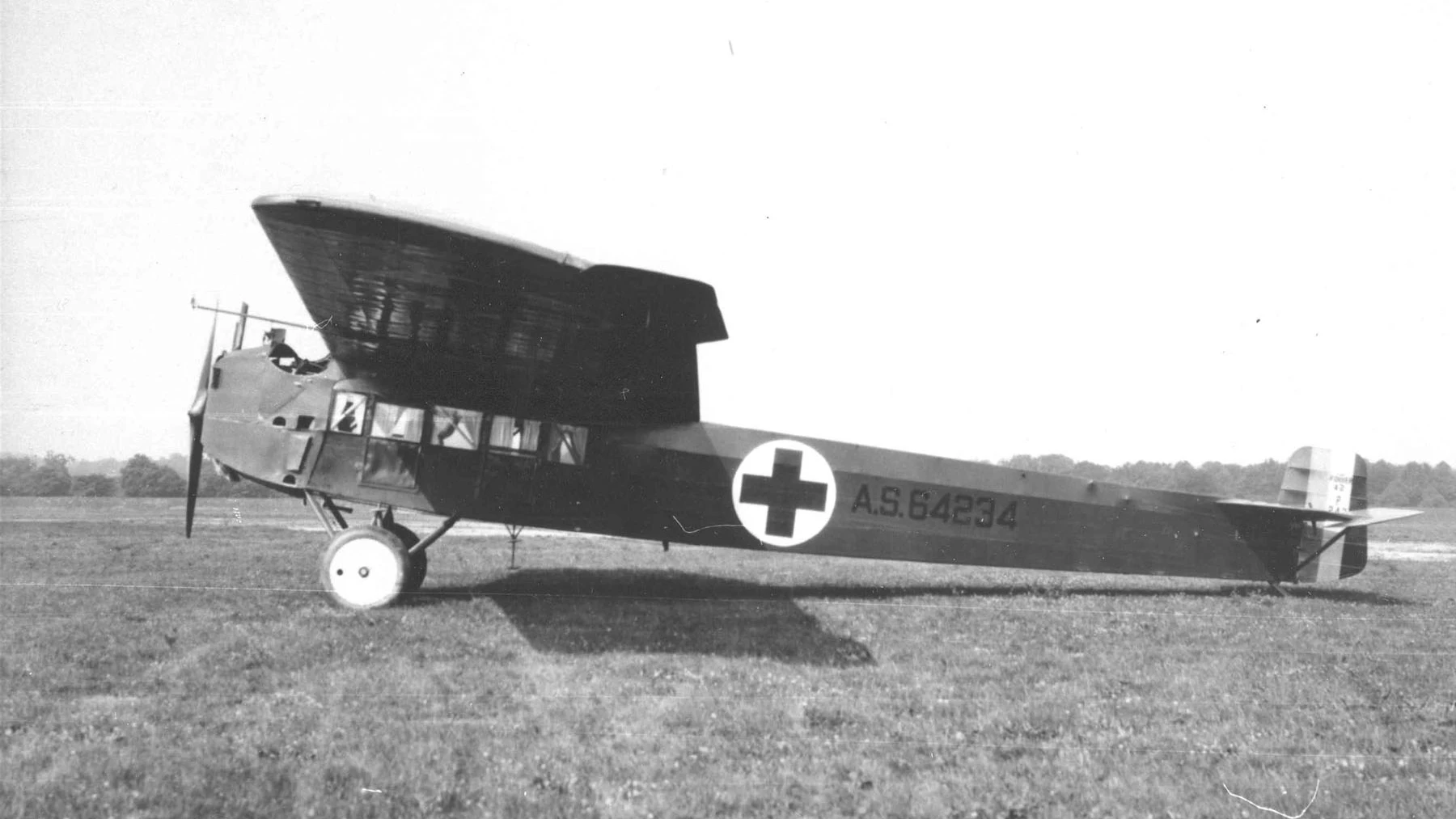
The Fokker F.IV, also known as the Fokker T-2 in the United States, emerged in 1922 from a post-Great War context in which Anthony Fokker, forced by the restrictions of the Treaty of Versailles, was determinedly moving towards civil aviation. His goal was to design robust and reliable aircraft, capable of meeting the new challenges of long-range passenger and postal transport.
The genesis of the F.IV is closely linked to the interest of the US Army Air Service (USAAS), which was looking for an aircraft to demonstrate the capabilities of transcontinental flight and endurance. Thus it was that, upon specific request, Fokker developed an aircraft destined to overcome the limits of the time, combining its renowned experience with American needs.
This aircraft represented a significant step in the evolution of long-range flight capability, serving as a bridge between the rudimentary post-World War II machines and the future giants of commercial aviation. The collaboration between Dutch engineering and American ambition would soon rewrite important pages of aeronautical history.
Architecture & Technological Design
The Fokker F.IV fully embodied Anthony Fokker's design philosophy, distinguishing itself with its avant-garde cantilever high-wing monoplane architecture. This solution, the manufacturer's trademark, eliminated the need for external tie rods and struts, drastically reducing aerodynamic resistance and offering superior structural strength for its time.
The construction made use of a fuselage cell made of welded steel tubes, covered in canvas, while the wing was a self-supporting plywood engineering masterpiece. This combination gave the F.IV both lightness and considerable resistance, essential for the long flights for which it was designed.
At the heart of the design was a powerful single-piston, liquid-cooled engine of approximately 400 hp (typically the Liberty L-12), providing the thrust needed for feats of endurance and distance. Its clean aerodynamics and rugged design made it ideally suited to shattering aviation records.
Onboard Specifications
- ◆Cantilever Wing: The self-supporting high wing configuration eliminated stays, reducing drag and improving efficiency.
- ◆Enclosed and heated cabin: A crucial innovation for crew comfort and survival during long endurance flights.
- ◆Structural Strength: The combination of welded steel fuselage and plywood wing ensured reliability for extended missions.
Operational Career & Operators
Although it was initially intended as an observation and bomber aircraft for the USAAS, with the designation A.O.S. (Aerial Observation Ship) and then T-2 (Transport No. 2), the Fokker F.IV distinguished itself not for widespread service, but for its exceptional feats. Only a few examples were produced, but their impact was monumental.
The T-2, piloted by Lieutenants John Macready and Oakley Kelly, became legend in 1923. The aircraft set a new world record for flight duration, remaining in the air for 36 hours, 5 minutes and 1 second, demonstrating the incredible reliability of the Liberty design and engine.
A few months later, the same aircraft completed the first non-stop transcontinental flight in the United States, departing from New York and landing in San Diego. This epic crossing consolidated the F.IV's reputation as a pioneer of long-range flights, opening new frontiers for air transport.
Legacy & Cultural Impact
The Fokker F.IV, although not produced in large numbers, left an indelible mark on the history of aviation. His record-breaking feats not only demonstrated the feasibility of long-distance flight, but also the reliability and potential of monoplanes for civil and military applications.
He demonstrated to the world that it was possible to travel by air across continents, pushing forward the vision of a future in which air travel would become commonplace. His influence was reflected in subsequent Fokker designs and those of other manufacturers, who began to adopt similar solutions for their passenger aircraft.
The F.IV, and in particular the T-2, became a symbol of ingenuity and perseverance, inspiring a generation of aviators and fueling public confidence in the aircraft. Its history remains a fundamental chapter in the development of modern aviation.
Telemetria Specs (HUD)
Hangar Trivia & Curiosità
- 💡Il Fokker T-2 (F.IV) compì il primo volo transcontinentale senza scalo attraverso gli Stati Uniti nel 1923, pilotato dai tenenti Kelly e Macready, in 26 ore e 50 minuti.
- 💡L'aereo era originariamente destinato a competere nella Pulitzer Trophy Race del 1922, ma fu ritenuto troppo grande e lento per una competizione ad alta velocità.
- 💡Nonostante fosse un aereo da trasporto e osservazione, fu sviluppato specificamente per le prestazioni di resistenza e per battere record, piuttosto che per la produzione di massa.
Archivio Avvistamenti Spotter
Immagini scattate dalla community in tutto il mondo