F.II
Fokker
Historical Context & Origins
The first flight of the Fokker F.II in 1920 marks a pivotal moment in the history of aviation, emerging from the tumultuous post-World War I landscape. With the cessation of hostilities, the European aeronautical industry found itself redefining its purpose, moving from war production to the development of means for the nascent civil aviation.
In this context of reconstruction and innovation, Anthony Fokker, the legendary Dutch manufacturer, saw the potential of air transport for passengers. His goal was to create an aircraft specifically designed for trade routes, an almost revolutionary concept in an era dominated by converted military aircraft or rudimentary adaptations.
The F.II design was led by the brilliant engineer Reinhold Platz, who under Fokker's supervision, conceived an aircraft that would set new standards of comfort and safety. It wasn't just an airplane, but a statement of intent for the future of civil air transport.
Architecture & Technological Design
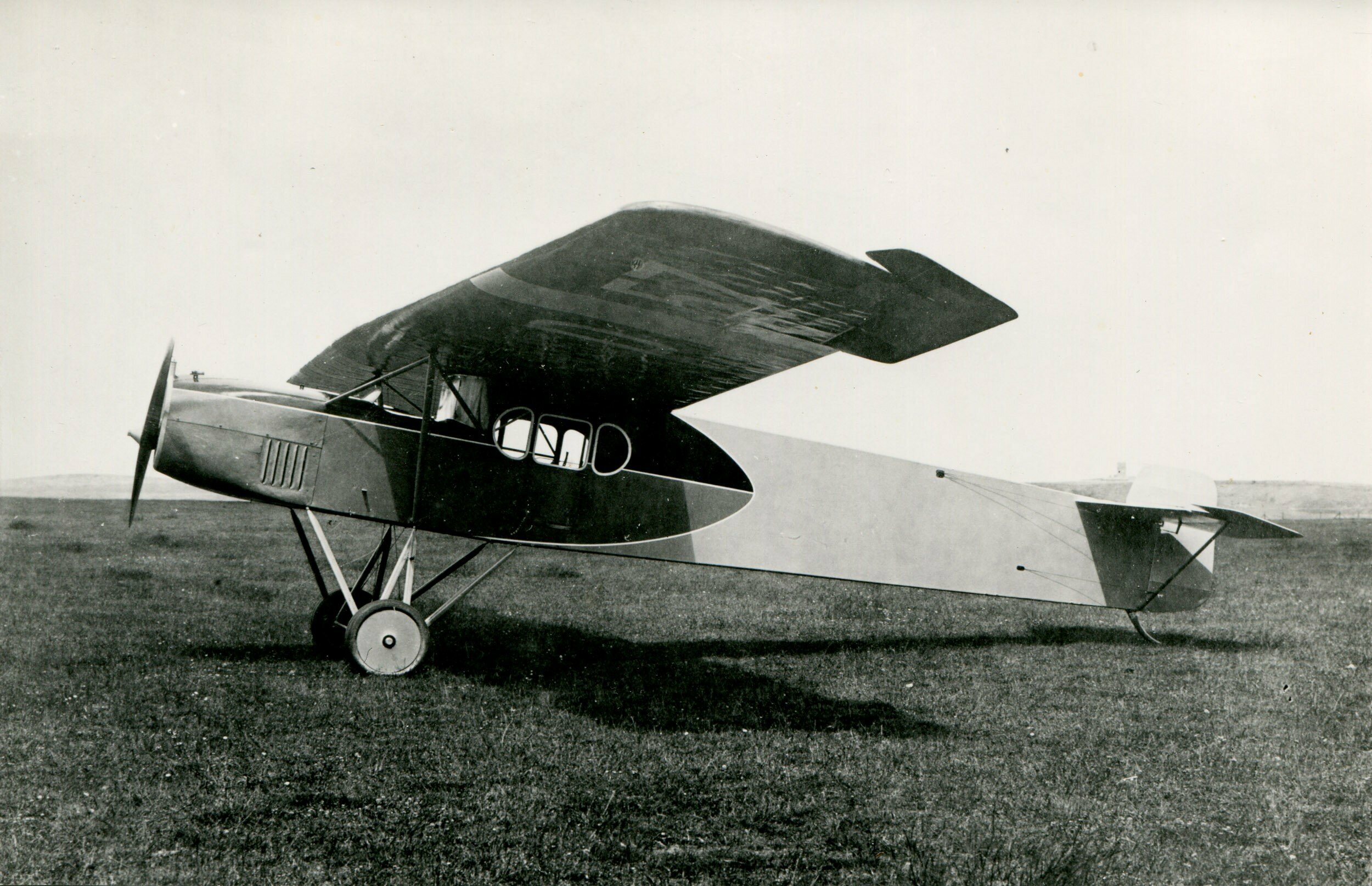
The Fokker F.II was notable for its avant-garde architecture, in particular the adoption of a cantilever wing, a feature which eliminated the need for external struts or tie rods. This solution, while complicating the initial construction, drastically reduced aerodynamic resistance, improving efficiency and speed.
The fuselage featured a sturdy welded steel tube structure, covered in canvas, a trademark of Fokker construction. The wings, however, were made of wood, combining lightness and solidity. This skilful integration of different materials gave the F.II considerable structural resistance for its time.
Another fundamental innovation was its completely closed passenger cabin, capable of accommodating four people. This offered travelers a level of protection from the elements and comfort unthinkable by the standards of the time, while pilots operated from an open cockpit located above the cabin.
Onboard Specifications
- ◆Cantilever wing: eliminated the external struts, reducing resistance and simplifying maintenance.
- ◆Enclosed passenger cabin: Offered shelter and comfort for four passengers, a revolutionary luxury for pioneering commercial flights.
- ◆Mixed wood/steel tube structure: guaranteed strength and durability, combining the lightness of wood for the wings with the resistance of steel for the fuselage.
Operational Career & Operators
The Fokker F.II entered service with KLM (Koninklijke Luchtvaart Maatschappij), the Dutch airline, becoming one of the first aircraft to operate scheduled passenger flights. This aircraft was fundamental to the opening of the first European air routes, connecting cities such as Amsterdam, Hamburg and Bremen.
Despite a relatively limited production of around twenty examples, its impact was significant. Some F.IIs were also acquired by Deutsche Luft-Reederei, the German airline which later became Lufthansa, contributing to the development of the air transport network in Germany.
These aircraft were the true pioneers of aviation, demonstrating the feasibility and reliability of commercial flights in an era when aeronautics was still viewed with skepticism by many. Each flight of the F.II was a small step towards the future.
Legacy & Cultural Impact
The Fokker F.II was not just an airplane; it was a milestone that laid the foundation for Fokker's commercial success in the 1920s. Its concept as a dedicated passenger aircraft directly influenced subsequent and even more successful models, such as the Fokker F.III and the famous F.VIIa/b/3m, consolidating the manufacturer's reputation.
He demonstrated to the world that civil aviation was not a utopian dream but a concrete and promising reality, capable of connecting nations and people. The F.II embodied the spirit of innovation and boldness of an era that was embracing new technological and social frontiers.
His legacy lies in his ability to redefined expectations for air travel, raising the standard of comfort and safety and laying the foundation for the modern airline industry. The Fokker F.II remains an iconic symbol of the courage and vision that shaped aviation as we know it today.
Telemetria Specs (HUD)
Hangar Trivia & Curiosità
- 💡The F.II was one of the first aircraft designed and produced by Anthony Fokker's company after he moved operations from Germany to the Netherlands post-WWI, circumventing Treaty of Versailles restrictions.
- 💡It was notable for its innovative, fully enclosed cabin, offering unprecedented comfort and protection from the elements for up to four passengers compared to contemporary open-cockpit designs.
- 💡The type served as a foundational aircraft for early European airlines, most notably with Deutsche Luft-Reederei (a precursor to Lufthansa), paving the way for commercial air travel.
Archivio Avvistamenti Spotter
Immagini scattate dalla community in tutto il mondo