F.70
Farman
Historical Context & Origins
After the devastation of World War I, aviation found itself at a crossroads: transforming its incredible military technological thrust into civilian applications. In this fervent climate of innovation and reconstruction, the French manufacturer Farman, already a pioneer of flight, positioned itself as a key player in the birth of commercial aviation.
The need was clear: robust, reliable aircraft capable of carrying passengers or cargo on increasingly longer routes. The Farman F.70, with its first flight in 1921, emerged as a concrete response to these needs, embodying the vision of a future in which the sky would be accessible to all for peaceful purposes.
This single-engine aircraft was the natural heir and a refined evolution of previous Farman models, conceived to face the challenges of a commercial aviation still in its infancy, but with unlimited potential. It represented a significant step towards standardization and reliability in air travel.
Architecture & Technological Design
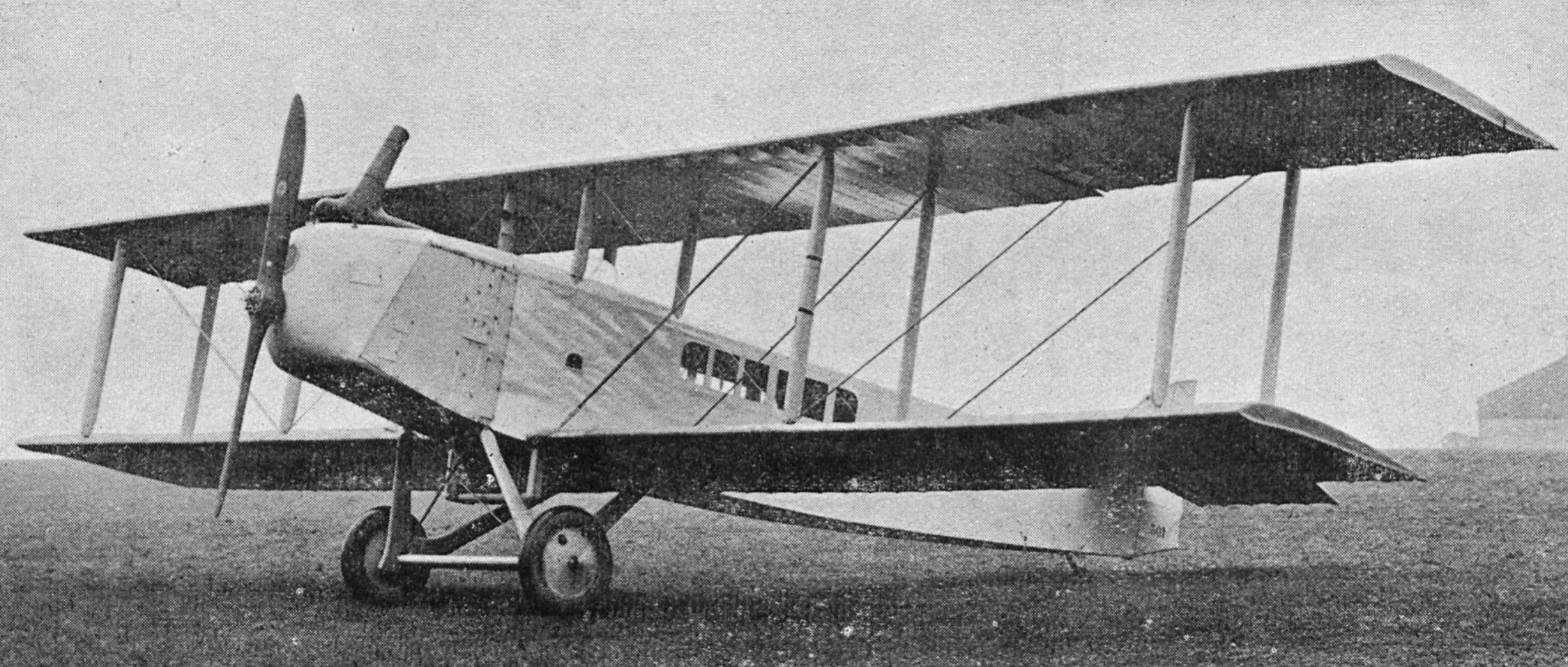
The Farman F.70 presented itself as a single-engine biplane with a solid and reassuring structure, typical of the Farman design of the time. Its wing configuration offered an excellent compromise between the lift required for carrying loads and the stability required for prolonged scheduled flights.
The fuselage, made of a combination of wood, canvas and metal, was designed to maximize interior space, offering a relatively comfortable passenger cabin for the times. The choice of materials and structural engineering reflected attention to durability and maintenance, crucial aspects for early aircraft operators.
The beating heart of the F.70 was often a powerful and reliable engine, such as the 300 HP Renault 12Fe or the 400 HP Lorraine-Dietrich 12 Da, located in the nose. This configuration guaranteed easy access for maintenance and contributed to the overall balance of the aircraft, a fundamental aspect for operational safety.
Onboard Specifications
- ◆Enclosed and soundproof passenger cabin: A significant innovation for its time, offering greater comfort and protection from the elements than open aircraft.
- ◆Highly reliable engine: The choice of proven engines guaranteed the continuity of flights, reducing the risk of failures on routes often without ground support.
- ◆Robust, modular construction: Facilitated repairs and modifications, extending the operational life of the aircraft and making it suitable for different load configurations.
Operational Career & Operators
The Farman F.70 found its main use in the nascent commercial aviation sector, standing out for its reliability. The airline Société Générale de Transports Aériens (SGTA), founded by Farman herself, was the main carrier, using it for vital connections between European capitals.
The F.70 operated on pioneer routes such as Paris-London and Paris-Brussels, demonstrating the feasibility of regular scheduled flights. These planes were among the first to successfully transport passengers and mail across national borders, helping to weave the first European airline network.
Despite the logistical and climatic challenges of the time, the F.70 earned a reputation as a tireless work machine, flying regularly and significantly contributing to establishing public confidence in air travel as a safe and punctual mode of travel.
Legacy & Cultural Impact
The Farman F.70, although not among the most famous aircraft in history, played a silent but fundamental role in the birth of commercial aviation. Its constant operation demonstrated that air transport was no longer a venture for adventurers, but a sustainable and crucial reality for economic and social progress.
This aircraft helped shape the expectations of early travelers and provided valuable data for the development of later, larger, higher-performance passenger aircraft. The experience gained with the F.70 was a springboard for innovation, pushing Farman and the entire industry towards new frontiers.
Today, the F.70 is remembered as a symbol of the pioneering spirit that characterized the early years of civil aviation, a bridge between the era of the heroes of the sky and the advent of global scheduled flights. His story is a tribute to the perseverance and ingenuity that made the dream of flight possible for everyone.
Telemetria Specs (HUD)
Hangar Trivia & Curiosità
- 💡It was a smaller, single-engine derivative of the successful Farman F.60 'Goliath' biplane, which began as a bomber and was also adapted for passenger service.
- 💡The F.70 typically carried four to five passengers in an enclosed cabin, a feature offering greater comfort compared to open-cockpit alternatives of the time.
- 💡Operators included major early European airlines like Compagnie des Grands Express Aériens (CGEA), flying routes connecting cities such as Paris, Brussels, and Amsterdam.
Archivio Avvistamenti Spotter
Immagini scattate dalla community in tutto il mondo