F.13a
Junkers
Historical Context & Origins
In the turbulent aftermath of the First World War, as Germany faced the stringent limitations of the Treaty of Versailles on military aviation, the vision of Hugo Junkers emerged. A bold and progressive engineer, Junkers saw a future for civil aviation, an industry still in its infancy and dominated by fragile wood and canvas structures. His ambition was to create a revolutionary passenger plane.
From this vision, the Junkers F.13a was born, an aircraft that would redefine the standards of aviation. Developed based on experiences with previous military monoplane designs such as the Junkers J.10 (CL.I) and J.12, the F.13a was conceived from the beginning as a pure civilian aircraft, focusing on safety, efficiency and comfort, a radically new approach for the time.
Its first flight, which took place on 25 June 1919, marked not only the beginning of a legend but also a milestone in the history of air transport. It was a technological manifesto that projected aviation into a new era, challenging convention and demonstrating the immense potential of long-range commercial flight.
Architecture & Technological Design
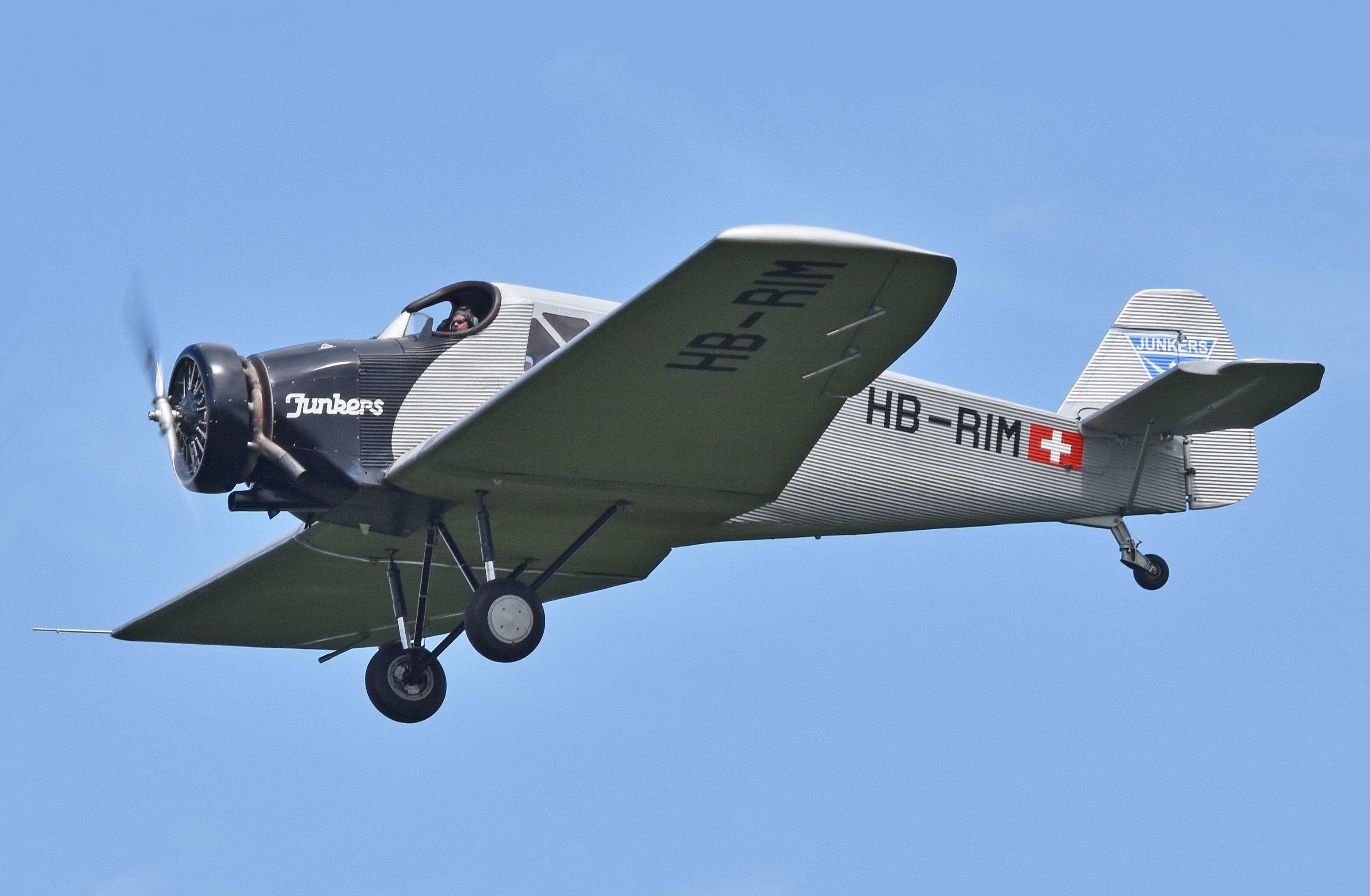
The F.13a was a masterpiece of aeronautical engineering, radically distinguishing itself from its contemporaries. Abandoning the traditional wooden structures and canvas coverings, Junkers opted for an all-metal construction, a bold and then almost unique choice for an airliner. This innovation gave the aircraft unprecedented strength and durability.
The heart of this architecture was its corrugated duralumin cladding, a distinctive feature that would become a trademark for Junkers. This corrugated profile not only provided inherent structural rigidity with less weight, but also eliminated the need for complex internal bracing, simplifying manufacturing and maintenance.
The design featured a thick-profile cantilever wing mounted low to the fuselage, eliminating the need for external drag-creating drag-creating rods and struts. This configuration, combined with its clean aerodynamics, contributed to remarkable efficiency and performance for a passenger aircraft of the time, making it a pioneer of the modern monoplane.
Onboard Specifications
- ◆Enclosed and heated passenger cabin: An unprecedented luxury for the time, ensuring comfort and protection from the elements for four passengers.
- ◆Thick Profile Cantilever Wing: Improved aerodynamic efficiency, lift and eliminated external stays, reducing drag.
- ◆Duralumin Monocoque Structure: Offered superior structural strength, lighter weight, and longer operational life than wood and canvas aircraft.
Operational Career & Operators
The F.13a quickly conquered the world of commercial aviation. Despite post-war restrictions, Junkers managed to sell hundreds of units worldwide, with over 330 units produced. It was adopted by numerous emerging airlines, such as Deutsche Luft-Reederei (D.L.R.), Lloyd Luftverkehr and, after various mergers, became a pillar of the Lufthansa fleet.
Its extraordinary reliability and robustness made it ideal for the challenges of nascent air transport. He flew in extreme conditions, crossing deserts, mountains and icy expanses, from Russia to Iran, from the United States to Japan. Many F.13a were also deployed in Sweden, Switzerland, Hungary and Poland, demonstrating its versatility and resilience on a global scale.
He was the protagonist of numerous pioneering and record-breaking flights. For example, in 1920, an F.13a made the first transalpine flight by a passenger aircraft, and in 1921 it was the first commercial aircraft to land in the United States, an event that underlined its international reach and the boldness of its design.
Legacy & Cultural Impact
The Junkers F.13a was not simply an airplane; it was a catalyst of change, a true symbol of modernity. His pioneering concept of an all-metal aircraft with an enclosed and heated cabin established the blueprint for the future of scheduled aviation, directly influencing subsequent generations of aircraft.
Its reliability and ability to operate on long routes and in difficult conditions unequivocally demonstrated the economic and practical viability of civil aviation. He dismantled the skepticism towards the "flying contraptions" of the past, transforming flying from a dangerous adventure into an increasingly accessible and comfortable means of transport.
The F.13a cemented Hugo Junkers' reputation as a visionary and Germany as a nation at the forefront of aeronautical engineering. Its impact goes beyond technique: it helped shape the collective imagination of air travel, leaving an indelible legacy in the culture and history of aviation.
Telemetria Specs (HUD)
Hangar Trivia & Curiosità
- 💡Fu il primo aereo di linea al mondo costruito interamente in metallo, utilizzando la lega di duralluminio.
- 💡Il design innovativo includeva una cabina passeggeri chiusa e riscaldata, un lusso per l'epoca.
- 💡Oltre 300 esemplari furono prodotti, operando in più di 20 paesi su rotte commerciali.
Archivio Avvistamenti Spotter
Immagini scattate dalla community in tutto il mondo