ERJ 145
Embraer
Historical Context & Origins
The Embraer ERJ 145 emerges at a crucial time for regional aviation, when demand for efficient and rapid air connections between minor and major hubs was constantly growing. Embraer, already established with the Brasilia series turboprops, was aiming for a decisive step into the regional jet segment.
Initially conceived as a jet derivative of the Brasilia, with engines mounted on the wing, the design underwent a radical revision to better respond to market needs. This turning point led to a completely new configuration, clearly distinguishing itself from competitors in terms of design and performance.
The result was the ERJ 145, which made its first flight on August 10, 1995, ushering in a new era for the Brazilian manufacturer. This strategic move consolidated Embraer's position among the world leaders in the production of regional aircraft.
Architecture & Technological Design
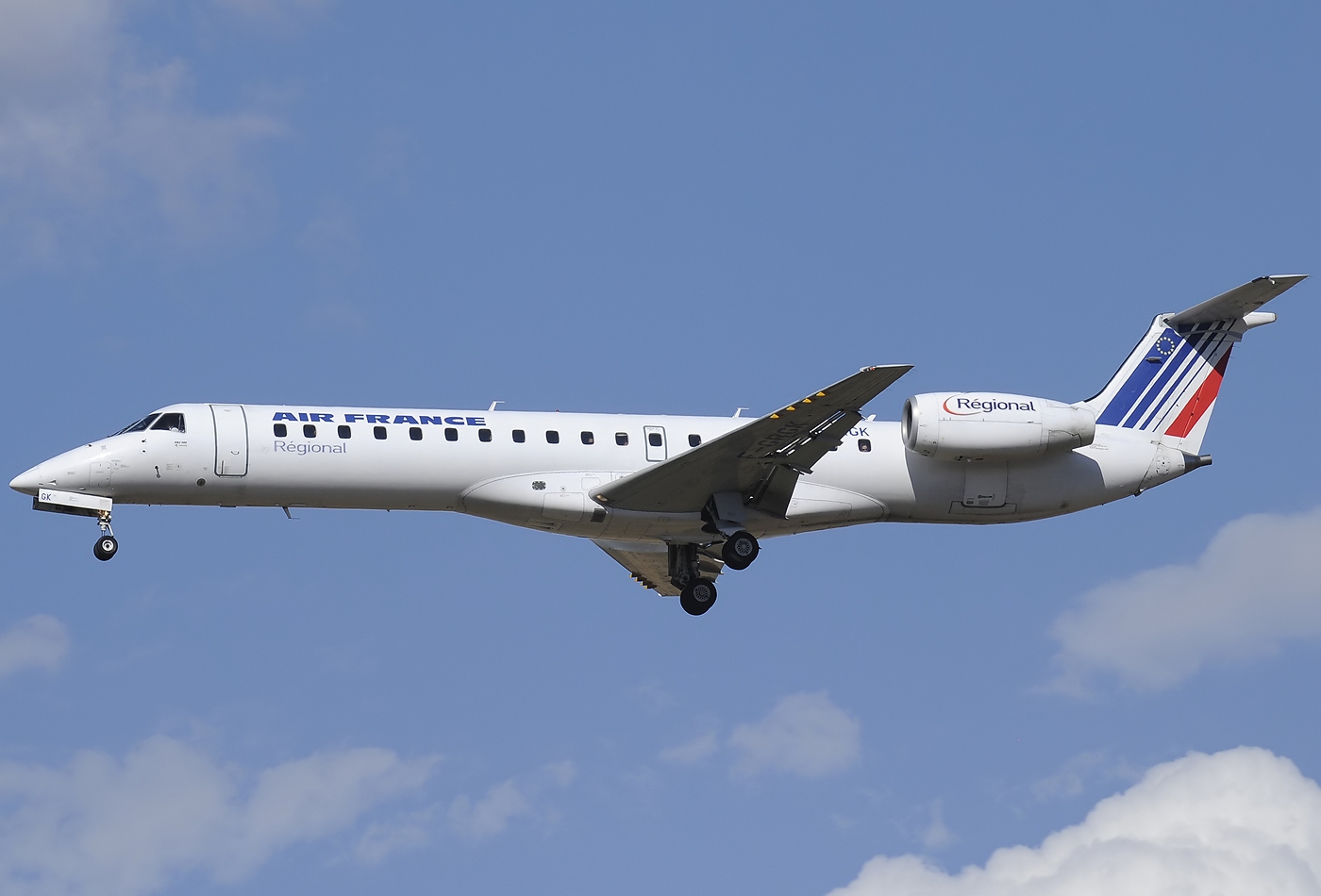
The ERJ 145 stands out for its optimized aerodynamic configuration, characterized by high and tapered swept wings and engines positioned in nacelles at the rear of the fuselage, under the tailplane. This design choice minimized ingestion of runway debris (FOD) and reduced cabin noise.
The narrow but efficient cross-section fuselage accommodates the passenger cabin with a 1-2 configuration, optimizing space for the 50 passengers on board. The overall design balanced performance, cost efficiency and operational comfort, which are critical for regional carriers.
Advanced avionics, centered around the Honeywell Primus 1000 EFIS (Electronic Flight Instrument System) glass cockpit, provided pilots with a clear digital interface. This system integrated flight, navigation and engine data, increasing safety and reducing crew workload.
Onboard Specifications
- ◆Rolls-Royce AE 3007A turbofan engines: Two units delivering approximately 33.0 kN (7,420 lbf) of thrust each, known for reliability and fuel efficiency.
- ◆Comfortable cabin for 50 passengers: Three-seat layout per row (1-2), offering a pleasant travel experience for regional routes.
- ◆Operational range of approximately 2,500 km (1,350 nautical miles): Allowing direct connections on medium-distance routes, essential for the expansion of regional networks.
Operational Career & Operators
The ERJ 145 quickly became a mainstay for numerous regional airlines around the world, revolutionizing the way point-to-point routes were operated. Its ruggedness and low operating costs made it extremely attractive to carriers in North America, Europe and beyond.
Airlines such as American Eagle, ExpressJet and Flybe have employed it extensively, creating widespread networks that were previously economically unsustainable with larger aircraft. Its ability to operate on shorter runways further expanded its range.
In addition to passenger transport, the ERJ 145 has given rise to specialized variants, including executive jets such as the Legacy 600 and military aircraft such as the Embraer R-99 (AEW&C, ISR). This versatility highlights the excellence and adaptability of the original design.
Legacy & Cultural Impact
The Embraer ERJ 145 has left an indelible mark on commercial aviation, demonstrating the viability and profitability of regional jets. It has helped redefine the concept of regional flying, making it faster, more comfortable and accessible to a wider audience.
Its introduction cemented Embraer's reputation as a global innovator, capable of competing effectively with aerospace giants. The ERJ 145 is not just an airplane, but a symbol of Brazilian ingenuity that has opened up new opportunities for air connectivity.
Even decades after its debut, numerous ERJ 145s continue to ply the skies, testifying to their longevity and the effectiveness of the design. Its legacy endures, influencing subsequent generations of regional aircraft and Embraer's development strategy.
Telemetria Specs (HUD)
Hangar Trivia & Curiosità
- 💡L'ERJ 145 è il membro più grande di una famiglia di jet regionali, che include anche i più corti ERJ 135 (37 posti) e ERJ 140 (44 posti).
- 💡Nonostante i suoi motori a reazione, la linea di design dell'ERJ 145 può essere ricondotta al successo del turboelica EMB 120 Brasilia di Embraer, sebbene presenti una fusoliera significativamente riprogettata e nuove ali.
- 💡Questo modello è stato fondamentale per affermare Embraer come attore principale nel mercato globale degli aerei regionali, competendo efficacemente con turboelica e jet più piccoli di altri produttori.
Archivio Avvistamenti Spotter
Immagini scattate dalla community in tutto il mondo