E190
Embraer
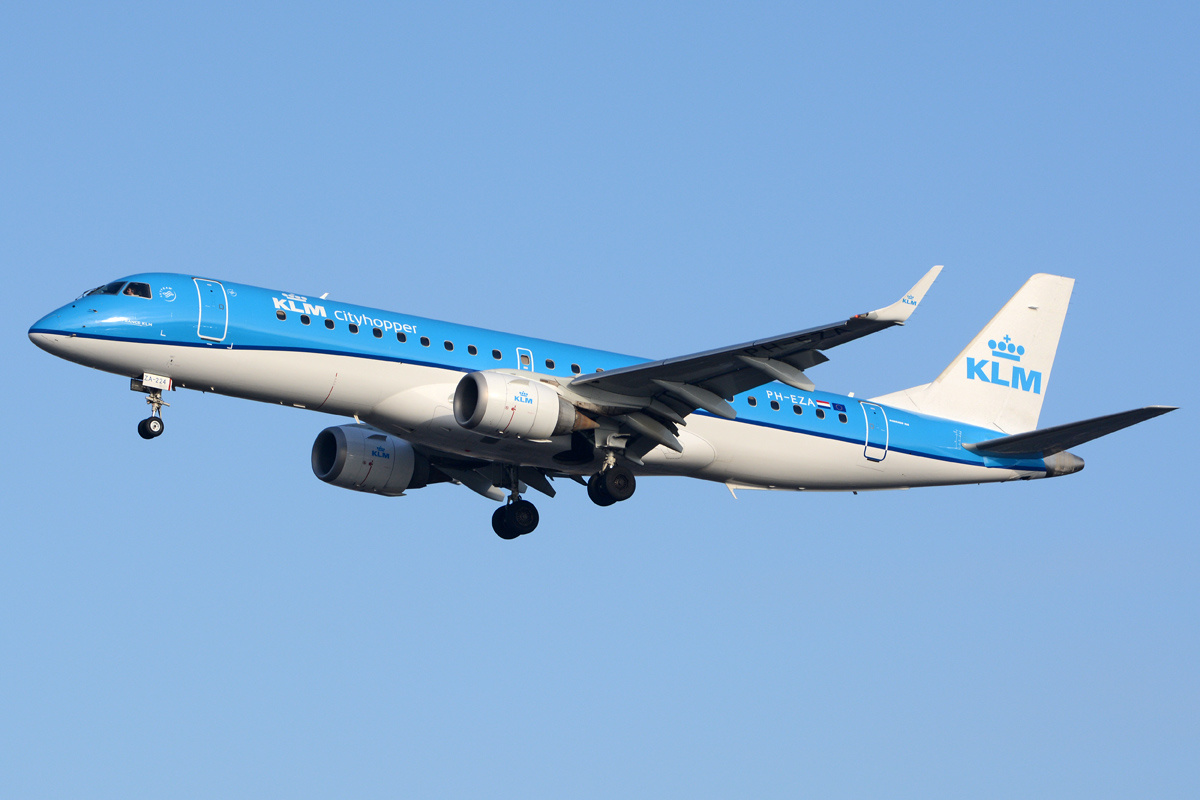
Historical Context & Origins
The Embraer E190, an integral part of the celebrated E-Jet family, emerges from a bold vision by Embraer, the Brazilian aerospace giant, to redefine the regional jet segment. After the success of the ERJ-135/140/145, the company felt the need for a larger aircraft, capable of offering airliner comfort on regional routes.
This ambition led to the genesis of the E-Jet program, officially launched in 1999, with the aim of creating a family of aircraft with high operational commonality but scalable dimensions. The E190 positioned itself as the flagship member for passenger capacity, aiming to bridge the gap between traditional regional jets and large narrow-body aircraft.
The first flight of the Embraer E190 occurred on March 12, 2004, marking a pivotal moment for commercial aviation. This event was not only the culmination of years of research and development, but also the beginning of a new era for regional air travel, promising efficiency and a dramatically superior passenger experience.
Architecture & Technological Design
The E190's design is a brilliant synthesis of innovation and engineering pragmatism. Its distinctive "double bubble" fuselage, designed to maximize interior space, allows for a 2+2 cabin configuration without center seats, a unique selling point that significantly elevates passenger comfort compared to competitors.
From a technological point of view, the E190 was a pioneer in its segment, adopting a complete Fly-by-Wire (FBW) system, a feature until then the prerogative of larger and more complex airliners. This system, integrated with the advanced Honeywell Primus Epic avionics suite, has improved safety, reduced pilot workload and optimized flight performance.
Powered by two General Electric CF34-10E turbofans, the E190 boasts remarkable power and efficiency. These engines, together with refined aerodynamics including high-aspect ratio wings and optimized winglets, allow it to operate with great flexibility on medium-range routes, combining high performance with low operating costs.
Onboard Specifications
- ◆Double-bubble cabin: 2+2 configuration that eliminates the middle seat, ensuring superior comfort and unmatched spaciousness for a regional jet.
- ◆Fly-by-Wire (FBW) Systems: Fully digital and advanced flight control, offering greater precision, stability and a significant reduction in workload for the crew.
- ◆Honeywell Primus Epic Avionics: A cutting-edge "glass cockpit" with multifunction display and intuitive interface, for superior situational awareness and optimized management of on-board systems.
Operational Career & Operators
The Embraer E190 has quickly found its place in the global aviation landscape, becoming a workhorse for numerous air carriers. Its ability to operate on medium density routes, offering the feel of a larger airliner, made it ideal for connecting smaller cities or integrating major networks.
Among the first and best-known operators were companies such as JetBlue Airways, which used it to expand its network without sacrificing the passenger experience, and Air Canada Express. Subsequently, leading European carriers such as Lufthansa CityLine and KLM Cityhopper adopted the E190, appreciating its efficiency and versatility.
The E190's operational career has been characterized by high reliability and the ability to adapt to different business models, from purely regional to "mainline" operations on longer routes. It has proven its worth in different geographical and climatic scenarios, earning a reputation for robustness and operational versatility.
Legacy & Cultural Impact
The Embraer E190 was not simply another regional jet; it represented a real revolution in the sector, redefining expectations for short and medium-range air transport. It proved that comfort, advanced technology and efficiency could coexist in a more compact format, blurring the lines between regional and airliner aircraft.
Its success laid the foundation for the development of the next generation, the E-Jet E2 family, which inherited and further refined the design and operational principles introduced by the E190. This consolidated Embraer's position as the world leader in the production of jets with up to 150 seats.
The E190 has left an indelible mark on the collective imagination of aviation enthusiasts and passengers. Its distinctive silhouette, the promise of comfortable travel without middle seats and its omnipresence in airports around the world make it a tangible symbol of Brazilian aeronautical engineering and its ability to innovate.
Telemetria Specs (HUD)
Hangar Trivia & Curiosità
- 💡L'E190 è stato il modello più grande della famiglia E-Jet originale, offrendo maggiore capacità di passeggeri e autonomia rispetto ai suoi fratelli minori (E170/E175).
- 💡Una delle caratteristiche più apprezzate dell'E190 è la configurazione dei sedili 2+2, che garantisce a tutti i passeggeri un posto lato corridoio o finestrino, eliminando il disagio del posto centrale.
- 💡Il primo volo dell'Embraer E190 è avvenuto il 12 marzo 2004, e da allora è diventato un pilastro per molte compagnie aeree regionali e mainline che cercano efficienza su rotte con domanda intermedia.
Archivio Avvistamenti Spotter
Immagini scattate dalla community in tutto il mondo