E175
Embraer
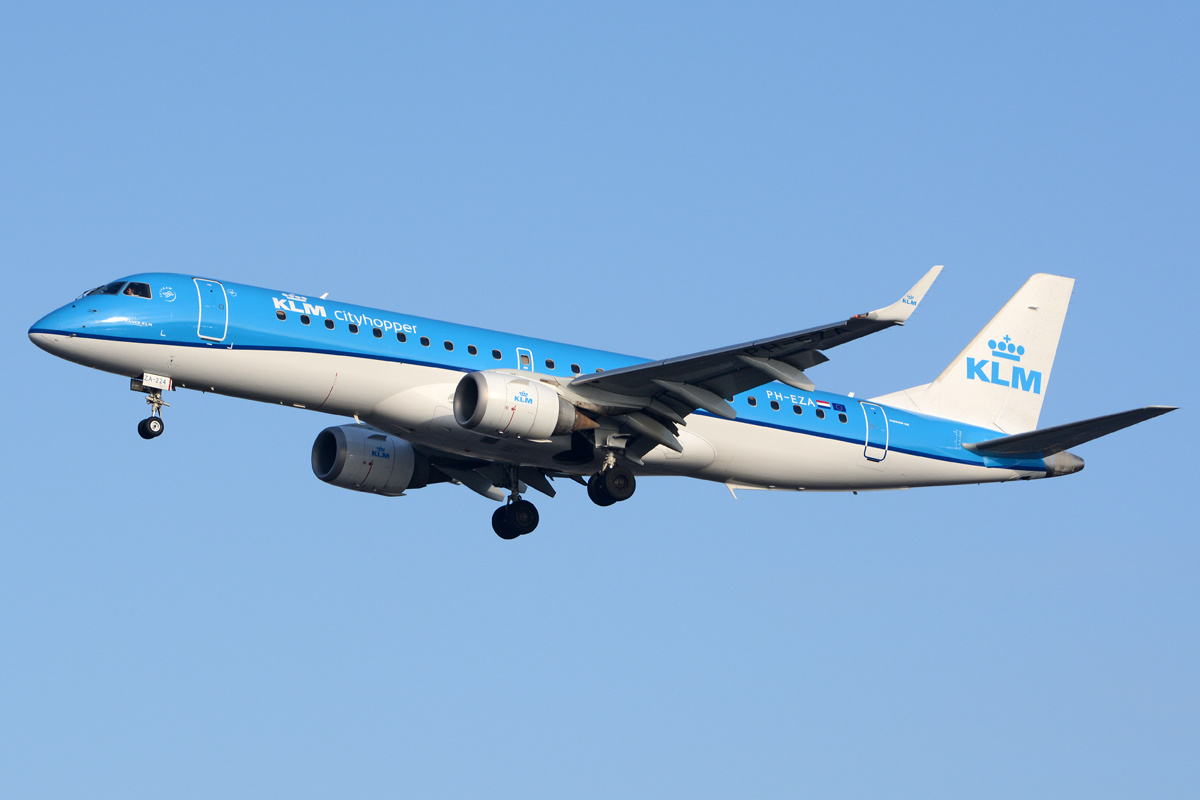
Historical Context & Origins
The start of the 21st century marked an era of profound transformation for regional air travel, with airlines seeking greater operational efficiency, superior comfort and flexibility. In this dynamic scenario, the Brazilian company Embraer has been able to seize the opportunity, launching the ambitious E-Jets program, a family of aircraft designed to redefine the standards of the regional sector.
The first flight of the E175 occurred in June 2003, just one year after its smaller "brother" E170, consolidating Embraer's vision of offering a modular range. The E175 was not simply a stretched version, but represented a strategic response to the growing needs of the North American and global markets for a regional aircraft capable of offering the feel and comfort of a jetliner, while maintaining the economic advantages of an optimized size aircraft.
Architecture & Technological Design
The Embraer E175 embodies a design philosophy focused on aerodynamic efficiency and passenger experience. Its distinctive "double-bubble" cross-section fuselage was a true innovation, allowing for wider aisles and spacious seats, ensuring a superior travel experience compared to direct competitors in the regional segment.
The wing design, optimized for efficiency at cruising speeds typical of regional flights, combines with an advanced propulsion and control system. The E175 is equipped with two General Electric CF34-8E turbofan engines, known for their reliability, relative silence and fuel efficiency, essential characteristics for the profitability of short and medium range operations.
Onboard Specifications
- ◆Double-bubble cabin: Unique in its segment, this fuselage cross-section maximizes interior space, offering passengers comfort and seating width comparable to mainline jets.
- ◆Fly-by-Wire (FBW) Controls: Fully electronic flight control system that digitizes the interface between the pilot and control surfaces, improving precision, reducing pilot workload and optimizing flight performance in various conditions.
- ◆Operational Commonality: High degree of sharing of parts, systems and flying procedures among various members of the E-Jet family, which significantly lowers flight crew training and maintenance costs for airlines operating multiple models.
Operational Career & Operators
The Embraer E175 has quickly established a dominant position in the regional jet segment, becoming a favorite choice for numerous airlines, particularly in the United States. Its capacity of approximately 76 passengers (in a typical two-class configuration) made it the ideal aircraft to operate under the so-called "scope clauses".
These contract clauses, prevalent at North American airlines, limit the capacity and maximum takeoff weight of regional jets operated by partner carriers, precisely where the E175 fits perfectly. Leading carriers such as American Eagle, Delta Connection and United Express have made the E175 the mainstay of their regional networks, liking its reliability, versatility and competitive operating costs.
Legacy & Cultural Impact
The E175 is not simply an airplane; it is a symbol of the revolution in regional air travel, having transformed flying expectations for millions of passengers. It demonstrated that even short-haul flights can offer a high-quality passenger experience, overcoming the perception of inconvenience often associated with previous generation regional jets.
Its impact is measurable not only in terms of millions of passengers transported in comfort and on time, but also in how it has shaped the strategies of global airlines. The E175 cemented Embraer's reputation as a leading innovator, setting a new benchmark and influencing the design of future regional aircraft worldwide.
Telemetria Specs (HUD)
Hangar Trivia & Curiosità
- 💡L'E175 è estremamente popolare negli Stati Uniti a causa delle 'scope clauses' nei contratti dei piloti, che limitano la dimensione massima degli aerei operati dalle compagnie regionali.
- 💡Fa parte della famiglia di E-Jet, nota per il suo design a 'doppia bolla' della fusoliera, che offre un corridoio e sedili più ampi rispetto ad altri jet regionali.
- 💡Presenta controlli 'fly-by-wire' avanzati, che migliorano la manovrabilità, riducono il carico di lavoro del pilota e aumentano la sicurezza operativa.
Archivio Avvistamenti Spotter
Immagini scattate dalla community in tutto il mondo