Dragon Rapide
de Havilland
Historical Context & Origins
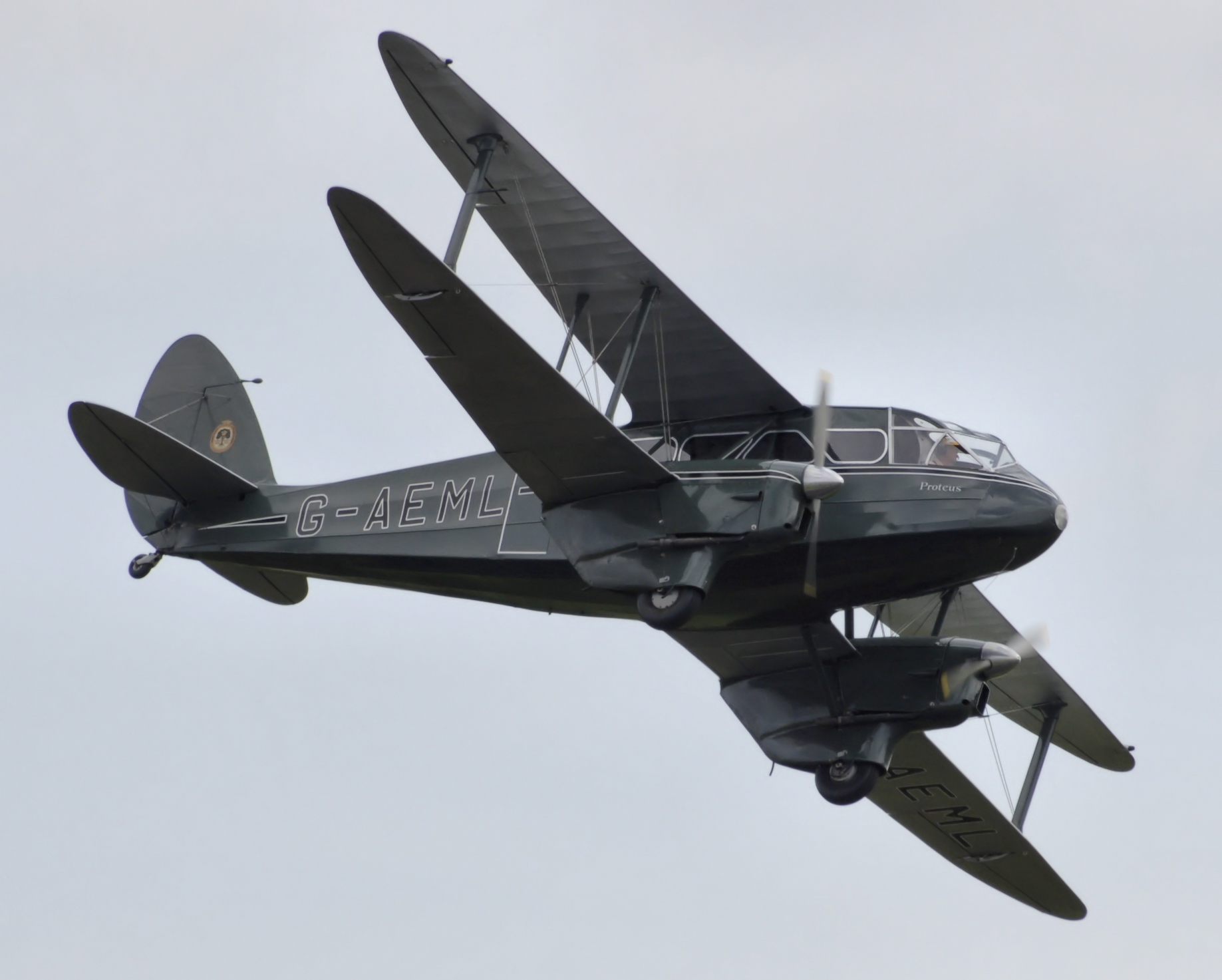
The legendary de Havilland Dragon Rapide, with its first flight in 1934, emerged in an era of fervent expansion for civil aviation, dominated by the growing demand for efficient and accessible air connections. De Havilland, already a pioneer in the sector, aimed to create a more powerful and capable successor to its DH.84 Dragon, maintaining its philosophy of simple design and economical construction.
The genesis of the Dragon Rapide answered a pressing need for a regional airliner that was not only reliable, but also incredibly versatile. It was intended to serve short and medium routes, operate from less well-equipped airports, and offer affordable maintenance, features critical to the expansion of air travel in the 1930s.
Architecture & Technological Design
The Dragon Rapide is a classic example of a British twin-engine biplane, renowned for its timeless aesthetics and robust engineering. Its structure was based on the established de Havilland tradition of using wood and canvas, an approach that ensured lightness, strength and remarkable ease of repair, making it ideal for remote and resource-limited operations.
Powered by two de Havilland Gipsy Six inline engines of 200 hp each, the Rapide combined respectable performance with exceptional operating economy. The wing configuration, with the upper wing slightly larger than the lower one, optimized lift and provided the pilot with excellent visibility, a crucial aspect for safety and maneuverability.
The design included a fixed carriage and a traditional tail, emphasizing simplicity and reduced manufacturing and maintenance costs. Despite the absence of modern hydraulic systems or retractable landing gear, the Rapide was a reliable workhorse, loved for its intuitive handling and its ability to land on unprepared runways.
Onboard Specifications
- ◆Wooden and canvas construction: Guarantee of structural lightness and ease of repair in the field.
- ◆Versatile passenger cabin: Configurable for 6-8 passengers or for cargo/medical transport, with large windows.
- ◆Dual controls: Equipped for pilot training or dual crew operations, increasing safety and flexibility.
Operational Career & Operators
The de Havilland Dragon Rapide quickly became the aircraft of choice for regional airlines and charter services around the world. Iconic airlines such as Imperial Airways and pre-war British Airways employed it extensively, connecting small cities and islands with major hubs. Its versatility was unmatched, serving as an air taxi, mail plane and even a flying ambulance.
During World War II, the Rapide took on a crucial new role. Hundreds were requisitioned or built for the Royal Air Force (RAF) and other armed forces, redesignated DH.89B Dominie. They were used for training of navigators and radio operators, light transport of personnel and cargo, and for communications tasks, demonstrating its incredible robustness even in extreme conditions.
Its reliability and low operating costs kept it in service well beyond the war, with many examples continuing to fly for private and charter companies well into the 1960s and beyond. It was a true "pack mule" of the skies, essential for logistics and transport in an era of great change.
Legacy & Cultural Impact
The de Havilland Dragon Rapide isn't just a plane; it is an icon, a timeless symbol of the golden age of British civil aviation. Its elegant design and reliable performance have helped democratize air travel, making it accessible to a wider audience and connecting previously isolated communities.
Even today, the Dragon Rapide exerts a powerful appeal on enthusiasts and pilots. Numerous examples have been restored and continue to fly on special occasions and air shows, the distinctive hum of its Gipsy Six engines evoking a sense of nostalgia and admiration for the aeronautical engineering of a bygone era.
Her long and varied career, from pre-war passenger transport to military duties and post-war charter service, is testament to her extraordinary longevity and adaptability. The Dragon Rapide remains a living testament to de Havilland's design brilliance and his lasting impact on the history of world aviation.
Telemetria Specs (HUD)
Hangar Trivia & Curiosità
- 💡Il Dragon Rapide fu ampiamente utilizzato dalla Royal Air Force e dalla Royal Navy durante la Seconda Guerra Mondiale, spesso designato come 'Dominie', principalmente per l'addestramento alla radio e alla navigazione, le comunicazioni e il trasporto leggero.
- 💡Era il successore diretto e più aerodinamicamente raffinato del precedente de Havilland Dragon, caratterizzato da ali affusolate e una migliore profilatura, che si traducevano in prestazioni superiori e un aspetto più elegante.
- 💡Notevolmente, nonostante la sua età, un certo numero di Dragon Rapide rimangono aeronavigabili e volano attivamente ancora oggi, quasi nove decenni dopo il suo volo inaugurale, fungendo da popolari aerei d'epoca nelle manifestazioni aeree.
Archivio Avvistamenti Spotter
Immagini scattate dalla community in tutto il mondo