DHC-8-400 Q400
Bombardier
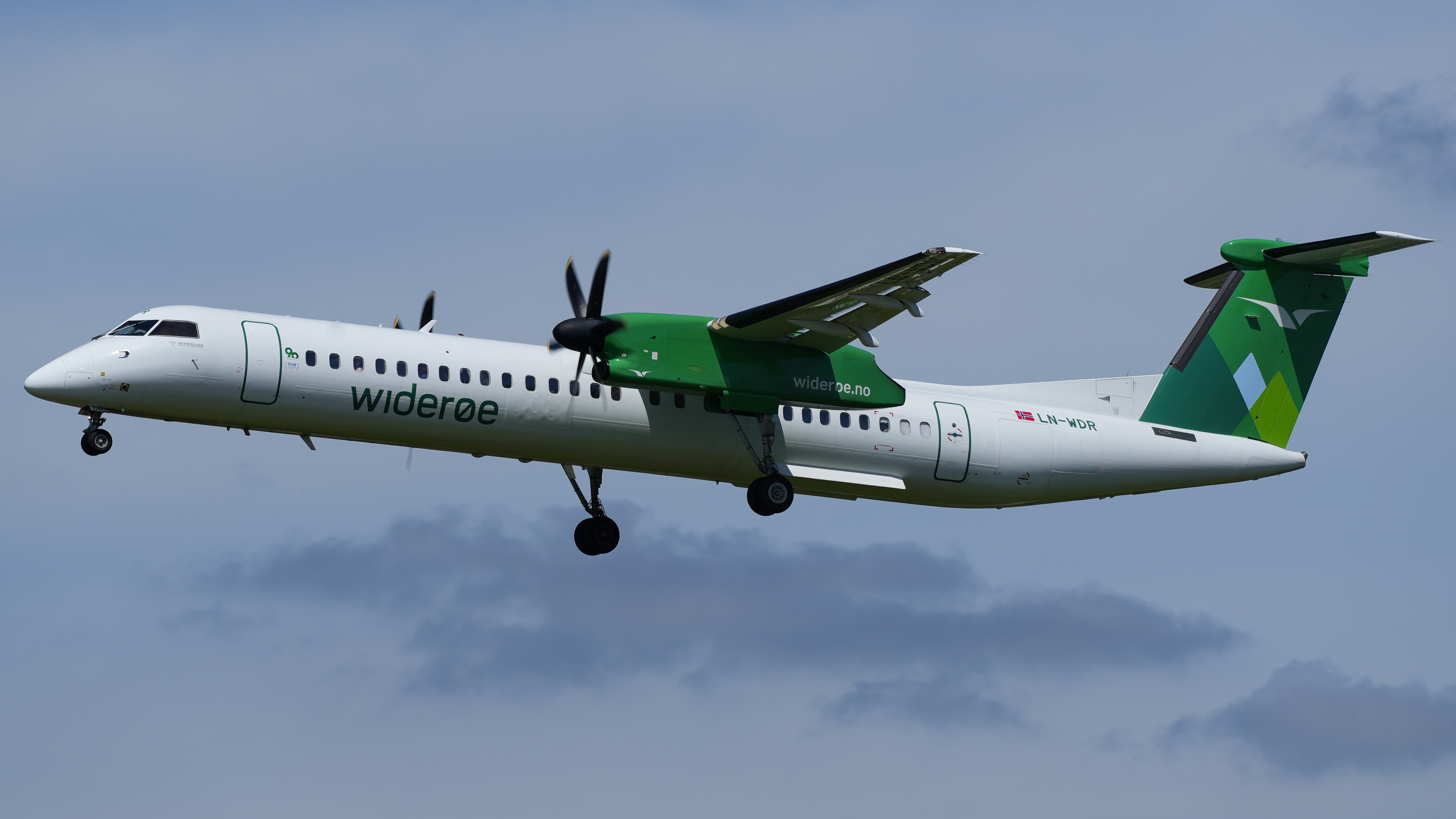
Historical Context & Origins
The lineage of the De Havilland Canada Dash 8, heir to the venerable DHC-7, has always been a cornerstone in regional aviation. Towards the end of the 90s, with the growing demand for faster and more capable aircraft for expanding regional routes, Bombardier – then owner of DHC – realized the urgent need for a radical evolution of its famous turboprop.
The answer was DHC-8-400, universally known as Q400. The letter "Q" stands for "Quiet", a clear indicator of its mission: not only to be bigger and faster, but also to raise passenger comfort to levels comparable to regional jets, thus overcoming turboprop stereotypes. Its first flight occurred in 1998, ushering in a revolutionary era.
The ambitious goal was to blend the inherent efficiency of turboprops with near-jet flight performance, bridging the gap between slower propeller-driven aircraft and regional jets. The Q400 was meticulously designed for medium-range routes, with the firm intention of redefining the standards of speed, comfort and operating costs for a propeller-driven aircraft.
Architecture & Technological Design
The Bombardier Q400 stands as a true masterpiece of aeronautical engineering, designed to maximize efficiency and speed in equal measure. Its distinctive architecture is based on a stretched fuselage and wings specifically optimized for high speeds, while maintaining excellent short takeoff and landing capabilities. The distinctive T-tail design and large wing surfaces contribute to superior stability in every phase of flight.
At the heart of its formidable propulsion system beat two powerful Pratt & Whitney Canada PW150A engines, each capable of delivering an impressive 5,071 horsepower. These are coupled to large-diameter, constant-speed six-bladed propellers, which provide exceptional thrust and, thanks to refined engineering, remarkable efficiency even at the highest cruising altitudes.
The real technological revolution of the Q400 lies in its pioneering Active Noise and Vibration Control (ANC) system. Sensors and actuators, strategically distributed throughout the cabin, actively generate opposing sound waves to effectively cancel out noise and vibration, providing an incredibly quiet and comfortable flying experience for a propeller-driven aircraft.
Onboard Specifications
- ◆Active Noise and Vibration Control (ANC): A cutting-edge system that drastically reduces noise and vibration in the cabin, raising passenger comfort to levels unthinkable for a turboprop.
- ◆High operating speed: With a cruising speed of approximately 667 km/h (360 knots), the Q400 is recognized as the world's fastest turboprop, openly challenging the performance of regional jets.
- ◆Short take-off and landing capability (STOL-like performance): Despite its size, it is able to operate with surprising effectiveness from short runways, making it ideal for regional airports with limited infrastructure.
Operational Career & Operators
Since its inception, the Bombardier Q400 has quickly established a dominant position in the regional aviation market. Its unrivaled combination of speed, efficiency and comfort has made it the preferred choice for countless airlines in every corner of the globe, determined to expand and optimize their regional networks. It has established itself as a flagship aircraft for point-to-point flights and for feeding larger hubs.
International carriers such as Porter Airlines, SAS, Luxair, Flybe (before its discontinuation) and Ethiopian Airlines have made the Q400 an indispensable pillar of their fleets. Its extraordinary versatility allows it to operate in a vast range of climatic and geographical conditions, from harsh Scandinavian winters to scorching African skies, without compromise.
Its inherent reliability and low operating costs, significantly lower than regional jets, combined with the ability to carry up to 90 passengers, have allowed the Q400 to thrive, effectively connecting communities and cities that would otherwise have enjoyed limited or no air service.
Legacy & Cultural Impact
The Bombardier Q400 made an indelible mark on the regional aviation landscape, unequivocally redefining expectations for turboprops. He persuasively demonstrated that the efficiency of a propeller aircraft must never compromise speed or comfort, thus challenging the consolidated supremacy of jets on certain and specific routes.
With its innovative ANC technology, it has raised the standard of regional air travel, making it tangibly more accessible and enjoyable for millions of passengers every year. Although the program was subsequently sold by Bombardier to De Havilland Canada (part of Longview Aviation Capital), the Q400 continues to take to the skies undeterred and play an absolutely crucial role.
His lasting legacy lies in the compelling demonstration that technological innovation can significantly extend the life and relevance of traditional aeronautical concepts. The Q400 remains a shining example of how advanced technology can forge intrinsically sustainable and high-performance solutions to the complex challenges of aviation, forever cementing its reputation as a true pioneer of the regional sky.
Telemetria Specs (HUD)
Hangar Trivia & Curiosità
- 💡The 'Q' in Q400 stands for 'Quiet,' referring to its Active Noise and Vibration Suppression (ANVS) system, which significantly reduces cabin noise compared to earlier Dash 8 models.
- 💡It is one of the fastest turboprop aircraft in service, often achieving cruise speeds comparable to some smaller regional jets.
- 💡Despite its turboprop engines, the Q400 can operate efficiently from smaller regional airports with shorter runways, offering excellent versatility for airlines.
Archivio Avvistamenti Spotter
Immagini scattate dalla community in tutto il mondo