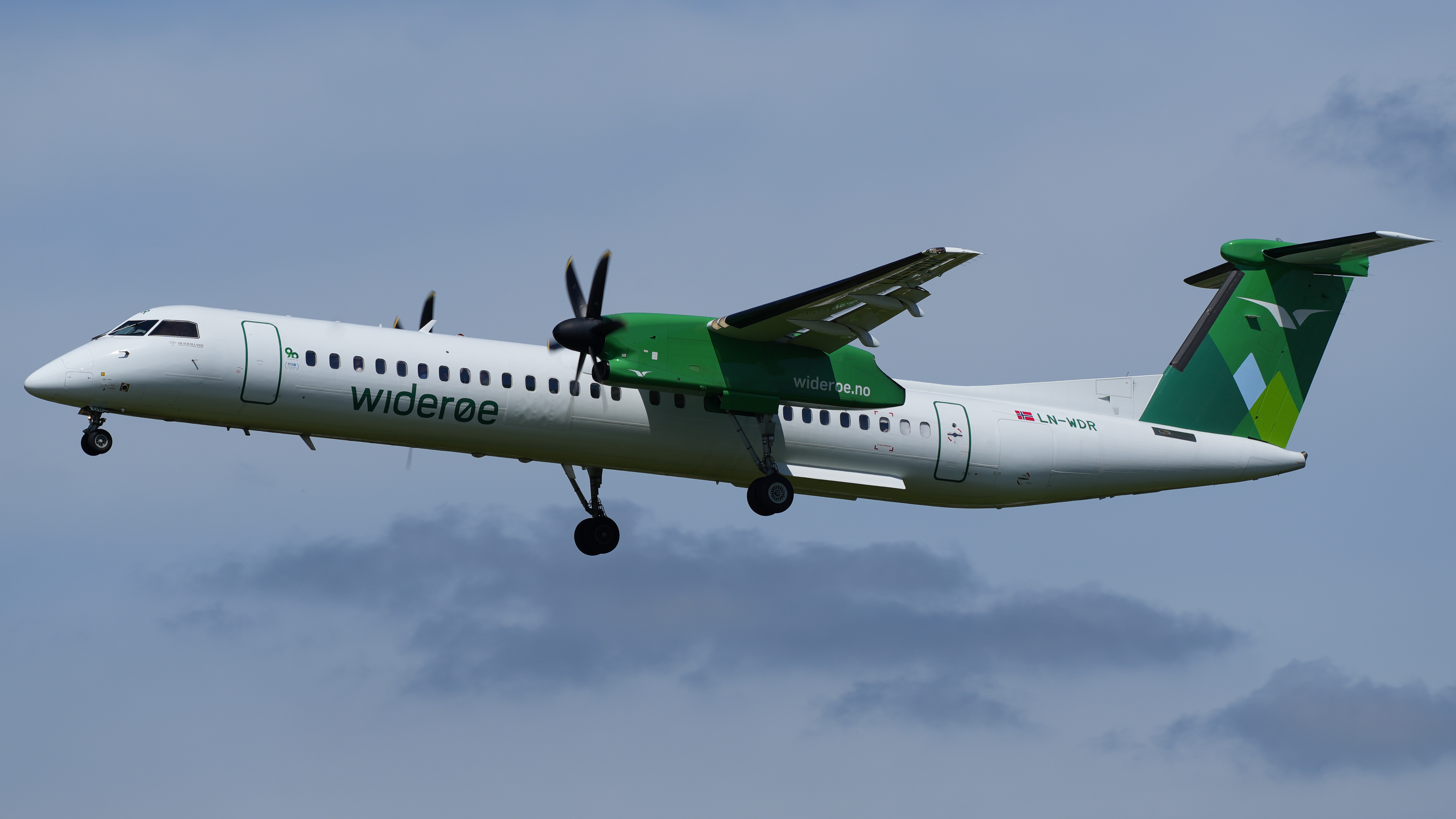
DHC-8-300
de Havilland Canada
Historical Context & Origins
The de Havilland Canada DHC-8, better known as Dash 8, has been a milestone in regional aviation since its conception. Designed to address the needs of short-haul routes with efficiency and reliability, initial variants such as the -100 and -200 quickly established themselves as industry leaders thanks to their robust performance and ability to operate on short runways.
Growing demand for greater passenger capacity and range, without sacrificing the series' acclaimed operational characteristics, pushed de Havilland Canada to develop a larger version. This evolution led to the birth of the DHC-8-300, an aircraft destined to further redefine the standards of regional air transport.
The DHC-8-300 made its first flight in 1989, marking the beginning of a new chapter for the Dash 8 family. This model capitalized on the success of its predecessors, introducing significant improvements that broadened its appeal and versatility on the global market, positioning itself as an optimal solution for medium-distance transportation.
Architecture & Technological Design
The architecture of the DHC-8-300 is a masterful example of applied aeronautical engineering. Its distinctive feature lies in the elongated fuselage, a good 3.43 meters longer compared to the -100, bringing the passenger capacity to a maximum of 50-56 seats. This volumetric increase has been integrated while maintaining the exceptional aerodynamics and short take-off and landing (STOL) performance of the Dash 8 family.
At the heart of its performance are the powerful Pratt & Whitney Canada PW123B turboprop engines, each capable of delivering 2,500 shp. These engines, combined with highly efficient six-bladed Dowty propellers, provide an excellent combination of cruising speed of approximately 520 km/h (280 knots), fuel efficiency and low noise, crucial for regional operations and passenger satisfaction.
One of the most significant innovations introduced with the -300, and then extended to other "Q" (Quiet) variants, is the ANVS (Active Noise and Vibration Suppression) system. This revolutionary technology actively monitors vibrations and cabin noise, neutralizing them with opposite-phase sound waves, ensuring significantly higher acoustic comfort than traditional turboprops.
Onboard Specifications
- ◆Elongated fuselage for greater passenger capacity (up to 56)
- ◆ANVS system (Active Noise and Vibration Suppression) for superior acoustic comfort
- ◆Pratt & Whitney Canada PW123B 2,500 shp engines for power and efficiency
Operational Career & Operators
The DHC-8-300 quickly solidified its reputation as a workhorse at numerous regional airlines around the world. Its ruggedness, reliability and ability to operate effectively in different climatic and infrastructure conditions, including unprepared runways or airports with noise restrictions, have made it extremely popular among operators.
Carriers such as Porter Airlines, Air Canada Jazz, QantasLink and Flybe are just a few examples of operators who have relied on the Dash 8-300 to build their regional networks, connecting communities and cities with efficient and convenient flights. Its versatility has seen it employed in a wide range of roles, from scheduled passenger transport to specialist cargo services, demonstrating remarkable adaptability.
Its long range, extending up to 1,530 km, and competitive cruising speed for a turboprop have made it ideal for routes exceeding 500-600 kilometres, connecting medium cities and major hubs. Its proven operational safety and low operating costs have been key factors in its enduring global commercial success.
Legacy & Cultural Impact
The legacy of the DHC-8-300 in the regional aviation landscape is undeniable and profound. It convincingly demonstrated that turboprop aircraft can offer a comfortable and quiet travel experience, dispelling myths related to the noise and vibrations typical of older models. Its influence is clearly visible in the development of subsequent generations of turboprops.
The success of the -300 paved the way for further innovations within the Dash 8 family, culminating in the larger and faster Q400. This cemented Bombardier's (which acquired de Havilland Canada) position as the undisputed leader in the regional turboprop segment, a role in which the DHC-8-300 played an integral and pioneering role.
Even today, many DHC-8-300s continue to be actively flown in various parts of the world, a testament to their extraordinary durability and forward-thinking design. It represents a symbol of how Canadian engineering has responded to the challenges of regional air transportation, leaving an indelible mark on the history of commercial aviation and the perception of turboprop travel.
Telemetria Specs (HUD)
Hangar Trivia & Curiosità
- 💡È spesso indicato come 'Q300', dove la 'Q' sta per l'incorporazione di un sistema attivo di soppressione del rumore e delle vibrazioni (ANVS), che rende la sua cabina notevolmente più silenziosa.
- 💡Il DHC-8-300 fu originariamente prodotto da de Havilland Canada, poi da Bombardier Aerospace, e ora è prodotto da De Havilland Aircraft of Canada Limited (DHC).
- 💡Il suo primo volo nel 1989 lo rese un significativo aggiornamento in termini di capacità e prestazioni all'interno della serie di successo Dash 8 di turboelica regionali.
Archivio Avvistamenti Spotter
Immagini scattate dalla community in tutto il mondo
Vettori Rilevati (Flotta Attiva)


Air Dolomiti
In Flotta: x12 u.

Air Creebec
In Flotta: x2 u.
Perimeter Aviation
In Flotta: x16 u.
Widerøe
In Flotta: x15 u.
Air New Zealand
In Flotta: x6 u.
Jazz Air
In Flotta: x10 u.
Central Mountain Air
In Flotta: x9 u.

CommuteAir
In Flotta: x15 u.
Voyageur Airways
In Flotta: x4 u.Vettori Rilevati (Flotta Storica / Dismessa)

R1 Airlines
Stato: Dismesso

ANA Wings
Stato: Dismesso

Hamburg Airlines
Stato: Dismesso
PAL Airlines
Stato: Dismesso
BWIA West Indies Airways
Stato: Dismesso
Tyrolean Airways
Stato: Dismesso

Flybe
Stato: Dismesso
Dutch Caribbean Airlines
Stato: Dismesso
Piedmont Airlines
Stato: Dismesso
Eastern Airways
Stato: Dismesso