DHC-6 Twin Otter
de Havilland Canada
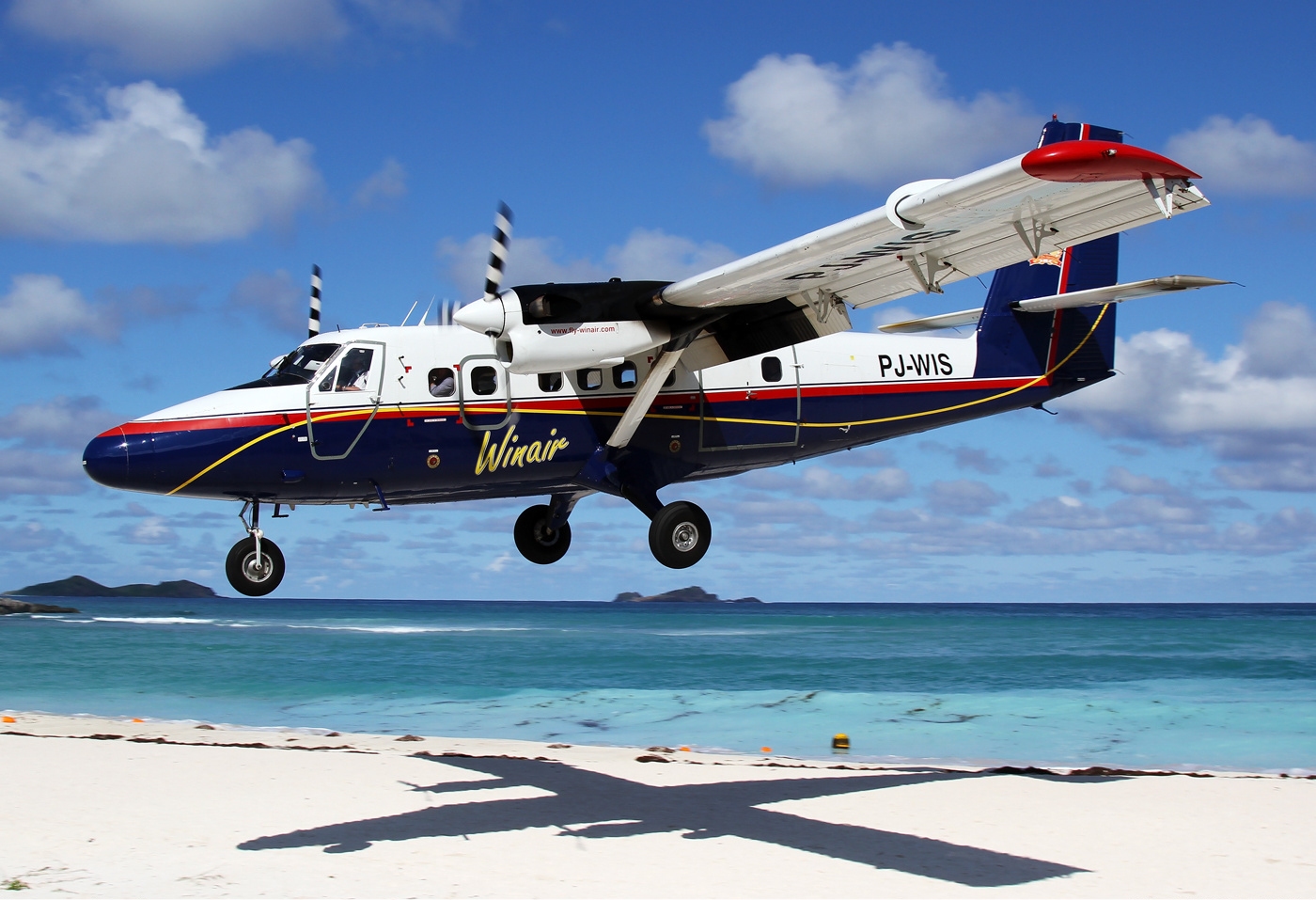
Historical Context & Origins
Post-war, Canada needed rugged, reliable aircraft to connect its vast and often inhospitable regions. De Havilland Canada had already distinguished itself with successful STOL (Short Take-Off and Landing) models such as the DHC-2 Beaver and DHC-3 Otter, but growing demand required greater capacity and greater operational safety, especially for remote routes.
The de Havilland Canada DHC-6 Twin Otter was born from this need, designed to overcome the limitations of its single-engine predecessors by offering increased redundancy and power. The project aimed to combine exceptional STOL capabilities with the reliability of turbine engines, opening new frontiers for aviation in extreme environments.
The first flight occurred on 20 May 1965, marking the beginning of a legend. From the outset, the Twin Otter demonstrated its inherent qualities: robustness, versatility and an extraordinary ability to operate from improvised runways, making it the ideal aircraft for bush pilots and regional airlines around the world.
Architecture & Technological Design
The architecture of the DHC-6 is a triumph of pragmatic engineering focused on functionality in extreme conditions. Its high-wing configuration provides excellent low-speed lift and clear visibility for pilots, while its robust and simple fixed tricycle landing gear makes it ideal for operations on unprepared surfaces.
The technological heart of the Twin Otter lies in its twin-turbine propulsion. Equipped with two Pratt & Whitney Canada PT6A engines, universally recognized for their reliability and exceptional performance even at high altitudes and extreme temperatures, the aircraft ensures constant power and redundancy vital for safety.
The structural versatility is further highlighted by the ability to adapt the trolley to different configurations. The DHC-6 can in fact be quickly equipped with skis for snow operations or floats for water landings, transforming it into a seaplane or skiplane, capabilities that exponentially amplify its range and applications.
Onboard Specifications
- ◆Structural robustness and damage tolerance: Designed to withstand high flight cycles and unprepared runway operations, reducing maintenance needs in remote environments.
- ◆Modularity and multi-role configurations: Interiors easily reconfigurable from passenger (up to 19 seats) to cargo, air ambulance or R&D platforms, maximizing operational flexibility.
- ◆PT6A Engine Reliability: Twin turboprop engines known for their efficiency, ease of maintenance and consistent performance across a wide range of climate and elevation conditions.
Operational Career & Operators
The Twin Otter's operational career is extraordinary, spanning more than five decades and spanning every corner of the globe. It has become an icon in the Arctic and Antarctic regions, where its ability to land on ice and snow makes it irreplaceable for scientific research and logistical transport.
Over 900 units have been produced, serving hundreds of operators, from small regional airlines connecting remote islands, such as the famous Trans Maldivian Airways with its fleet of seaplanes, to armed forces and humanitarian organizations. Its presence is constant in scenarios ranging from the Amazon rainforests to the peaks of the Himalayas.
Its unparalleled ability to operate from very short runways, often less than 300 meters long, on any type of surface, has made it the preferred means of transport for accessing otherwise unreachable places. This operational flexibility has cemented its reputation as the true workhorse of utility aviation.
Legacy & Cultural Impact
The legacy of the DHC-6 Twin Otter is deep and lasting. It is not simply an airplane, but a symbol of reliability and autonomy, a bridge to geographical isolation. Its continued production by Viking Air Limited since 2008 with the Series 400 series, is a testament to its design validity and uninterrupted market demand.
The Twin Otter has shaped the way remote communities interact with the outside world, enabling the transportation of essential goods, medical evacuation and the promotion of tourism in pristine places. Its unmistakable silhouette and the distinctive hum of its engines have become an integral part of the aural and visual landscape of multiple cultures.
For aviation enthusiasts, the DHC-6 represents an icon: an aircraft that defies convention and demonstrates that true engineering excellence lies in simplicity, robustness and the ability to get the job done in any conditions. It's a tribute to Canada's vision of connecting the world, one makeshift runway landing at a time.
Telemetria Specs (HUD)
Hangar Trivia & Curiosità
- 💡Molti Twin Otter sono utilizzati in Antartide per ricerca scientifica e logistica, grazie alle loro capacità STOL e all'operatività con sci da neve.
- 💡La produzione originale cessò nel 1988. Viking Air ne ha acquisito il certificato di tipo, rilanciando la produzione di una versione modernizzata (Serie 400) nel 2008.
- 💡Detiene il record per il volo di linea programmato più breve del mondo, tra Westray e Papa Westray nelle Isole Orcadi scozzesi, della durata di poco più di un minuto.
Archivio Avvistamenti Spotter
Immagini scattate dalla community in tutto il mondo
