DHC-2 Beaver
de Havilland Canada
Historical Context & Origins
In the turbulent post-war era, Canada needed an airplane capable of tackling its vast and inhospitable northern frontiers. De Havilland Canada, with a deep understanding of local needs, took on the challenge of creating a "flying truck", a robust and versatile aircraft for transporting people and goods to remote areas.
The result was the DHC-2 Beaver, designed to excel in extreme conditions, where improvised runways, frozen lakes and rivers were the only landing spots. Its first flight, which took place on 16 August 1947, marked the beginning of a legend in bush aviation.
This aircraft was specifically designed by listening to direct suggestions from bush pilots, who requested features such as STOL (Short Take-Off and Landing) capability, ease of maintenance and the ability to operate with different landing gear configurations. A vision that would have decreed its global success.
Architecture & Technological Design
The Beaver's architecture is a hymn to functionality and resistance, characterized by an all-metal structure which guarantees its reliability in harsh environments. La sua configurazione ad ala alta non solo offre una visibilità superiore ma contribuisce anche alle eccezionali qualità di volo lento e di decollo/atterraggio corto.
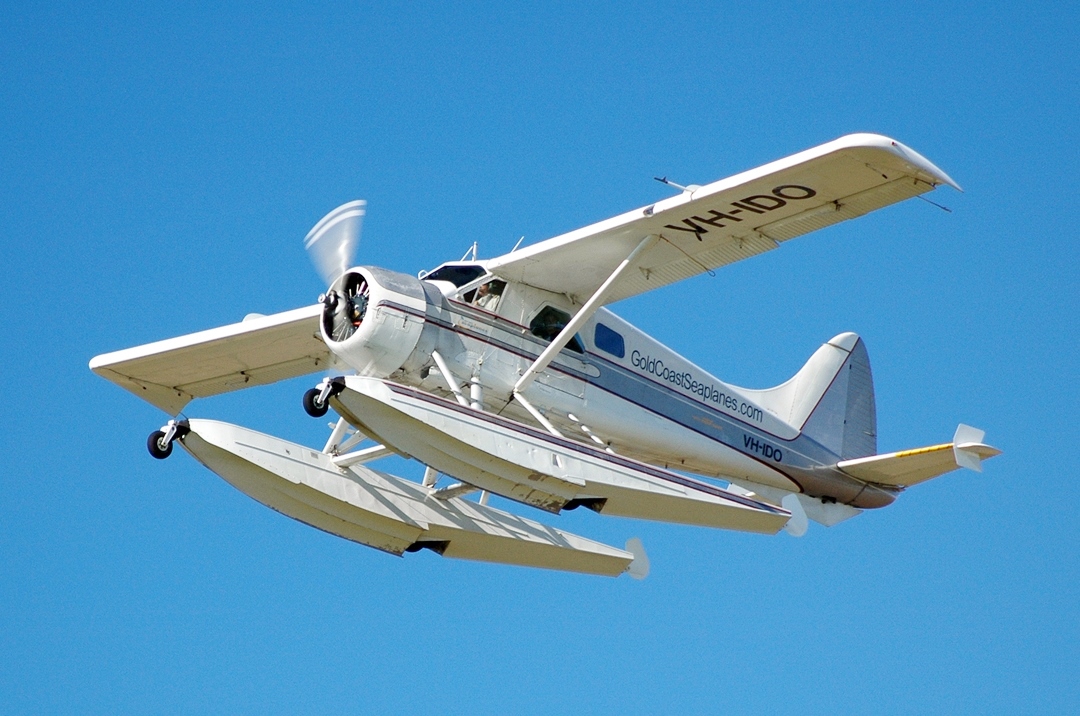
The design provided for inherent versatility, allowing the aircraft to be equipped with wheels for conventional runways, skis for snow and ice, or floats (sometimes amphibious) for water. This modularity made it indispensable for operations in any season and on almost any type of surface.
The DHC-2's design philosophy aimed to maximize payload capacity relative to empty weight, a crucial characteristic for a remote transport aircraft. Each component was engineered to be reliable and easy to repair in the field, minimizing downtime.
Onboard Specifications
- ◆Pratt & Whitney R-985 Wasp Jr. 450-horsepower Radial Engine: A rugged, proven powerplant renowned for its cold-weather reliability and ease of maintenance.
- ◆High wing design with Fowler flaps: This configuration maximizes lift and reduces stall speed, ensuring exceptional STOL performance and precise control at low speeds.
- ◆Reinforced structure for heavy loads and rough terrain: The entire airframe is designed to withstand extreme stresses, including rough landings and the transport of bulky equipment or passengers.
Operational Career & Operators
The DHC-2 Beaver quickly became the backbone of air operations in remote regions around the world, employed by loggers, mining companies, explorers and government services. Its ability to carry six passengers or significant cargo in confined spaces made it irreplaceable.
His reputation as an unstoppable "pack mule" earned him wide adoption even in the military. The US Army became the largest operator, using hundreds for liaison, observation, and search-and-rescue duties in Vietnam and other global missions.
With over 1,600 produced, the Beaver has served in more than 60 nations, from the jungle to the poles, demonstrating unmatched versatility and operational longevity. Many of these aircraft are still in service today, a testament to their extraordinary robustness and the foresight of their design.
Legacy & Cultural Impact
The de Havilland Canada DHC-2 Beaver isn't just an airplane; it is an icon, a symbol of Canadian ingenuity and wilderness adventure. Its unmistakable silhouette, often immortalized on remote lakes or in forests, has entered the collective imagination as a synonym for exploration and resilience.
Its impact extends beyond aviation, influencing popular culture and inspiring generations of aviators and adventurers. The Beaver demonstrated that a well-designed aircraft, focused on functionality and durability, can overcome fads and maintain its relevance for decades.
Even today, the DHC-2 is widely loved and used, with a vibrant community of enthusiasts and operators celebrating its history and capabilities. The Beaver's legacy continues to fly, embodying the indomitable spirit of an era when aeronautical engineering broke new ground.
Telemetria Specs (HUD)
Hangar Trivia & Curiosità
- 💡The DHC-2 Beaver was the first aircraft designed and built entirely by de Havilland Canada, breaking away from designs based on its British parent company.
- 💡Over 1,600 Beavers were produced, and a significant number are still flying today, a testament to its durable design and utility.
- 💡The U.S. Army was a major operator, acquiring hundreds of Beavers under the designation L-20, using them extensively for liaison and utility roles.
Archivio Avvistamenti Spotter
Immagini scattate dalla community in tutto il mondo