DH.4A
Airco
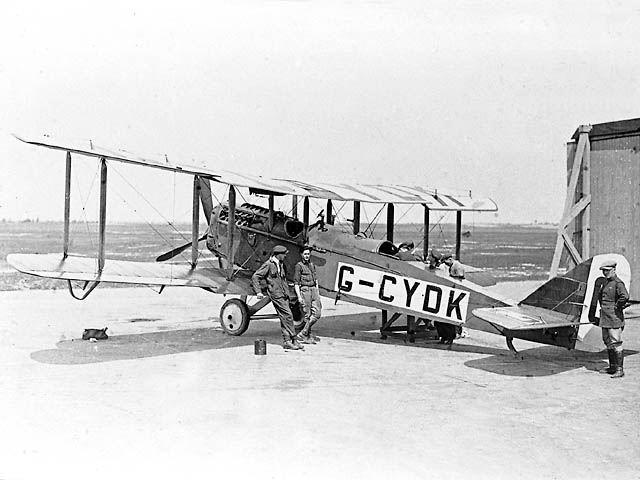
Historical Context & Origins
The Airco DH.4A traces its roots to the illustrious Airco DH.4, a two-seat light bomber and reconnaissance aircraft that distinguished itself as one of the Royal Air Force's most effective aircraft during the First World War. Designed by the legendary Geoffrey de Havilland, the DH.4 was renowned for its speed and robustness, but the end of the conflict left a significant surplus of these aircraft.
The cessation of hostilities led to the search for new applications for aeronautical technologies and decommissioned military aircraft. It was in this context that the idea of converting the high-performance DH.4 for civilian purposes took shape. The goal was ambitious: to transform an agile warplane into a pioneer of passenger and postal transport.
The first flight of the DH.4A in 1919 marked the beginning of a new era. This plane was not just a modification, but a true reinterpretation that embodied the hope and innovation of a post-war period projected towards the future of commercial aviation.
Architecture & Technological Design
The DH.4A maintained the essential biplane architecture of its military predecessor, characterized by a canvas-covered wooden structure, a proven design that guaranteed lightness and resistance. However, the modifications for civilian use were profound and aimed at maximizing comfort and efficiency for the new roles.
The most significant innovation was the introduction of a completely enclosed passenger cabin for one or two occupants, positioned where the gunner's and bombardier's positions had previously been located. This offered unprecedented protection from the elements, raising the standard of travel for the time and making flying accessible to a wider audience.
The powerful engine, often the Rolls-Royce Eagle VIII with 360 horsepower, was maintained and refined to ensure exceptional reliability and performance. This propulsion, combined with a refined aerodynamic design, allowed the DH.4A to reach remarkable speeds and cover considerable distances, fundamental characteristics for nascent commercial air services.
Onboard Specifications
- ◆Enclosed and soundproof passenger cabin: A crucial innovation for comfort and protection from noise and the elements.
- ◆Rolls-Royce Eagle VIII Engine: Delivering reliable power and high performance, essential for early commercial flights.
- ◆Versatile Cargo Capacity: Designed to carry one or two passengers, or a sizable volume of mail or light cargo.
Operational Career & Operators
The DH.4A quickly became a major player in the very first commercial air services. It was the pivotal aircraft used to inaugurate the first regular international air mail service, connecting London and Paris, a historic event which demonstrated the feasibility and efficiency of long-distance air transport.
Pioneering operators such as Air Transport & Travel (AT&T) and Instone Air Line employed the DH.4A extensively. These planes not only transported mail quickly, but also began offering passenger flights, ushering in the era of air travel as we know it today, albeit in an embryonic form.
Its reliability and performance helped establish public confidence in air travel, overcoming initial reservations and fears. Each successful flight completed by the DH.4A was a step forward in establishing civil aviation as a viable and promising means of transportation.
Legacy & Cultural Impact
The Airco DH.4A was not simply an airplane; he was a pioneer of commercial aviation, a true icon who shaped the future of air transport. He successfully demonstrated that aircraft could be transformed from instruments of war into vehicles of civil and economic progress.
Its role in opening international air routes and setting the standards for early passenger and postal services is indelible. It laid the foundation for the development of larger and more complex passenger aircraft, influencing generations of aeronautical engineers and designers.
The DH.4A's legacy lies in its boldness and vision. A symbol of transition, it reminds us of the ingenuity and determination that made the dream of commercial flight possible, transforming the sky from a battlefield to a highway for global trade and connection.
Telemetria Specs (HUD)
Hangar Trivia & Curiosità
- 💡Nato come bombardiere diurno della Prima Guerra Mondiale, il DH.4 fu riconvertito per usi civili dopo il conflitto.
- 💡Fu tra i primi aerei a operare servizi di posta aerea internazionali, inclusa la rotta Londra-Parigi.
- 💡La versione DH.4A poteva trasportare uno o due passeggeri in una cabina chiusa, oltre al pilota.
Archivio Avvistamenti Spotter
Immagini scattate dalla community in tutto il mondo