DH.18
de Havilland
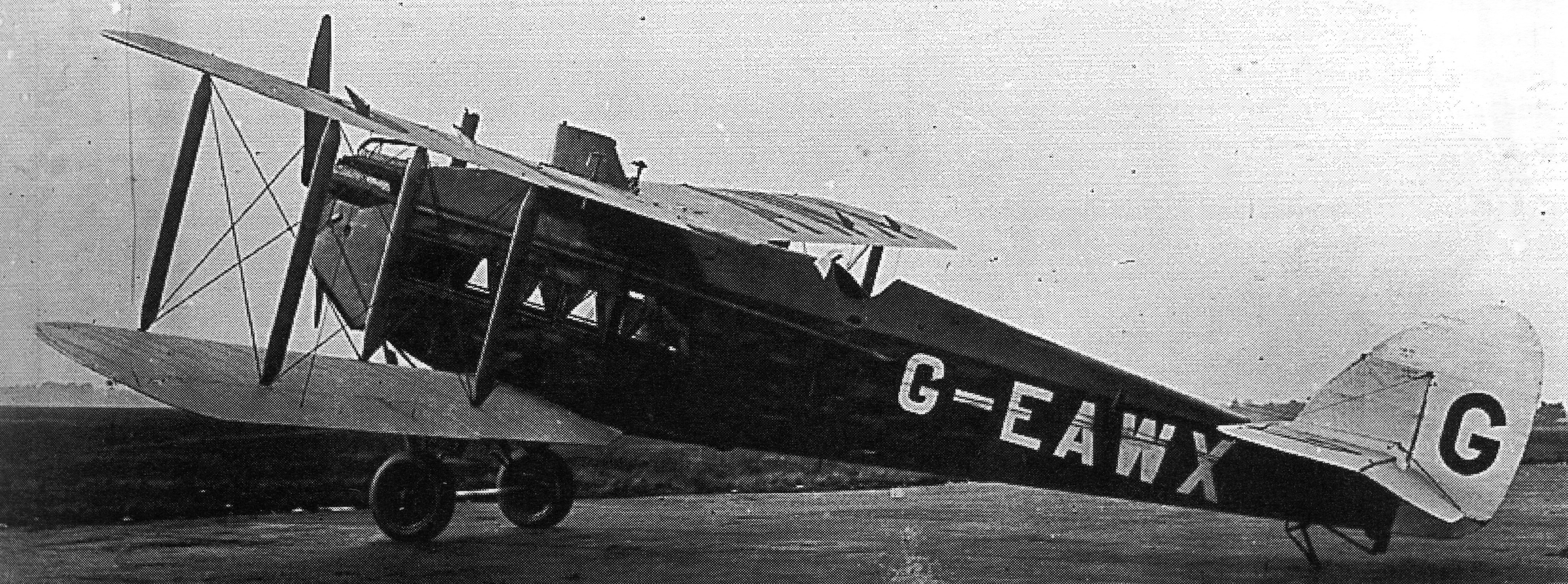
Historical Context & Origins
The dawn of the 1920s marked a crucial period for aviation, transitioning from military dominance to the civilian sector. With the end of the Great War, the de Havilland Aircraft Company, founded by the brilliant Geoffrey de Havilland, aimed to convert war technology into peaceful applications. The pressing need for aircraft dedicated to passenger transport emerged.
De Havilland, with a far-sighted vision, concentrated on specific aircraft for the civil sector. The de Havilland DH.18 was the first genuine British airliner, designed for the growing demands for fast and reliable connections, particularly on trans-Channel routes. Its first flight occurred in 1920, inaugurating a fundamental chapter in the history of commercial aviation and demonstrating its feasibility.
Architecture & Technological Design
The DH.18 was a conventional biplane, made primarily of wood and canvas, standard materials of the time. Its design emphasized sturdiness and reliability for transporting people and goods. The single-wing configuration and fixed landing gear reflected the best construction practices of the time, ensuring operational stability essential for commercial use.
One of the most distinctive and revolutionary features was its passenger cabin. Unlike many contemporary aircraft that offered open seating, the DH.18 boasted an enclosed, heated cabin, an almost unthinkable luxury at the time. This attention to comfort and protection from the elements was a huge step forward for the travel experience.
The beating heart of the DH.18 was the powerful Napier Lion engine, a liquid-cooled 12-cylinder W-shaped engine, capable of delivering approximately 450 horsepower. This choice guaranteed the power necessary to carry a considerable payload and crucial reliability for commercial flights, allowing the aircraft to operate with adequate safety margins.
Onboard Specifications
- ◆Enclosed and heated passenger cabin: A revolutionary luxury for traveler comfort, offering protection from cold and noise.
- ◆450 HP Napier Lion Engine: A powerful and proven powerplant, ensuring adequate performance and operational reliability.
- ◆Capacity for 8 passengers: A significant number for the time, setting a new standard for scheduled air travel.
Operational Career & Operators
The de Havilland DH.18 quickly entered service with Aircraft Transport and Travel Ltd and later with Instone Air Line. These operators deployed the aircraft on vital routes between London and Paris, establishing the first regular international scheduled air links in Europe and demonstrating its pioneering operational viability.
The operational career of the DH.18 was not without challenges. Notably, the G-EAWO crash in 1922 made it the first British airliner to crash in regular service, although without casualties. This event, although tragic, highlighted the need to improve safety standards, pushing the industry towards greater attention to regulation.
Only six examples of the DH.18 were built, making it a relatively rare but extremely influential aircraft. Despite their limited numbers, each aircraft helped define operational practices, technical challenges and passenger expectations in commercial aviation, laying the foundation for future developments in the industry.
Legacy & Cultural Impact
The de Havilland DH.18, with its pioneering enclosed cabin and its role in early international air routes, left an indelible mark on aviation history. It demonstrated that passenger air transport was a commercially and technically feasible reality, helping to shape the public perception of flying from an adventurous undertaking to a reliable and, albeit embryonic, comfortable means of transport.
Its impact extended beyond individual flights, directly influencing de Havilland's future designs. The lessons learned from the DH.18 were instrumental in the development of successful successors such as the DH.34 and DH.66 Hercules, which would further cement the company's reputation in civil aviation. The DH.18 represents a true archetype of the modern airliner, a bastion of British ingenuity and a symbol of pioneering daring.
Telemetria Specs (HUD)
Hangar Trivia & Curiosità
- 💡It was among the first British purpose-built commercial airliners after World War I, marking a transition from converted military aircraft.
- 💡Only six DH.18 aircraft were ever built, underscoring its role as an early experimental design for commercial services.
- 💡A DH.18 was tragically involved in the world's first mid-air collision between two airliners on April 7, 1922, over Picardy, France.
Archivio Avvistamenti Spotter
Immagini scattate dalla community in tutto il mondo