DH.106 Comet 4
de Havilland
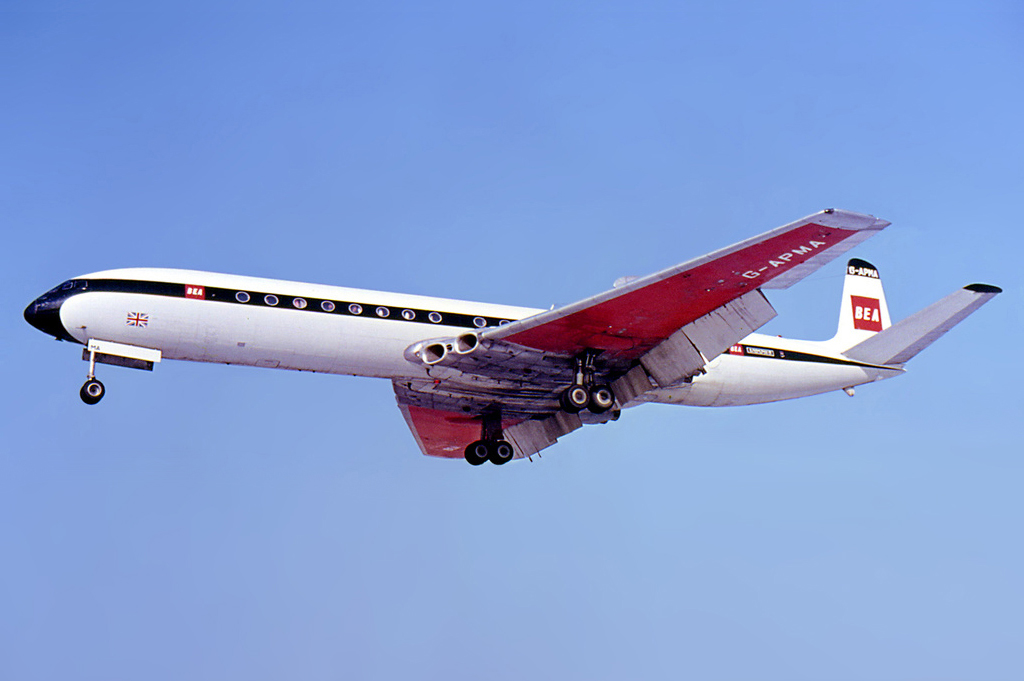
Historical Context & Origins
The de Havilland Comet was the world's first jet airliner, ushering in a new era in air travel with its first flight in 1949. Despite initial excitement, a series of tragic accidents between 1953 and 1954, caused by metal fatigue and stress concentration around the square windows, ended its career prematurely.
From these painful lessons was born the determination to redeem the dream of jet flight, leading to the redesign and engineering of a greatly improved version. The Comet 4, which made its first flight in 1958, was not just an aircraft, but a demonstration of British resilience and innovation in the face of adversity.
Architecture & Technological Design
The Comet 4 represented a quantum leap in safety and reliability compared to its predecessors. De Havilland engineers applied fail-safe design principles and dramatically strengthened the fuselage structure, using thicker sheet metal and oval windows to eliminate critical structural weaknesses.
Under the wings, the Comet 4 was powered by four powerful Rolls-Royce Avon Mk 524 turbojet engines, which provided greater thrust, efficiency and, crucially, greater autonomy. This combination of power and structural strength allowed the aircraft to tackle long-range routes with unprecedented safety and speed for the time.
The aerodynamic architecture, although similar in general lines to previous Comets, benefited from refinements that further improved performance. Its ability to fly at higher altitudes and higher speeds offered passengers a smoother and more comfortable travel experience, away from weather turbulence.
Onboard Specifications
- ◆Reinforced Structure and Fail-Safe Principles: Redesigned fuselage with thicker sheet metal and enhanced structural strength to prevent metal fatigue.
- ◆Rolls-Royce Avon Mk 524 engines: Four advanced turbojets that provided greater thrust and extended operational range, making it competitive on transatlantic routes.
- ◆Pressurized cockpit with oval windows: Elimination of critical structural stress points, ensuring greater safety and comfort for passengers at high altitudes.
Operational Career & Operators
The Comet 4 quickly restored faith in jet aviation, inaugurating the first commercial transatlantic jet route for BOAC (British Overseas Airways Corporation) in October 1958, beating the introduction of the Boeing 707 by a few weeks. This was a moment of national pride and an engineering triumph.
Although its supremacy on long-haul routes was short-lived due to the arrival of larger aircraft such as the Boeing 707 and Douglas DC-8, the Comet 4 faithfully served numerous global airlines. Carriers such as BOAC, British European Airways (BEA), Aerolíneas Argentinas and East African Airways successfully employed it on several international routes.
The Comet 4 has flown for decades in both civilian and military roles, demonstrating its robustness and versatility. Its elegance and distinctive swept wing soared across the world, becoming a symbol of progress and a precursor to the global jet age.
Legacy & Cultural Impact
The legacy of the de Havilland Comet 4 is deep and complex, serving as a crucial bridge between the propellant and jet ages. It has demonstrated that, even after major setbacks, innovation and meticulous engineering can overcome seemingly insurmountable challenges, restoring public trust.
It shaped future aircraft design, making fail-safe principles and material fatigue analysis industry standards. Its contribution to aviation safety is invaluable, having set standards that still safeguard millions of passengers today.
The Comet 4 remains an aviation icon, a symbol of British resilience and innovation. It was not just a technological pioneer, but a vehicle that transported the world into the future of flight, leaving an indelible mark on the history of commercial aviation.
Telemetria Specs (HUD)
Hangar Trivia & Curiosità
- 💡The Comet 4 was a direct descendant of the world's first commercial jet airliner, the original Comet 1, which revolutionized air travel in 1952.
- 💡It famously inaugurated the first transatlantic jet passenger service in October 1958, with BOAC Flight BA712 from London to New York.
- 💡Despite its innovations, the Comet 4's commercial success was relatively short-lived due to the larger, more efficient Boeing 707 and Douglas DC-8 entering service shortly after.
Archivio Avvistamenti Spotter
Immagini scattate dalla community in tutto il mondo