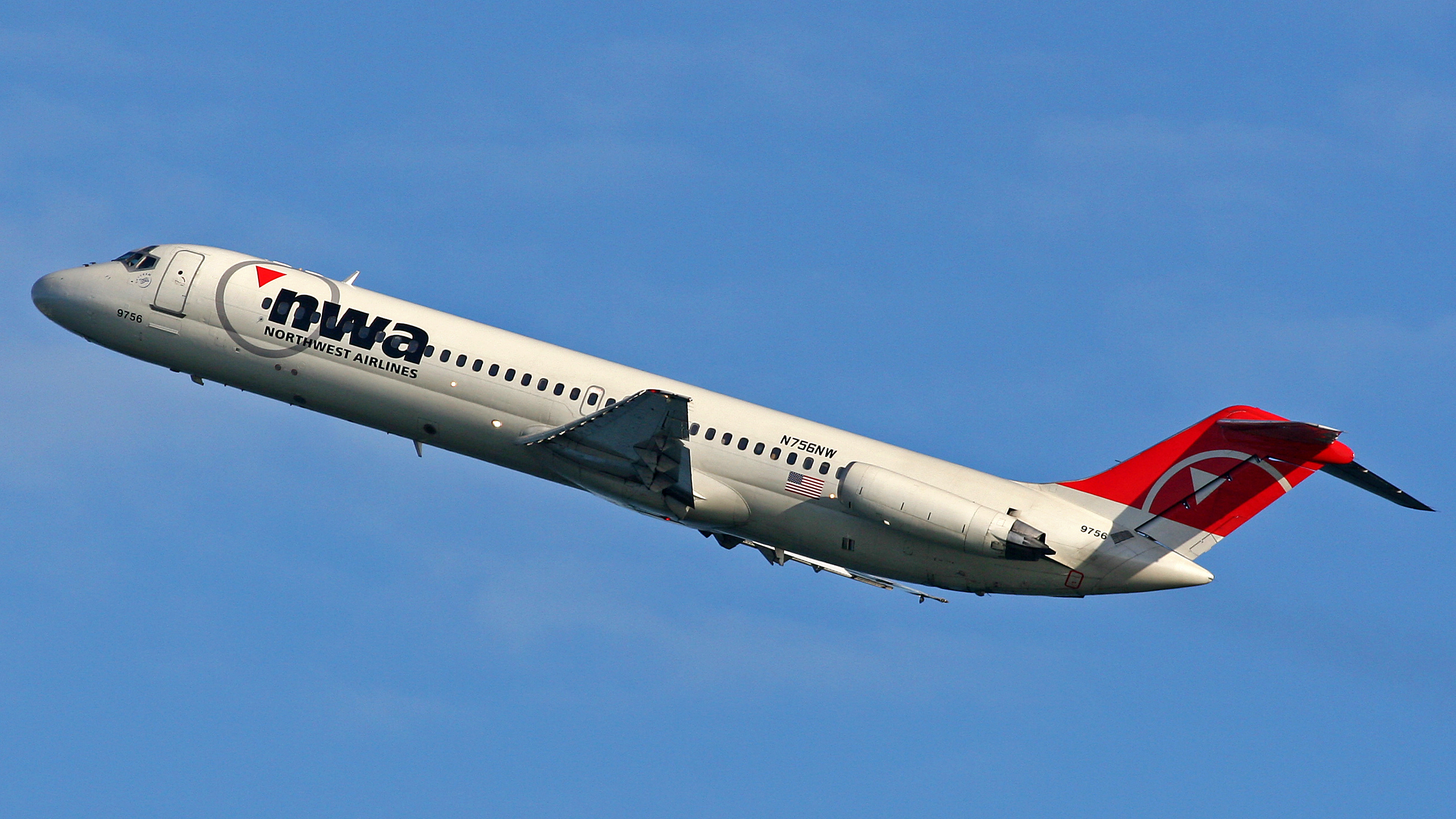
DC-9-40
Douglas
Historical Context & Origins
The early 1960s showed a clear need for smaller, more efficient jet aircraft for high-frequency regional routes. The Douglas DC-9 answered this question, offering an agile and economical jet solution compared to the transcontinental giants. The first flight of the original variant occurred in 1965.
The DC-9 series evolved rapidly. The DC-9-40, which made its first flight in 1967, represented a crucial evolution. It introduced a lengthened fuselage to increase passenger capacity on high-demand medium-range routes, while maintaining the excellent operating characteristics and efficiency of the base model.
Architecture & Technological Design
The Douglas DC-9-40 stood out for its avant-garde architecture, with a T-tail configuration and two rear turbofan engines. This arrangement ensured a quieter cabin and a "clean-wing", significantly improving aerodynamic efficiency and take-off and landing performance.
The lengthening of the fuselage of the -40 brought the length to approximately 36.3 meters, allowing it to accommodate up to 125 passengers in a typical configuration. Structural strength, combined with simplified onboard systems, made the DC-9-40 an extremely reliable and economical aircraft to operate, a key factor in its commercial success.
Onboard Specifications
- ◆Upgraded Pratt & Whitney JT8D engines: Essential for the thrust needed for the greater mass, ensuring reliability and performance.
- ◆Clean-wing design: Dramatically improves aerodynamic efficiency and reduces drag, contributing to lower fuel consumption.
- ◆Airbrakes integrated into the spoilers: Effective solution for landing deceleration, optimizing low-speed flight management.
Operational Career & Operators
The DC-9-40 found rapid success with several airlines, cementing its reputation as a "workhorse" for regional transportation. Scandinavian Airlines System (SAS), the launch customer, used it extensively on European and Scandinavian routes, appreciating its versatility and reliability in different climatic conditions.
Other major airlines such as North Central Airlines and Ozark Air Lines in the United States, and Finnair in Europe, entrusted a large part of their fleet to the DC-9-40. Its ability to operate at airports with less developed infrastructure made it a valuable asset, expanding air connectivity and supporting traffic growth.
Legacy & Cultural Impact
The Douglas DC-9-40 left an indelible mark on commercial aviation, profoundly influencing the design of short-medium range jets. Its design philosophy, based on reliability, operational efficiency and low costs, was the blueprint for subsequent models of the MD-80 family and, later, the Boeing 717.
Even today, although many DC-9-40s have been retired, its technical and operational legacy endures. It significantly contributed to making air travel accessible, democratizing jet travel and connecting countless cities. This consolidated its status as an icon of 20th century commercial aviation.
Telemetria Specs (HUD)
Hangar Trivia & Curiosità
- 💡The DC-9 series was designed for rapid airport turnarounds, often featuring integral airstairs to reduce reliance on ground equipment.
- 💡The -40 series was one of the longest in the original DC-9 family, bridging the size gap before the development of the larger MD-80s.
- 💡Many DC-9-40s found a second life as dedicated cargo aircraft, extending their service careers significantly beyond passenger operations.
Archivio Avvistamenti Spotter
Immagini scattate dalla community in tutto il mondo