DC-9-10
Douglas
Historical Context & Origins
In the turbulent aviation landscape of the 1960s, a clear need emerged for smaller, more agile jet aircraft capable of operating on short-haul regional routes and from airports with less developed infrastructure. Giants of the sky like the Boeing 707 and the Douglas DC-8 were designed for long distances, leaving a void in the short-medium range jet segment.
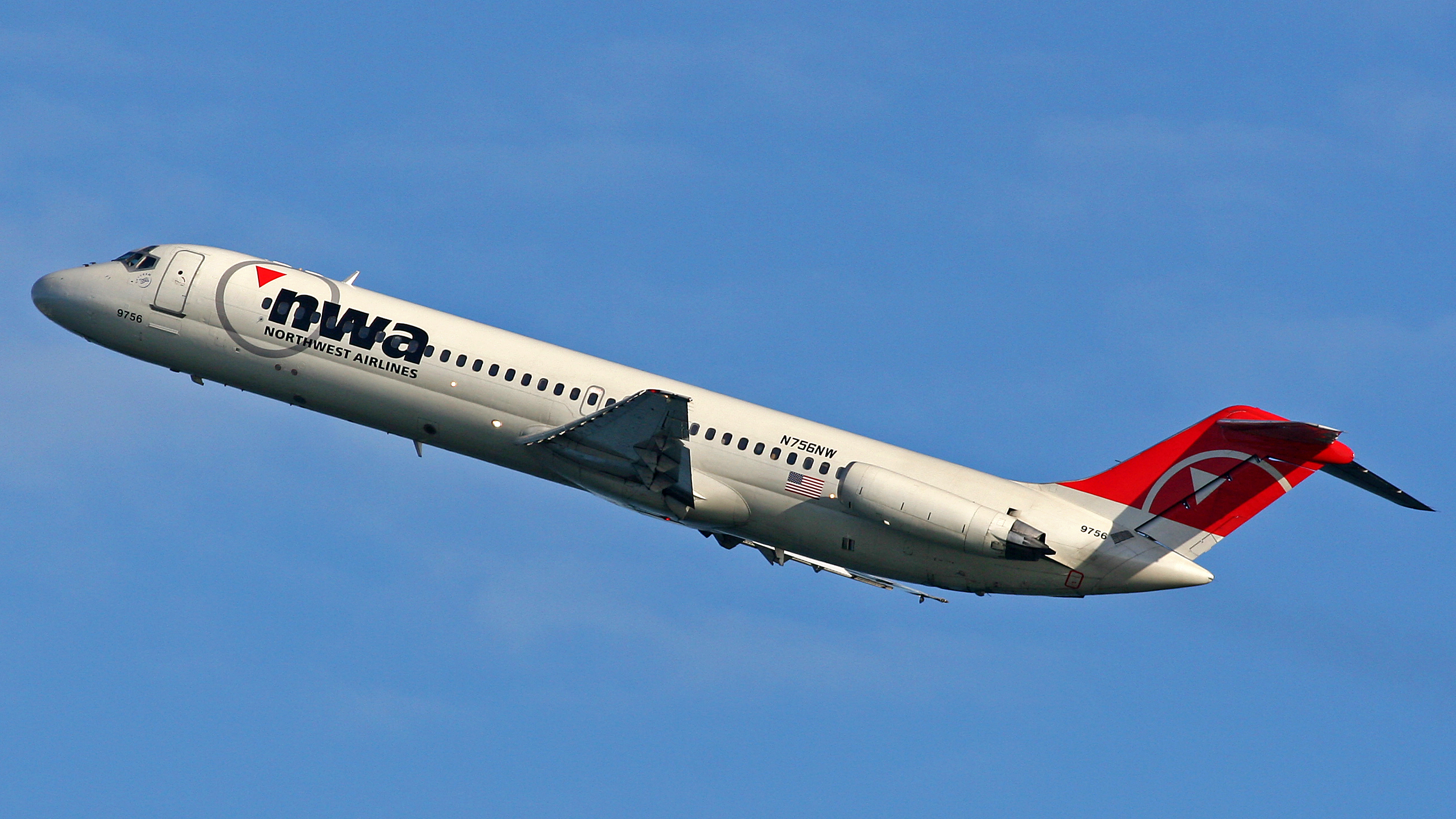
The Douglas Aircraft Company, already a world leader, responded to this challenge with a bold project: the DC-9. The Douglas DC-9-10, the inaugural and more compact variant, made its first flight on February 25, 1965, marking the beginning of a new era. This aircraft was specifically designed for maximum efficiency on short flights, giving carriers the flexibility to expand their networks.
Architecture & Technological Design
The DC-9-10 was distinguished by an innovative and incredibly functional design, which combined simplicity and operational efficiency. The tail-mounted Pratt & Whitney JT8D twin turbofan engine configuration and distinctive T-tail were not just a trademark, but engineering choices aimed at optimizing the wing's aerodynamics for short takeoff and landing (STOL) performance, while reducing cabin noise.
The structural robustness and modularity of the systems were central to its design, ensuring reliability and minimal maintenance times. This approach, combined with the ability to operate autonomously from the ground with an auxiliary power unit (APU), made it ideal for quick stopovers and less well-equipped airports, significantly reducing operating costs for airlines.
Onboard Specifications
- ◆Rear engines: The Pratt & Whitney JT8D-1 or JT8D-7 turbofans, positioned at the tail, freed the wing from bulky pylons, improving aerodynamic efficiency and flow cleanliness.
- ◆Moderate swept wing: Designed to maximize low-speed performance during takeoffs and landings, crucial for operations on shorter runways typical of the regional segment.
- ◆Aerodynamic brakes on the wings (spoilers): Used to increase aerodynamic drag during landing, ensuring fast and effective deceleration and precise roll control.
Operational Career & Operators
The Douglas DC-9-10 quickly entered service, with Delta Air Lines among its first and largest customers. Its efficiency, ease of maintenance, and ability to serve markets previously unattainable for jets made it an immediate success. Many other airlines, including Eastern Air Lines, TWA and numerous regional and international carriers, integrated the DC-9-10 into their fleets.
Its reliability became legendary, enabling high-frequency operations and helping to democratize air travel. It became a true "workhorse" for short- and medium-distance flights, demonstrating the validity of its design concept and operational superiority over many of its propeller-driven counterparts or less efficient early jets.
Legacy & Cultural Impact
The success of the DC-9-10 was the launching pad for one of the longest-serving and best-selling aircraft families in the history of commercial aviation. Its modular architecture allowed the development of numerous lengthened and improved variants, such as the DC-9-30, -40, and -50, and finally the subsequent MD-80, MD-90 series, and the Boeing 717.
The Douglas DC-9-10 was not just an airplane, but a true pioneer that redefined the concept of regional air travel. It has shaped entire airline networks, connecting smaller cities and making air travel accessible to millions of people. Its technical and operational legacy is still visible today, making it a pivotal and unforgettable chapter in aviation history.
Telemetria Specs (HUD)
Hangar Trivia & Curiosità
- 💡The DC-9 was specifically designed for quick turnarounds, featuring integral airstairs to reduce reliance on ground equipment and speed up boarding.
- 💡It was one of the most successful commercial jets to prominently feature a T-tail and rear-mounted engines, a layout optimized for clean wing airflow and reduced noise in the cabin.
- 💡The DC-9 series, including its MD-80/90 and Boeing 717 successors, represents one of the longest continuous production runs for a single aircraft design in aviation history.
Archivio Avvistamenti Spotter
Immagini scattate dalla community in tutto il mondo