DC-8 Series 50
Douglas
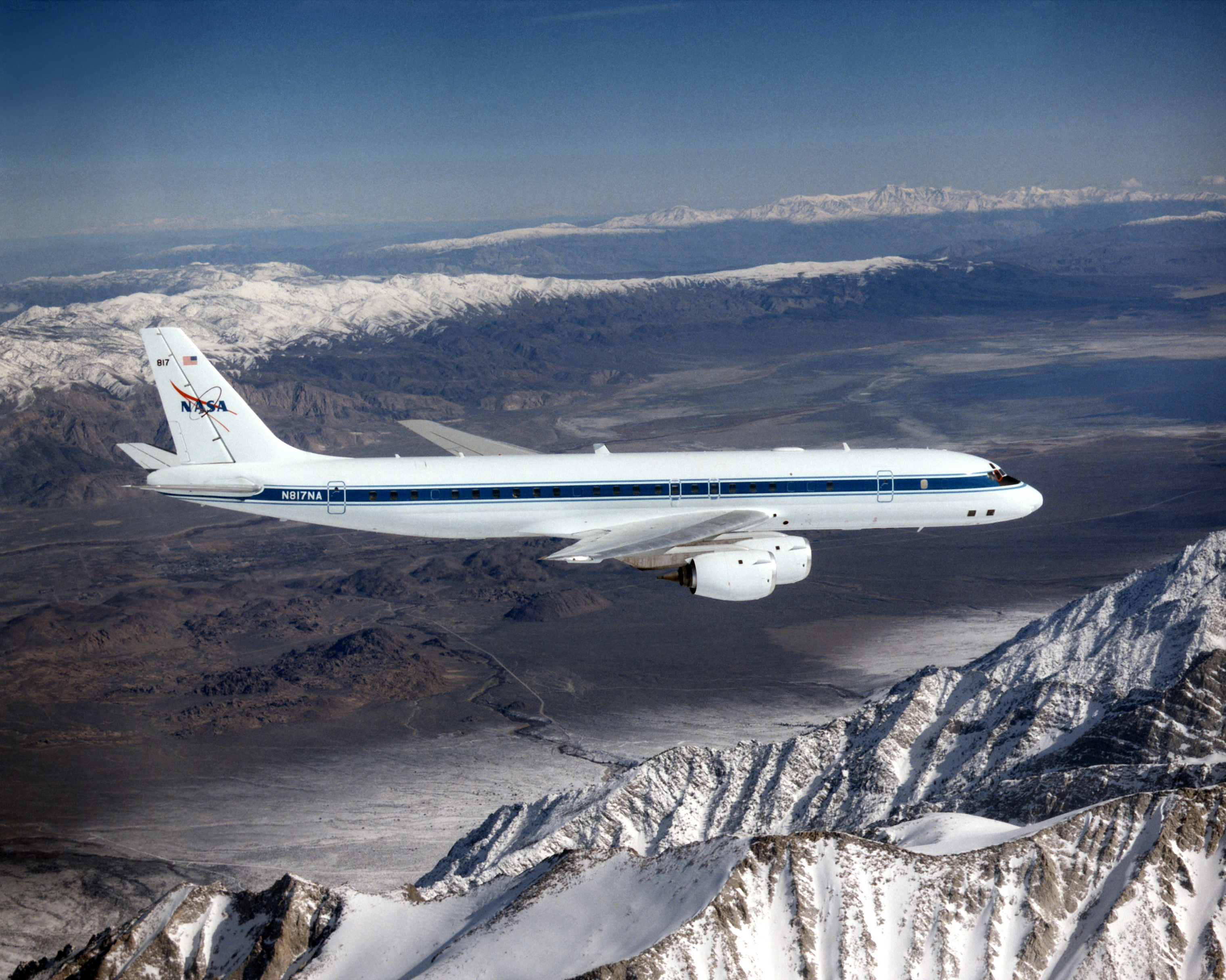
Historical Context & Origins
In the turmoil of the post-war era, commercial aviation aspired to greater speed and range, a challenge taken up by the new jetliners. The Douglas DC-8 emerged as a direct response to the success of the Boeing 707, marking Douglas Aircraft Company's entry into the competitive long-range jet aircraft market.
The original design of the DC-8 dates back to the mid-1950s, culminating with the first flight of the initial series in 1958. However, it was with the Series 50, which made its first flight in 1961, that the DC-8 reached crucial technological maturity, establishing itself as a mainstay of the world's air fleets.
This variant in particular introduced significant innovations, consolidating its position in a market dominated by the race for efficiency and capacity. The Series 50 became synonymous with technical advances that would redefine transcontinental and intercontinental air travel.
Architecture & Technological Design
The Douglas DC-8 Series 50 featured an elegant and functional design, characterized by a low swept wing and four engines mounted in underwing nacelles. This aerodynamic configuration, designed for high speeds and long distances, guaranteed stability and excellent performance in cruise flight.
The defining feature and major upgrade of the Series 50 was the introduction of turbofan engines, specifically the Pratt & Whitney JT3D. These new generation engines offered greater thrust than previous turbojets, with a significant improvement in fuel efficiency and a notable reduction in noise.
The adoption of turbofans allowed the DC-8 Series 50 to operate with extended ranges and lower operating costs, making it extremely attractive for airlines operating on transoceanic routes. Its robust structure was also designed for long operational life, which is crucial for operators.
Onboard Specifications
- ◆Pratt & Whitney JT3D turbofan engines: Critical to increased thrust, efficiency and noise reduction.
- ◆Aerodynamics optimized for long distances: Featuring swept wings and a streamlined design for transcontinental and intercontinental flights.
- ◆Advanced pressurization and air conditioning system: Guaranteed superior comfort for passengers during high-altitude and long-duration flights.
Operational Career & Operators
The Douglas DC-8 Series 50 quickly entered service with numerous prestige airlines around the world, including United Airlines, Delta Air Lines and SAS. These carriers used it extensively on their most profitable routes, appreciating its reliability and load capacity.
Its presence in fleets helped democratize long-haul air travel, making it more accessible and faster for an ever-wider audience. The DC-8 Series 50 proved to be a formidable competitor to the Boeing 707, earning a solid reputation for its ruggedness and operational safety.
Many Series 50 continued to fly for decades, with some converted to cargo aircraft towards the end of their passenger careers. Their ability to carry large volumes of cargo extended their service life, demonstrating the versatility and inherent excellent design of the aircraft.
Legacy & Cultural Impact
The Douglas DC-8 Series 50 left an indelible mark on the history of civil aviation, contributing significantly to the jet age and the transformation of global air transport. It was a symbol of progress and connectivity, shortening the distances between continents.
Although it was eventually surpassed by larger, more modern wide-body aircraft, its impact on aeronautical engineering and the travel experience remains undeniable. The DC-8, and in particular the Series 50, laid the foundation for future generations of long-range aircraft, demonstrating the potential of turbofan engines.
Today, a few examples of the DC-8 Series 50 remain in active service, mostly as freighters. Its memory endures as a testament to a pioneering era, a timeless classic that shaped the way the world travels and trades, cementing the Douglas name in aviation legend.
Telemetria Specs (HUD)
Hangar Trivia & Curiosità
- 💡The DC-8 Series 50 was among the first DC-8 variants to feature the more fuel-efficient Pratt & Whitney JT3D turbofan engines, a significant upgrade from earlier turbojet models.
- 💡Many DC-8 Series 50 aircraft were later converted into dedicated freighters (e.g., DC-8-55F), extending their operational lifespan for decades with cargo airlines worldwide.
- 💡It played a crucial role in expanding global air travel during the 1960s, enabling more direct and efficient routes across continents and fostering international connections.
Archivio Avvistamenti Spotter
Immagini scattate dalla community in tutto il mondo