DC-8 Series 40
Douglas
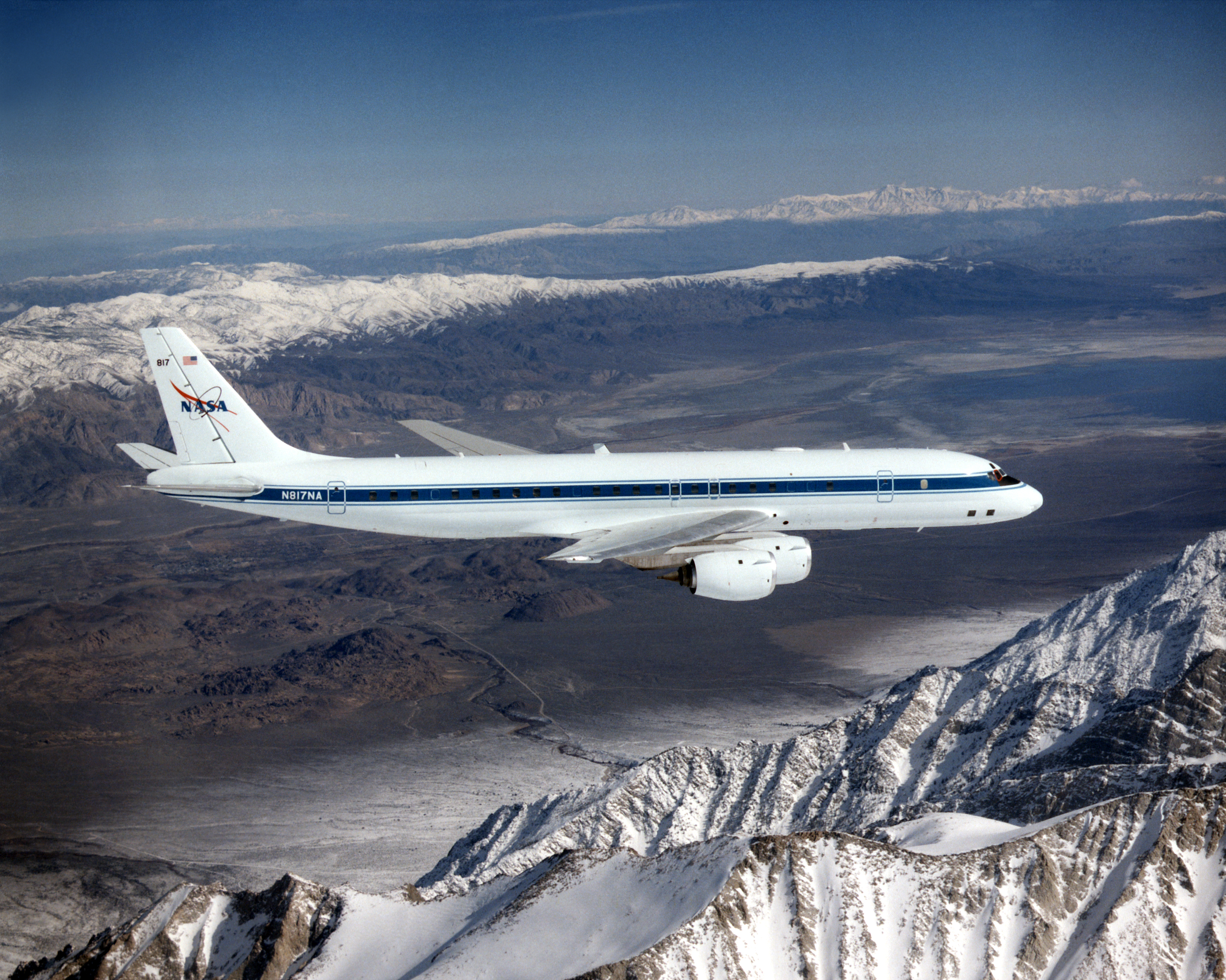
Historical Context & Origins
In the late 1950s, commercial aviation was on the verge of a revolution, driven by growing demand for faster, more comfortable air travel. The Douglas DC-8 emerged as Douglas Aircraft Company's answer to the looming jet age, a direct competitor to the previously announced Boeing 707. The global market eagerly awaited the new "jet liners."
Douglas, with a legendary tradition in air transport with its DC-3, DC-4 and DC-6/7, found itself having to catch up with Boeing's audacity. The design of the DC-8 began with the goal of offering an aircraft that was not only competitive in terms of speed and capability, but also superior in range and reliability, laying the foundation for its future versatility.
The introduction of the DC-8 symbolized a bold step forward for Douglas in the context of the transoceanic jet race. Competition was intense, and each series of the DC-8, including the Series 40, would need to demonstrate innovation and adaptability to capture a significant share of the rapidly expanding global market.
Architecture & Technological Design
The Douglas DC-8 Series 40, which first flew in 1960, represented a crucial evolution in the design of the DC-8 family. Maintaining the classic low-wing monoplane configuration with four engines mounted under the wings, this variant stood out for a fundamental technological innovation that would mark its success.
The most distinctive and advanced feature of the Series 40 was the adoption of Rolls-Royce Conway Mk. turbofan engines. 509 (RCo.10). This choice projected the DC-8 into a new era of efficiency, as the turbofans offeredgreater thrustthan previous turbojets, with a significantreduction in fuel consumptionandless noise impact**.
The integration of the turbofans not only improved the overall performance of the aircraft, allowing longer ranges and higher payloads, but also contributed to making travel more pleasant for passengers thanks to a quieter cabin environment. This series represented a decisive qualitative leap for the aircraft, consolidating its position as a powerful and versatile transcontinental operator.
Onboard Specifications
- ◆Rolls-Royce Conway Mk. Turbofan engines 509 (RCo.10): The first turbofans for the DC-8 family, which revolutionized efficiency and performance.
- ◆Transcontinental/Transoceanic Autonomy: Ability to travel long distances thanks to efficient engines and large tanks.
- ◆High Payload Capacity: Designed to transport a significant number of passengers and/or a considerable volume of cargo over long distances.
Operational Career & Operators
Debuting in 1960, the Douglas DC-8 Series 40 quickly entered service with prestige carriers, including Trans-Canada Airlines (now Air Canada) and Canadian Pacific Air Lines. These companies were among the first to exploit the advantages of the new turbofan engines, inaugurating transatlantic and intercontinental routes with greater efficiency.
The DC-8 Series 40 established itself as a reliable and high-performance work aircraft, significantly contributing to the expansion of long-distance scheduled air transport. Its robustness and operational capabilities made it a popular choice, despite fierce competition from other contemporary jets.
Many Series 40 examples remained in service for decades, some converted for freight, demonstrating their exceptional longevity and adaptability. Their presence in the world's skies marked an era of unprecedented growth for global commercial aviation.
Legacy & Cultural Impact
The Douglas DC-8 Series 40 left an indelible mark on aviation history, serving as a turbofan pioneer in the civil jet market. Its introduction of Conway engines paved the way for a new generation of more efficient, quieter and longer-range aircraft, directly influencing future developments in the industry.
This model has contributed substantially to making long-haul air travel more accessible and comfortable for millions of people. It symbolized the modernity and speed of the jet age, becoming an icon of the skies and a silent protagonist of globalization.
Even today, the DC-8, although mostly retired from passenger service, continues to fly in cargo roles, a testament to its robust engineering and durability. The 40 Series, in particular, is remembered as a key innovator, whose contribution to turbofan technology shaped the future of aviation.
Telemetria Specs (HUD)
Hangar Trivia & Curiosità
- 💡The Series 40 was the only DC-8 variant to exclusively use Rolls-Royce Conway turbofan engines, distinguishing it from other models that typically featured Pratt & Whitney or General Electric powerplants.
- 💡The Rolls-Royce Conway engines were among the world's first turbofans in commercial service, making the DC-8 Series 40 a pioneer in adopting this more efficient and quieter propulsion technology.
- 💡Despite being a strong competitor to the Boeing 707, many DC-8s, including some Series 40 airframes, enjoyed remarkably long service lives, with some converted for cargo operations well into the 21st century.
Archivio Avvistamenti Spotter
Immagini scattate dalla community in tutto il mondo