DC-8 Series 30
Douglas
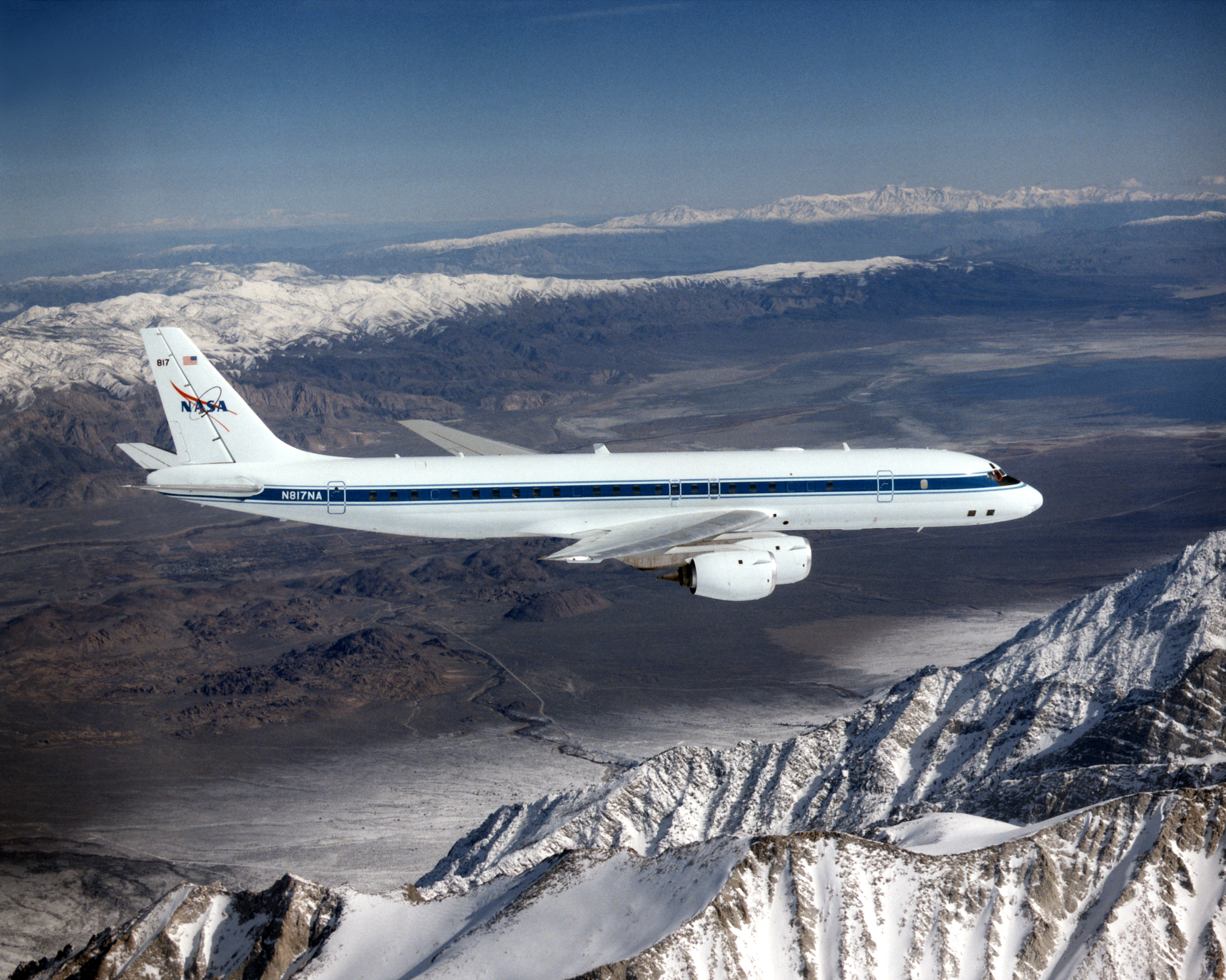
Historical Context & Origins
The Douglas DC-8, with its first flight in 1958, emerged in an era of fervent aeronautical innovation, marked by the transition from piston engines to revolutionary jets. Douglas Aircraft, an undisputed giant of commercial aviation with its legendary DC-3 and DC-6, faced the challenge of competing with the rampant Boeing 707, anticipating a future dominated by jet aircraft.
The DC-8 30 Series was a crucial response to the growing demand for long-range intercontinental flights. Although the first versions were oriented towards the domestic market, the need to cross the Atlantic or Pacific with efficiency and capacity led Douglas to develop more powerful and capable variants, intended to connect continents.
Architecture & Technological Design
The DC-8 Series 30 was distinguished by its elegant and functional architecture, a classic low-wing monoplane design with four jet engines mounted in underwing nacelles. This configuration, while familiar, hid sophisticated engineering aimed at maximizing performance and reliability over extended routes.
To meet the challenges of intercontinental flight, the Series 30 received significant upgrades. It was equipped with Pratt & Whitney JT4A turbojet engines, significantly more powerful than the JT3C units of the previous series, guaranteeing the thrust necessary for full-load takeoffs and long-range cruises. Structural changes and an increase in fuel capacity were also implemented to further extend operational range.
Onboard Specifications
- ◆Pratt & Whitney JT4A-9/-11 engines: Powerful turbojets essential for long-range operations, providing increased thrust on takeoff.
- ◆Autonomy extended over 8,000 km: Ability to fly transatlantic and transcontinental without intermediate stops, a true game changer.
- ◆Passenger capacity up to 176 (typical): Versatile configuration to accommodate large numbers of passengers, critical to route profitability.
Operational Career & Operators
The Douglas DC-8 Series 30 quickly entered service with some of the world's most prestigious airlines, becoming the workhorse for their international routes. Carriers such as Pan American World Airways, United Airlines, KLM Royal Dutch Airlines, SAS Scandinavian Airlines and Alitalia adopted it enthusiastically, taking advantage of its autonomy and reliability.
Its entry online marked the beginning of a new era for air travel, making global connections faster, more comfortable and more accessible. The DC-8 Series 30 contributed decisively to establishing the logistics of intercontinental jet flights, carrying millions of passengers across oceans and connecting economies and cultures.
Legacy & Cultural Impact
The Douglas DC-8 Series 30 was not just an airplane, but a tangible symbol of the "Jet Age", dramatically reducing travel times and transforming the perception of distance. Its sleek silhouette and powerful engines embodied technological progress and the ambition of an increasingly connected world.
Even after the introduction of new generation aircraft, the DC-8 Series 30 and its later variants continued to serve for decades, often converted into reliable freighters. Its operational longevity is a testament to its robustness and excellent original design, cementing its place in history as one of civil aviation's most influential aircraft.
Telemetria Specs (HUD)
Hangar Trivia & Curiosità
- 💡La Serie 30 fu specificamente mirata ai voli intercontinentali più lunghi, migliorando l'autonomia delle precedenti varianti del DC-8.
- 💡Nonostante fosse una delle prime varianti, diversi DC-8, inclusi alcuni delle produzioni originali, sono stati successivamente rimotorizzati e hanno continuato a volare nel XXI secolo.
- 💡Il DC-8, in particolare i suoi primi modelli come la Serie 30, fu determinante nel rendere popolare il viaggio in jet e rendere i voli a lungo raggio più accessibili e veloci.
Archivio Avvistamenti Spotter
Immagini scattate dalla community in tutto il mondo