DC-8 Series 20
Douglas
Historical Context & Origins
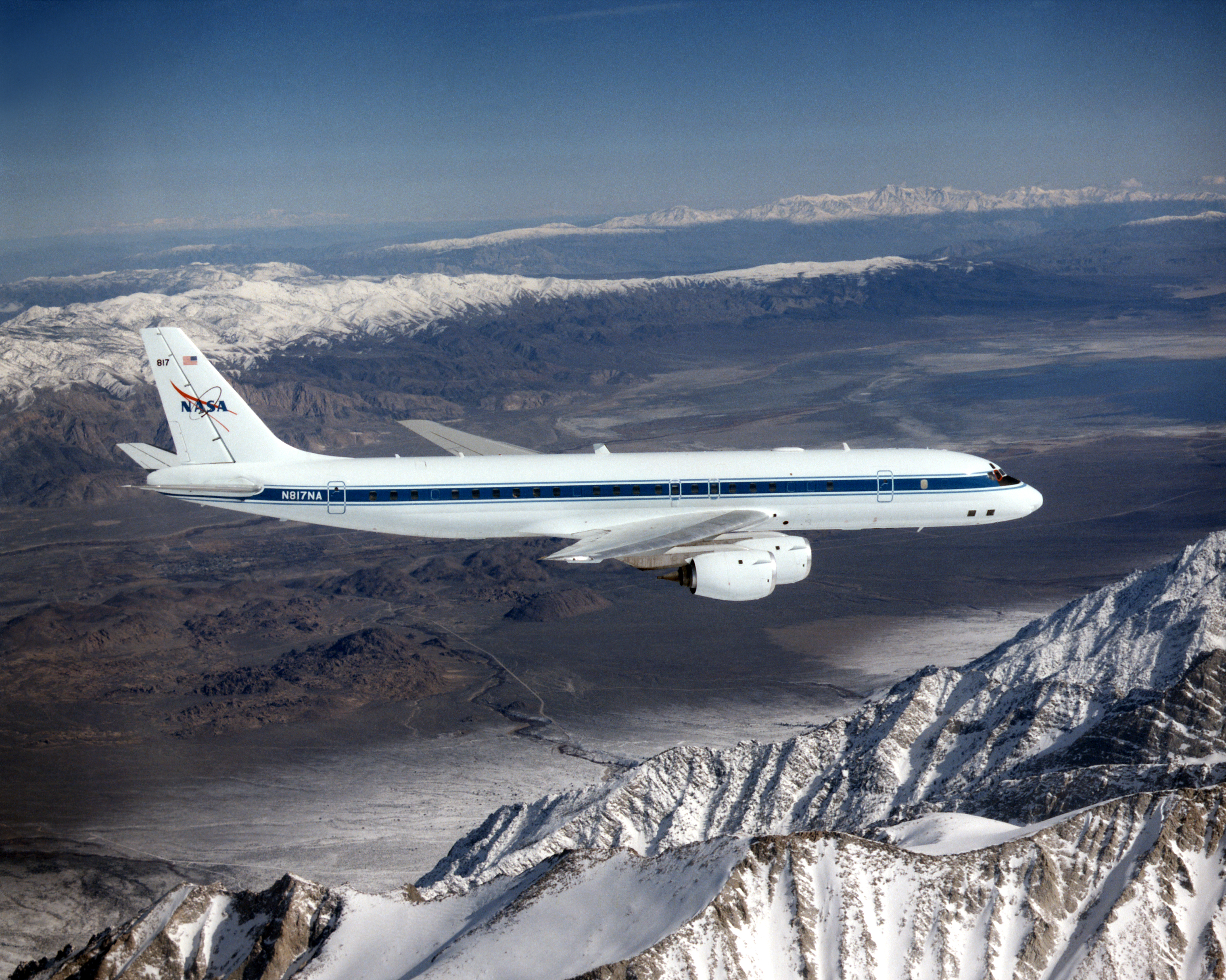
The giant Douglas, with an illustrious history in the aviation industry, was determined not to give way to Boeing in the nascent jetliner era. The Douglas DC-8 was born from this ambition, a direct response to the Boeing 707, with the declared goal of dominating the transoceanic and transcontinental skies.
The DC-8's first flight occurred on May 29, 1958, marking Douglas' formal entry into the exclusive club of jet airliner manufacturers. The Series 20 represented a strategic evolution compared to the initial series, designed to offer improved performance and greater operational efficiency from the early stages of production.
Architecture & Technological Design
The DC-8 Series 20 was distinguished by its elegant and functional architecture: a low-wing monoplane with four turbofan engines mounted in underwing nacelles. Its robust aluminum alloy structure was designed to withstand the intense stresses of flight at high speed and altitude, ensuring maximum safety and uncompromising durability.
This series, in particular, marked a significant leap forward in performance thanks to the adoption of considerably more powerful engines. Its advanced aerodynamic configuration, the result of years of meticulous research by Douglas, ensured excellent cruising efficiency and remarkable stability in all delicate phases of flight.
Onboard Specifications
- ◆Pratt & Whitney JT4A Engines: This critical upgrade provided significantly more thrust than the Series 10 engines, allowing for improved takeoff performance, increased cruise speed, and extended range for longer routes.
- ◆High aspect ratio wing with optimized profile: Carefully designed to maximize aerodynamic efficiency at transhonor speeds, reducing drag and dramatically improving fuel consumption, a key economic factor for long-haul flights.
- ◆Enhanced Flight Control Systems: Inclusion of sophisticated redundant hydraulic systems and an advanced next-generation autopilot, both essential for navigational precision and operational safety in new and complex jet flight scenarios.
Operational Career & Operators
The DC-8 Series 20 was quickly adopted by major and prestigious global airlines, including United Airlines and Delta Air Lines, who immediately appreciated its superior performance and proverbial robustness. These carriers successfully deployed it on transcontinental and, later, intercontinental routes, ushering in a new era of faster, more comfortable and accessible air travel.
Its inherent reliability and extraordinary ability to carry large numbers of passengers and cargo quickly made it an irreplaceable mainstay of global airline fleets. The Series 20 contributed decisively to the unprecedented expansion of passenger air traffic in the 1960s and 1970s, demonstrating the foresight of the Douglas engineering design.
Legacy & Cultural Impact
Although sometimes overshadowed by the fame of its historic rival, the DC-8 has left an indelible and lasting imprint on the history of civil aviation. Many examples, including the versatile Series 20, have continued to serve faithfully for decades, being converted for efficient cargo operations, where their robustness and load capacity have found a second operational life.
This iconic aircraft symbolizes an era of bold technological innovation and intense industrial competition that irreversibly shaped modern air travel. The Douglas DC-8 Series 20 remains a shining emblem of pioneering aeronautical engineering, a silent giant of the skies that connected and brought continents and cultures together, definitively cementing the jetliner as the dominant mode of transportation.
Telemetria Specs (HUD)
Hangar Trivia & Curiosità
- 💡The Series 20 was distinguished from the initial Series 10 by its switch to the more powerful Pratt & Whitney JT4A turbojet engines, providing a substantial boost in thrust and performance.
- 💡Despite its improvements, the Series 20 had a relatively brief production run as Douglas quickly moved to introduce turbofan-powered variants (like the Series 30 and 50) for greater fuel efficiency and range.
- 💡Major operators of the DC-8 Series 20 included prominent North American carriers such as United Air Lines and Delta Air Lines, utilizing it for their transcontinental routes.
Archivio Avvistamenti Spotter
Immagini scattate dalla community in tutto il mondo