DC-8 Series 10
Douglas
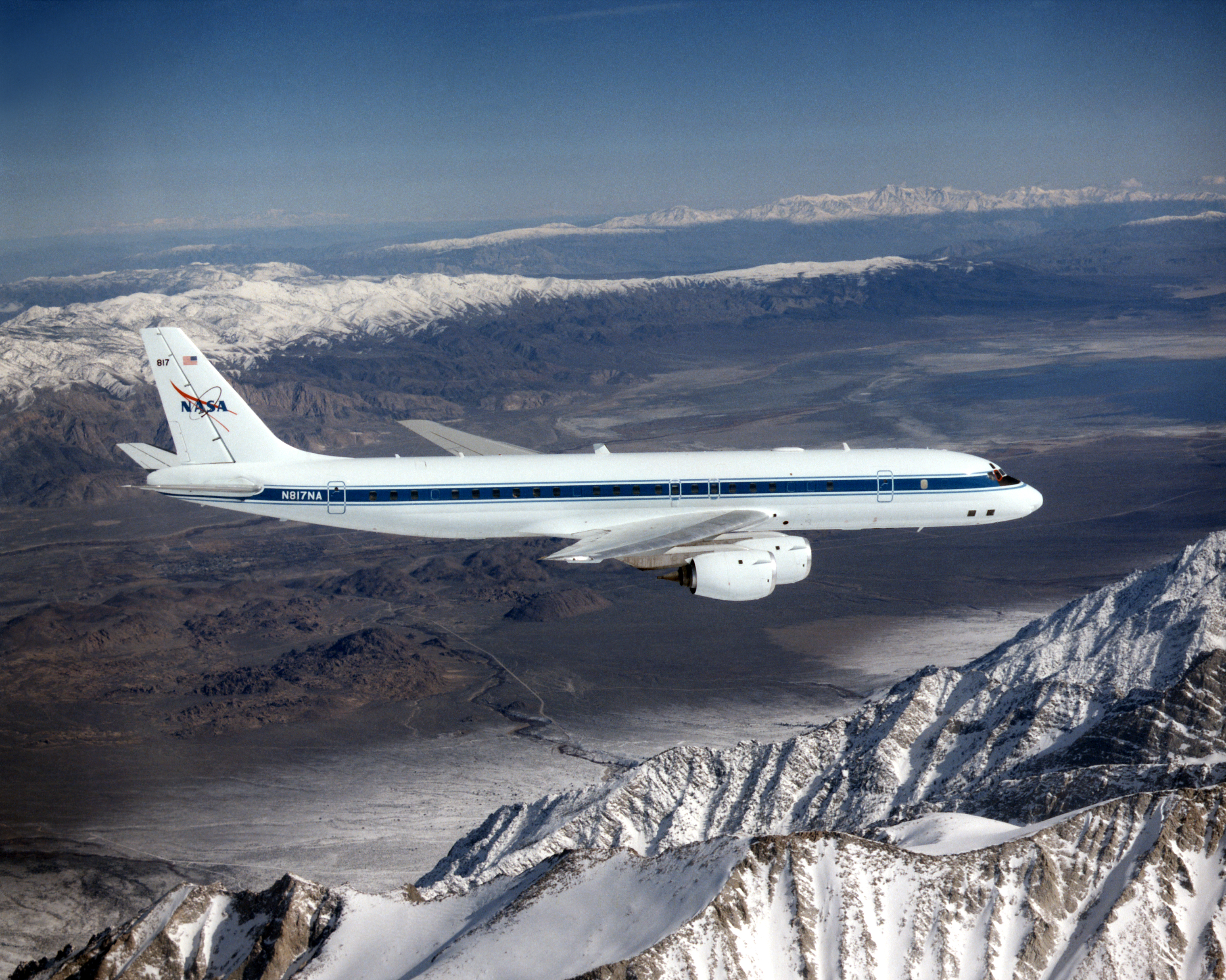
Historical Context & Origins
The epic of the Douglas DC-8 Series 10 begins in an era of extraordinary innovation, the 1950s, when the world was preparing for the advent of commercial jet aviation. In that feverish period, Douglas Aircraft Company, already a legend with its propeller-driven aircraft, found itself faced with the challenge of maintaining its leadership against the growing success of the Boeing 707. The need for a long-distance jet aircraft was clear.
The genesis of the DC-8 dates back to 1952, when Douglas began exploring the idea of a transport jet, initially with an eye on the military tanker market. However, the vision quickly shifted towards an ambitious commercial project that would replicate the triumph of its predecessors, the DC-3, DC-6 and DC-7. The goal was to create an aircraft that could connect continents with unprecedented speed and comfort.
- ◆*May 29, 1958marked a historic moment with the first flight of the DC-8 prototype, embodying the promise of a new era. TheSeries 10** version, in particular, was the first production variant, designed specifically for US transcontinental and domestic routes, a crucial market segment where competition was already fierce.
Architecture & Technological Design
The Douglas DC-8 Series 10 featured cutting-edge aerodynamic architecture for its time, featuring a low swept wing typical of commercial jets to ensure efficiency at high speeds. The four turbojet engines were housed in separate nacelles under the wings, a configuration that balanced power and safety, becoming a standard in modern aviation.
The design was the result of in-depth engineering research aimed at maximizing both performance and passenger comfort. Its streamlined fuselage and optimized wings allowed the DC-8 to reach impressive cruising speeds for its time, solidifying the concept of rapid, non-stop air travel between major cities. The attention to detail extended to the interior, designed to accommodate travelers in a spacious and less noisy environment.
The design included advanced hydraulic systems for controlling the flight surfaces and relatively sophisticated avionics for the time, which assisted pilots in complex navigation. Structural strength, Douglas' trademark, ensured reliability and a long operational life, crucial elements for the commercial success of the aircraft.
Onboard Specifications
- ◆Engines: Four Pratt & Whitney JT3C turbojets, which provided considerable thrust for acceleration and cruising speed.
- ◆Capacity: Typically configured to carry between 110 and 179 passengers, depending on the airlines internal layout.
- ◆Cruise Speed: It could reach speeds close to 900 km/h, drastically reducing flight times compared to propeller models.
Operational Career & Operators
The Douglas DC-8 Series 10 began its operational career with great enthusiasm in September 1959, debuting simultaneously with two giants of American aviation: United Airlines and Delta Air Lines. This joint launch underlined the industry's confidence in the capabilities of the new jet, which immediately proved to be a formidable competitor in the transcontinental market.
Its performance, especially speed and comfort, quickly made it popular among passengers. The DC-8 Series 10 became a mainstay for long-range domestic connections, helping to shape travel habits and the expansion of airline networks in the United States. Despite strong competition from the Boeing 707, the DC-8 captured a significant share of the market, appreciated for its reliability.
Legacy & Cultural Impact
The Douglas DC-8, and in particular its initial series, the Series 10, has left an indelible mark on the history of commercial aviation. Although often overshadowed by its main rival, the DC-8 nevertheless cemented Douglas' position as a key player in the jet age, demonstrating the company's ability to adapt and innovate in the face of new technological challenges.
Its design platform proved exceptionally versatile, allowing the development of numerous variants, from the high-capacity, ultra-long-range "Super Sixties", to the quiet and efficient "Super Seventies", with modernized turbofan engines. Many DC-8s continued their operational lives as freighters, flying for decades and testifying to the robustness and foresight of the original design.
Beyond its technical and operational impact, the DC-8 Series 10 has become a symbol of the "Golden Age" of air travel, evoking an era of glamor and progress when jet travel was synonymous with modernity and adventure. Its elegant silhouette and performance have helped make the dream of transcontinental flight an accessible and fascinating reality for millions of people.
Telemetria Specs (HUD)
Hangar Trivia & Curiosità
- 💡Fu la risposta diretta di Douglas al Boeing 707, mirato allo stesso redditizio mercato a lungo raggio.
- 💡La Series 10 fu una delle poche varianti alimentate esclusivamente da motori turbojet puri, rendendola più rumorosa e meno efficiente in termini di carburante rispetto ai successivi modelli turbofan.
- 💡Nonostante le difficoltà iniziali contro il 707, la piattaforma DC-8 ottenne alla fine un notevole successo, evolvendosi in un duraturo aerocargo.
Archivio Avvistamenti Spotter
Immagini scattate dalla community in tutto il mondo