D.338
Dewoitine
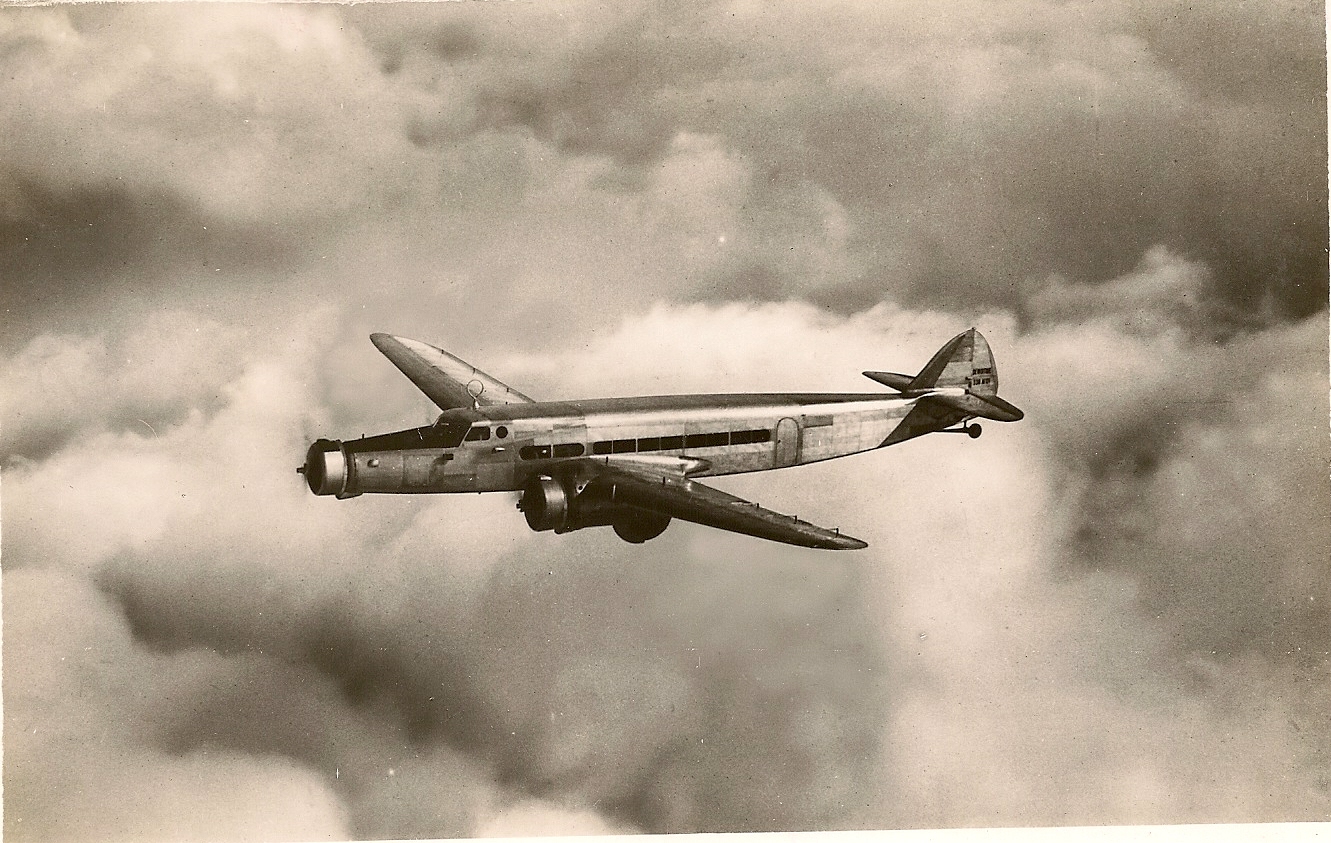
Historical Context & Origins
The Dewoitine D.338 emerged in an era of fervent aeronautical development, responding to the growing need for higher-performance civil aircraft. The mid-1930s saw a global rush to modernize fleets, pushing France to keep pace with world leaders in commercial aviation.
Its first flight in 1936 marked a significant step for transalpine aviation, capitalizing on the experience accumulated with its predecessors D.332 and D.333. This aircraft embodied Air France's ambitions for long-haul routes, promising greater speed, comfort and load capacity than previous models.
Conceived by engineer Émile Dewoitine, the D.338 represented the pinnacle of his vision for a three-engined passenger transport. It was designed to overcome the reliability and capacity limits of its time, establishing itself as a pillar for the expansion of French air routes towards the colonial empire.
Architecture & Technological Design
The Dewoitine D.338 sported a low-wing, all-metal monoplane architecture, an avant-garde choice for its time that ensured strength and lightness. Its three-engine configuration, with thrusters arranged on the wings and one in the nose, offered crucial redundancy for safety on long transcontinental flights.
The engine was entrusted to three Gnome-Rhône 14N radial engines, famous for their power and reliability, each capable of delivering over 800 horsepower. This propulsion choice allowed the D.338 to reach competitive cruising speeds and considerable autonomy, essential for African and Asian routes.
The aerodynamic design had been refined to maximize efficiency, including retractable landing gear, a feature that significantly improved in-flight performance by reducing drag. This innovation, combined with attention to structural details, contributed to making it an aircraft of excellence.
Onboard Specifications
- ◆Soundproofed and air-conditioned passenger cabin: an innovation for the time that offered superior comfort to passengers.
- ◆All-metal structure with smooth skin: helped improve the aerodynamics and structural strength of the aircraft.
- ◆Advanced cockpit with full instrumentation: guaranteed pilots precise control and better operational visibility.
Operational Career & Operators
The Dewoitine D.338 quickly became the workhorse of Air France, which ordered a significant fleet of them. It was used intensively on the most prestigious and demanding routes, connecting Paris to Dakar, Beirut and, in particular, French Indochina with the famous Paris-Saigon line.
Its reliability and its capacity to carry up to 22 passengers made it irreplaceable for the expansion of French airlines. It made countless voyages across deserts and seas, symbolizing the power and reach of French civil aviation before the outbreak of World War II.
With the advent of the conflict, many examples were requisitioned for military purposes, although their main role remained that of transport. Most of the operational D.338s survived the first years of the war, but their careers were inevitably interrupted or modified by war events.
Legacy & Cultural Impact
The Dewoitine D.338 was not just an airplane; it was a symbol of French aeronautical engineering and of Air France's ambition. It contributed significantly to establishing the foundations of modern long-haul routes, demonstrating the feasibility of intercontinental air transport.
Its presence in the skies of three continents made it an icon of progress and connectivity, shaping the collective imagination of commercial aviation. Although he is less known today than other giants of the time, his contribution was fundamental to the development of air transport.
Many of the technological and operational concepts tested and perfected with the D.338 were taken up and improved in subsequent projects. It represents a crucial chapter in the history of aviation, an aircraft that raised the standards of comfort, speed and reliability for passenger air travel.
Telemetria Specs (HUD)
Hangar Trivia & Curiosità
- 💡The D.338 was an evolution of earlier Dewoitine designs (D.332, D.333), featuring improved payload capacity and range for longer routes.
- 💡It famously operated the 'Pearl Route' to Saigon, a journey that would typically involve multiple stops over several days.
- 💡Several D.338s were pressed into military transport service during World War II, with some surviving to operate commercially in the immediate post-war period.
Archivio Avvistamenti Spotter
Immagini scattate dalla community in tutto il mondo