CV-880
Costruttore Sconosciuto
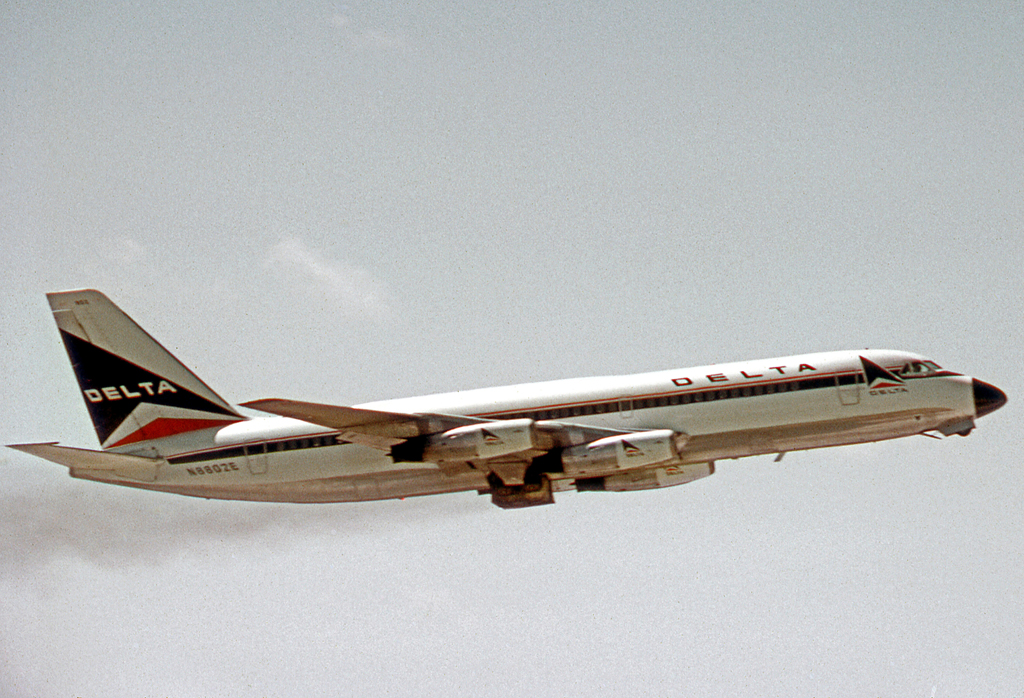
Historical Context & Origins
In the vibrant decade of the late 1950s, the jet age redefined air travel, with giants like the Boeing 707 and Douglas DC-8 dominating the market. Convair saw an opportunity, aiming for a more agile, faster and medium-range oriented jetliner.
The project was born with the ambitious goal of offering extreme performance. Originally named Convair 600 for its promise of exceeding 600 miles per hour, the aircraft defied convention. Its first flight occurred in 1959, introducing a radical design and an unprecedented construction philosophy.
To emphasize its speed, it was later renamed CV-880, a name that alluded to a cruising speed of 880 feet per second, equivalent to approximately 990 km/h. This name consolidated Convair's intention to offer the fastest jetliner of the time.
Architecture & Technological Design
The Convair CV-880 was a poster child for aerodynamic engineering, focused on maximizing speed. Its streamlined fuselage and high swept wings were crucial elements, designed to dramatically reduce drag and push the subsonic limits.
Powering this technological jewel were four General Electric CJ-805-3 engines, a civil variant of the powerful J79 turbojets of military origin, famous for equipping fighters such as the F-4 Phantom II. This bold choice provided an extraordinary boost.
The entire design of the CV-880 reflected an uncompromising approach to performance. Every curve was optimized for speed, embodying functional elegance. This aircraft represented the pinnacle of American ingenuity of the time, promising a luxurious and rapid flying experience.
Onboard Specifications
- ◆Record speed: With a maximum cruising speed of approximately 990 km/h (Mach 0.89), it was the fastest jetliner of its generation.
- ◆Innovative engines: Four turbofans General Electric CJ-805-3B, the only civil application of military-derived engines.
- ◆Narrow fuselage: Its tapered profile, optimized for speed, limited seating capacity to approximately 110 passengers.
Operational Career & Operators
Despite its extraordinary engineering and performance, the Convair CV-880 struggled to conquer the market. Its lower passenger capacity and high operating costs, due to high fuel consumption, undermined its competitiveness.
Of the major carriers that adopted it, TWA and Delta Air Lines were the most significant, employing it on US domestic routes. They appreciated the speed and comfort, but the aircraft proved difficult to make economically viable.
Only 65 examples were produced in total, a number well below initial expectations. Its operational life was often short, remaining an example of "misunderstood genius", admired for its engineering audacity but penalized by market logic.
Legacy & Cultural Impact
The Convair CV-880, while not a commercial success, left a significant legacy in aviation history, demonstrating the achievable limits in terms of design and performance. He catalyzed innovation, pushing the boundaries of aeronautical engineering of his time.
It is widely considered a cult classic by enthusiasts, celebrated for its elegant lines and unrivaled speed. The CV-880 embodies the ambition of an era, a symbol of the golden age of jet travel and American ingenuity.
Its most iconic moment was when one example, the famous "The Lisa Marie", became Elvis Presley's private jet. This consolidated its status not only as a technological marvel but also as an icon of style and luxury, guaranteeing it an eternal place in the collective imagination.
Telemetria Specs (HUD)
Hangar Trivia & Curiosità
- 💡Elvis Presley famously owned a Convair 880, which he named 'Lisa Marie' after his daughter, customizing its luxurious interior.
- 💡The '880' in its name refers to its intended cruise speed of 880 feet per second, equating to approximately 980 km/h or Mach 0.84.
- 💡Despite being technologically advanced and fast, the CV-880 was a commercial failure due to strong competition and higher fuel consumption, making it one of the rarest jets.
Archivio Avvistamenti Spotter
Immagini scattate dalla community in tutto il mondo