CV-580
Costruttore Sconosciuto
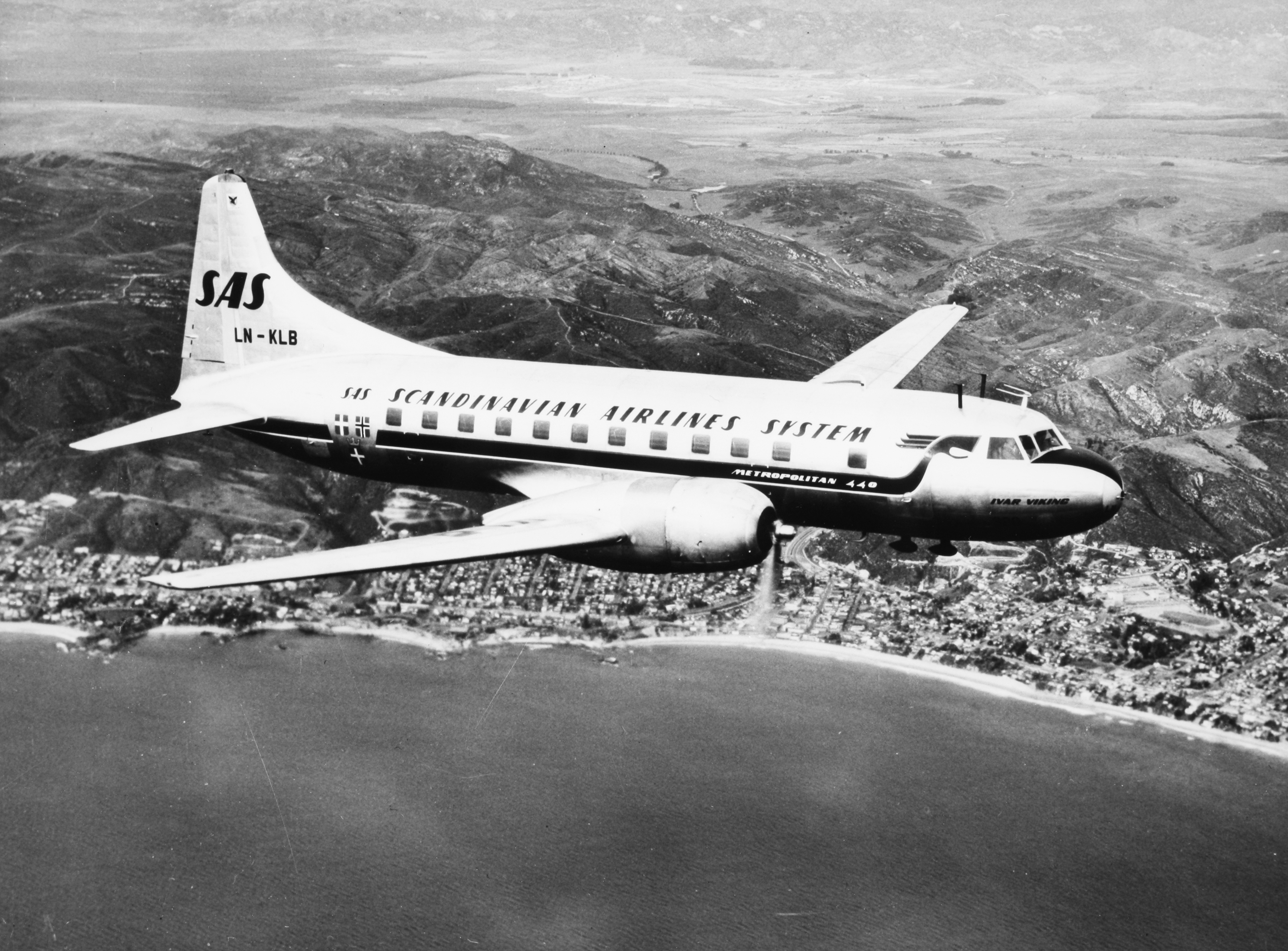
Historical Context & Origins
The Aviation CV-580, better known simply as the Convair 580, represents a fascinating epic in aeronautical engineering, originating as a sophisticated conversion of the already successful Convair 340 and 440 Metropolitan piston-powered passenger aircraft. In the context of a rapidly evolving industry between the 1950s and 1960s, airlines were looking for cheaper, faster and more efficient solutions.
The transition from piston to turboprop engines promised a significant qualitative leap in terms of fuel efficiency, cruising speed and operational reliability. So it was that PacAero Engineering Corporation and General Dynamics came together to offer an innovative conversion program, breathing new life into hundreds of existing airplanes. The first flight of the CV-580 took place in 1960, marking the beginning of a new era for these robust airframes.
This "restyling" operation was not a simple replacement of engines, but a targeted redesign that aimed to maximize the potential of an already proven airframe. The goal was to create a competitive aircraft that could rival new turboprop designs, while offering a lower acquisition cost than an entirely new aircraft.
Architecture & Technological Design
The heart of the Convair 580 transformation lay in the replacement of the Pratt & Whitney R-2800 piston engines with the more powerful and reliable Allison 501-D13H turboprops. These thrusters, combined with new four-bladed propellers, provided significantly greater thrust, allowing the CV-580 to operate at higher speeds and at greater altitudes, significantly reducing flight times and cabin noise.
This advanced architecture also involved structural reinforcement of the airframe at critical points to handle the greater stresses imposed by the new engines and increased performance. The design retained the iconic low wing and pressurized cabin of its predecessors, but every component was optimized to work in synergy with the new propulsion configuration, elevating the aircraft to new standards of excellence.
The integration of Allison turboprops not only improved performance, but gave the CV-580 surprising versatility, making it suitable for a wide range of missions. Its ability to operate from shorter runways and its inherent robustness made it a valuable asset for regional and cargo operators in every corner of the globe.
Onboard Specifications
- ◆Allison 501-D13H engines: Turboprops of 3,750 shp each, known for power and reliability.
- ◆Higher cruising speed: Reached approximately 500 km/h (310 mph), a significant improvement over piston models.
- ◆Extended autonomy and improved load capacity: Allowing longer routes and greater operational flexibility.
Operational Career & Operators
The Convair 580 quickly established itself as a true workhorse for numerous regional and feeder airlines in North America and beyond. Carriers such as Allegheny Airlines, Frontier Airlines and Republic Airlines made it the backbone of their fleets, appreciating its cost-effectiveness, robustness and ability to operate in various environmental conditions.
Its reliability and excellent load capacity made it equally popular in the cargo transport sector. Companies such as Federal Express (FedEx) used the CV-580 extensively in the early stages of their expansion, demonstrating its versatility and efficiency in transporting cargo on short- and medium-haul routes.
In addition to passenger and cargo service, the CV-580 also found use in specialist roles, including meteorological research aircraft, surveillance and radar calibration platforms, highlighting an adaptability and operational longevity that few other aircraft can boast.
Legacy & Cultural Impact
The Aviation CV-580 has left a lasting legacy as one of the most successful examples of aviation conversion. It demonstrated unequivocally how the application of new propulsion technologies could significantly extend the useful life and operational effectiveness of pre-existing aircraft, with significant cost savings.
Its cultural impact is rooted in its constant presence in regional skies for decades, serving as a bridge between the age of piston engines and that of modern turboprops and jets. It has helped shape the concept of regional air transport, making it more accessible and efficient.
Even today, examples of the CV-580 continue to fly in cargo or special roles, a testament to the extraordinary engineering and vision that led to its creation. It is a symbol of resilience and ingenuity in the world of aviation, a true classic that has demonstrated timeless value.
Telemetria Specs (HUD)
Hangar Trivia & Curiosità
- 💡The CV-580 was created by replacing the original Pratt & Whitney R-2800 piston engines with more powerful Allison 501-D13 turboprops, dramatically improving its operational capabilities.
- 💡Many of the conversions were performed by Pacific Airmotive (PAC) and General Dynamics, making it a very popular and cost-effective upgrade solution for operators.
- 💡Beyond passenger and cargo services, some CV-580s were adapted for specialized roles, including meteorological research and even as an airborne early warning (AEW) testbed.
Archivio Avvistamenti Spotter
Immagini scattate dalla community in tutto il mondo