CV-240
Costruttore Sconosciuto
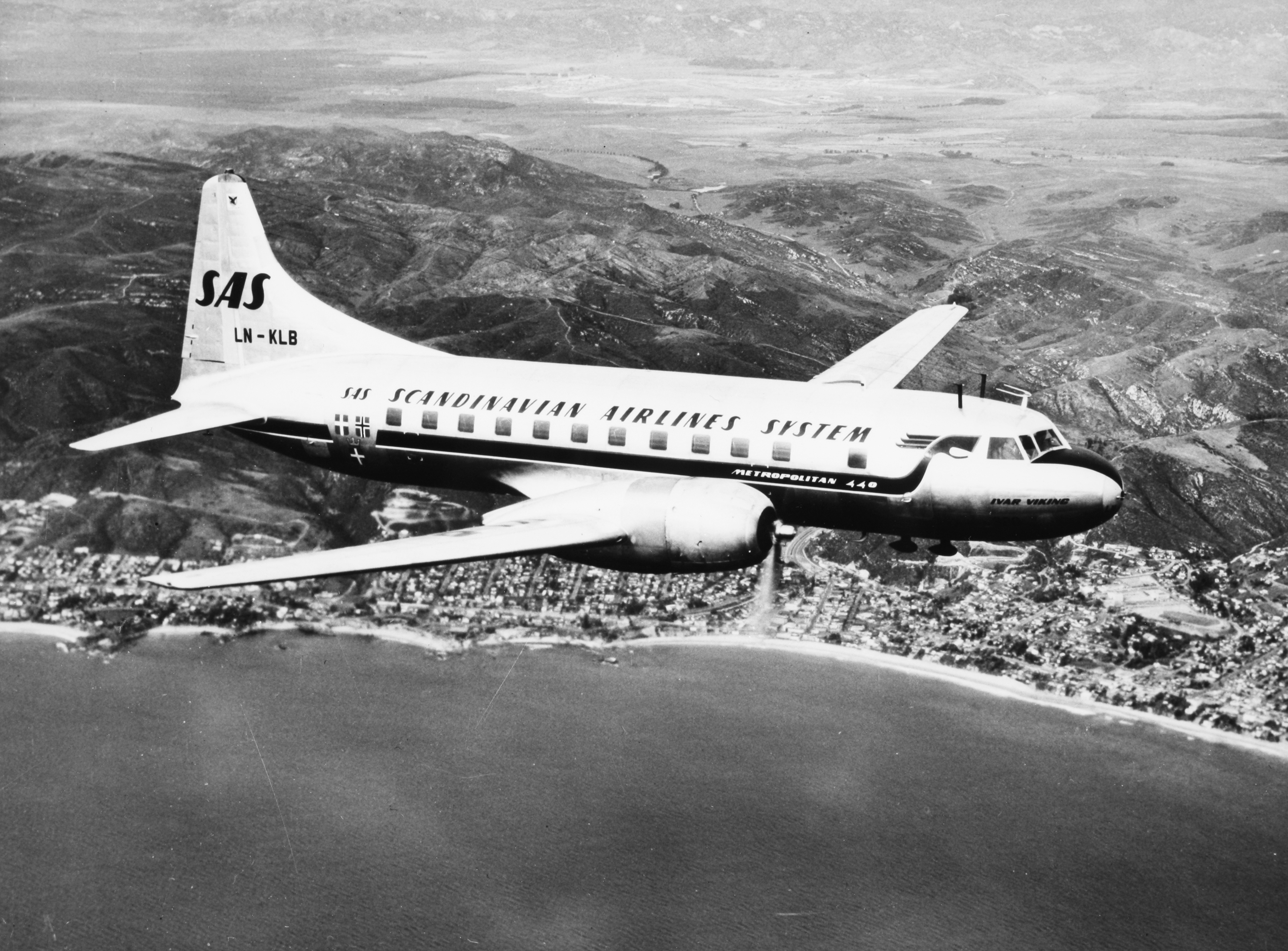
Historical Context & Origins
In the post-war turmoil, the global civil aviation industry was looking for a successor to the ubiquitous Douglas DC-3. Airlines needed a more modern, faster and more comfortable aircraft, capable of handling regional and medium-haul routes in an era of growing demand for air transport.
It was in this dynamic context that Convair (Consolidated Vultee Aircraft Corporation) conceived the CV-240, responding to a specific requirement of American Airlines. The goal was to create a pressurized twin-engine airliner, capable of offering greater speed, safety and superior comfort for passengers than its predecessors. Its first flight occurred in 1947, marking the beginning of a new era.
The impetus for the Convair 240 was clear: to revolutionize short- and medium-range air travel by combining technical innovation with a greater focus on the passenger experience. It was intended to be not just a means of transport, but a symbol of progress and convenience.
Architecture & Technological Design
The Convair CV-240 stood out for its cutting-edge architecture for its time, which blended performance and reliability. Featuring a low-wing twin-engine configuration, it was one of the first regional airliners to incorporate a pressurized cabin, an innovation that significantly elevated flight comfort.
Equipped with powerful Pratt & Whitney R-2800 Double Wasp radial engines, the CV-240 guaranteed remarkable cruising speed and enviable operational robustness. Its structure, designed according to "fail-safe" principles, offered superior passive safety, contributing to its longevity and commercial success.
Refined aerodynamics and advanced engineering choices allowed the CV-240 to operate efficiently even from airports with shorter runways, making it extremely versatile for a wide range of routes. This intelligent design made it a benchmark for future developments in the sector.
Onboard Specifications
- ◆Pressurized cabin: A quantum leap in passenger comfort.
- ◆Pratt & Whitney R-2800 engines: Reliability and power for fast flights.
- ◆Low-wing design: Advanced aerodynamic stability and efficiency.
Operational Career & Operators
The Convair CV-240 enjoyed immediate and widespread commercial success, entering service with world-renowned airlines. American Airlines was the launch customer, quickly followed by prestige European carriers such as KLM, Swissair and Lufthansa, who used it to rebuild and modernize their post-war fleets.
Its reliability and versatility made it ideal for both passenger and cargo transport, and it even saw use in military roles such as the C-131 Samaritan for the US Air Force. The Convair family, which evolved with models such as the CV-340 and CV-440 Metropolitan, further extended its impact.
Many CV-240s were later converted with turboprop engines (such as the famous Allison Convair), significantly extending its operational life and demonstrating the excellence of its original design. Its presence in the skies around the world was a symbol of the rebirth of commercial aviation.
Legacy & Cultural Impact
The Convair CV-240 was not just a successful aircraft; he was a pioneer who set the standard for future regional airliners. His introduction of the pressurized cabin in this class of aircraft was an innovation that forever changed the experience of air travel.
Its impact extended well beyond technical specifications, influencing the design and operation of numerous subsequent transport aircraft. Although many examples have been retired, some continue to fly in cargo or historic roles, a testament to their ruggedness and timeless design.
The Convair CV-240 remains an icon of post-war aeronautical engineering, a tangible symbol of the human capacity to innovate and improve. Its history is a fundamental chapter in the evolution of air transport, the resonance of which is still perceptible in modern aviation.
Telemetria Specs (HUD)
Hangar Trivia & Curiosità
- 💡Fu progettato per sostituire il celebre Douglas DC-3, offrendo una cabina pressurizzata per un maggiore comfort e una velocità superiore.
- 💡La serie CV-240 fu la base per lo sviluppo di modelli successivi più grandi e potenti, come il CV-340 e il CV-440, estendendone la longevità operativa.
- 💡American Airlines fu il cliente di lancio principale, mettendo in servizio il primo CV-240 nel 1948 e contribuendo al suo successo iniziale.
Archivio Avvistamenti Spotter
Immagini scattate dalla community in tutto il mondo

