CRJ100
Bombardier
Historical Context & Origins
In the aeronautical landscape of the 1990s, a growing demand emerged for aircraft capable of connecting regional airports to larger hubs with efficiency and comfort. Bombardier realized the potential of this segment, starting a true revolution in regional air transport.
The idea behind the Bombardier CRJ100 was born from the proven platform of the Canadair Challenger 600, a successful executive jet. By adapting the fuselage and implementing structural changes, the Canadian company laid the foundations for its first regional jet, marking a turning point.
The first flight of the prototype took place on 10 May 1991, marking the beginning of a new era. This event kicked off the rapid expansion of the regional jet concept, forever changing the dynamics of short- and medium-distance air passenger traffic.
Architecture & Technological Design
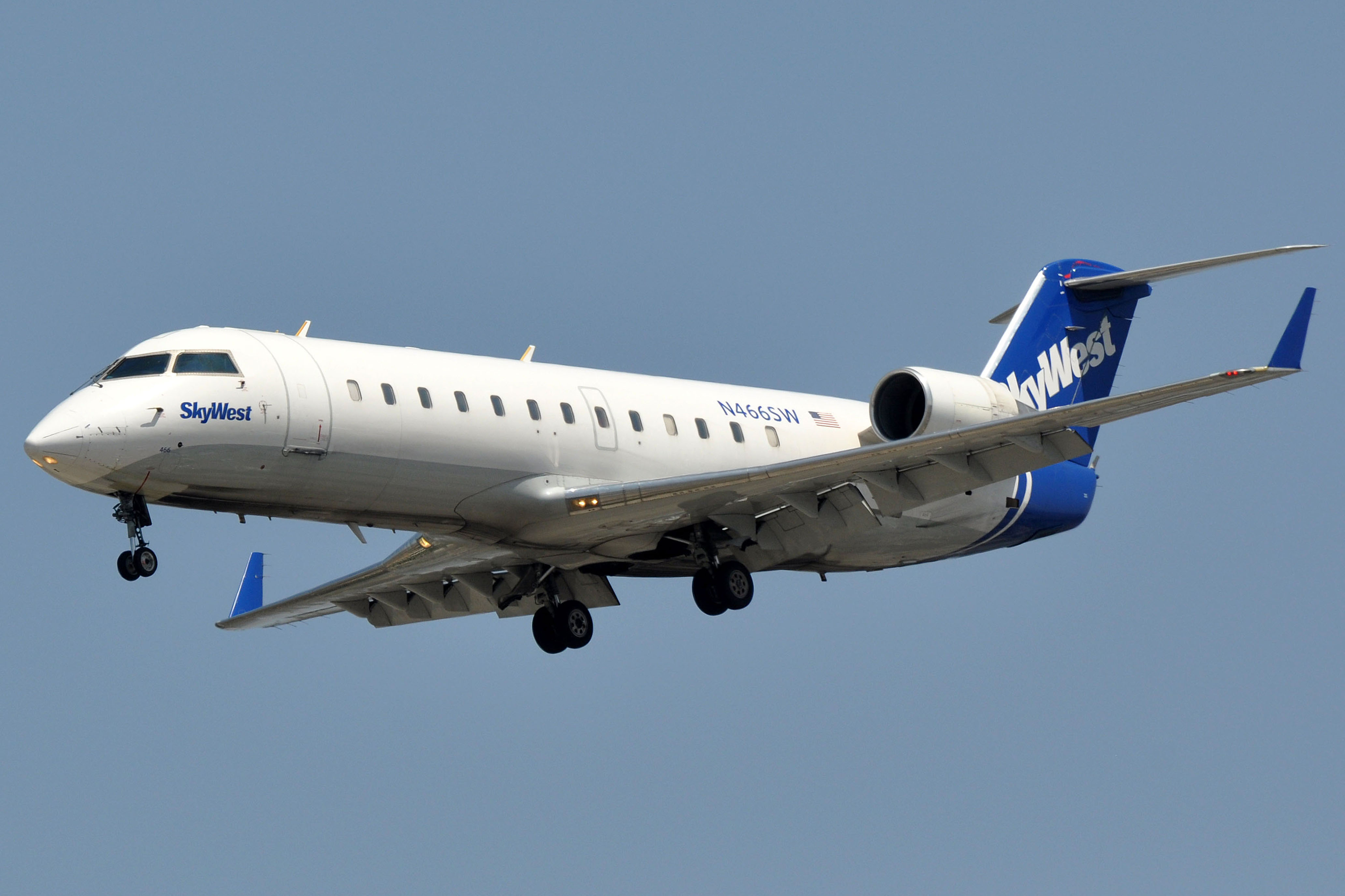
The CRJ100 is a masterful example of aeronautical engineering aimed at efficiency and versatility. Its architecture features a cantilever low-wing monoplane with a streamlined design, optimized for superior aerodynamic performance and reduced fuel consumption, crucial for regional operations.
One of the distinctive features is the configuration with two turbofan engines mounted in the tail section, a solution that helps reduce cabin noise and simplify maintenance. This choice allowed us to maximize the internal space, offering a typical layout with 50 seats, a perfect balance between capacity and operation.
The cruciform tail design, derived from the Challenger, improves directional control and stability, especially during take-off and landing. The entire structure was designed for robustness and reliability, pillars of Bombardier's construction philosophy.
Onboard Specifications
- ◆General Electric CF34-3A1 engines: Powerful and reliable thrusters, fundamental to the performance and efficiency of the aircraft, allowing operations even from shorter runways.
- ◆Advanced Digital Avionics: A cutting-edge glass cockpit for its time, offering pilots an intuitive interface and greater situational awareness.
- ◆Optimized Supercritical Wing: Designed to maximize aerodynamic efficiency at high cruising speeds, reducing drag and contributing to lower fuel consumption.
Operational Career & Operators
The Bombardier CRJ100 quickly took over the market, becoming the workhorse for countless regional airlines around the world. Its ability to operate on medium-density routes, connecting smaller towns to international hubs, has proven to be an invaluable asset.
Carriers such as Lufthansa CityLine, Comair (Delta Connection) and Air Canada Jazz were among the largest operators, capitalizing on its proven reliability and cost-effective operation. The CRJ100 allowed these companies to offer greater frequencies and a more direct service to passengers.
Its operational flexibility, combined with unexpected cabin comfort for its class, has contributed to the loyalty of millions of travellers. This jet proved that regional flights could be not only efficient, but also enjoyable, exceeding expectations.
Legacy & Cultural Impact
The CRJ100 was a true pioneer, defining the regional jet segment and serving as the launching pad for the entire CRJ family. It demonstrated the profitability of an undervalued market, prompting other manufacturers to follow its example.
Its architecture and design principles directly influenced the development of subsequent versions, such as the larger and more popular CRJ200, CRJ700, CRJ900 and CRJ1000. This "family" has cemented Bombardier's position as the undisputed leader in the industry for decades.
The cultural impact of the CRJ100 is profound: it has democratized air travel, making destinations accessible that were previously only reachable by long land journeys or flights with complex stopovers. It is the symbol of an era in which regional aviation went from niche to essential component of the global network, a legacy that continues to fly.
Telemetria Specs (HUD)
Hangar Trivia & Curiosità
- 💡The CRJ100 is the foundational model of the successful Bombardier CRJ (Canadair Regional Jet) family, which expanded into larger variants like the CRJ700, CRJ900, and CRJ1000.
- 💡Its design was directly adapted from the Canadair Challenger 600 series business jet, sharing a common fuselage and wing structure.
- 💡The introduction of the CRJ100 allowed regional airlines to offer jet service on routes previously served exclusively by slower turboprop aircraft, setting a new standard for regional air travel.
Archivio Avvistamenti Spotter
Immagini scattate dalla community in tutto il mondo