Constellation L-049
Lockheed
Historical Context & Origins
The epic of the Lockheed Constellation L-049 has its roots in the turbulent years of the Second World War, but with a vision projected towards post-war civil aviation. The project took shape from a specific request from Howard Hughes, the legendary magnate and majority shareholder of TWA, who wanted an airliner capable of surpassing its rivals in speed and range.
The need was clear: long-range, fast and efficient transport, capable of connecting the American coasts without stopovers, an ambitious undertaking for the time. Although designed for passenger transport, its first flight, which took place on January 11, 1943, saw it enter military service as a C-69, a crucial role for the Allied war effort, demonstrating its exceptional capabilities right from the start.
Architecture & Technological Design
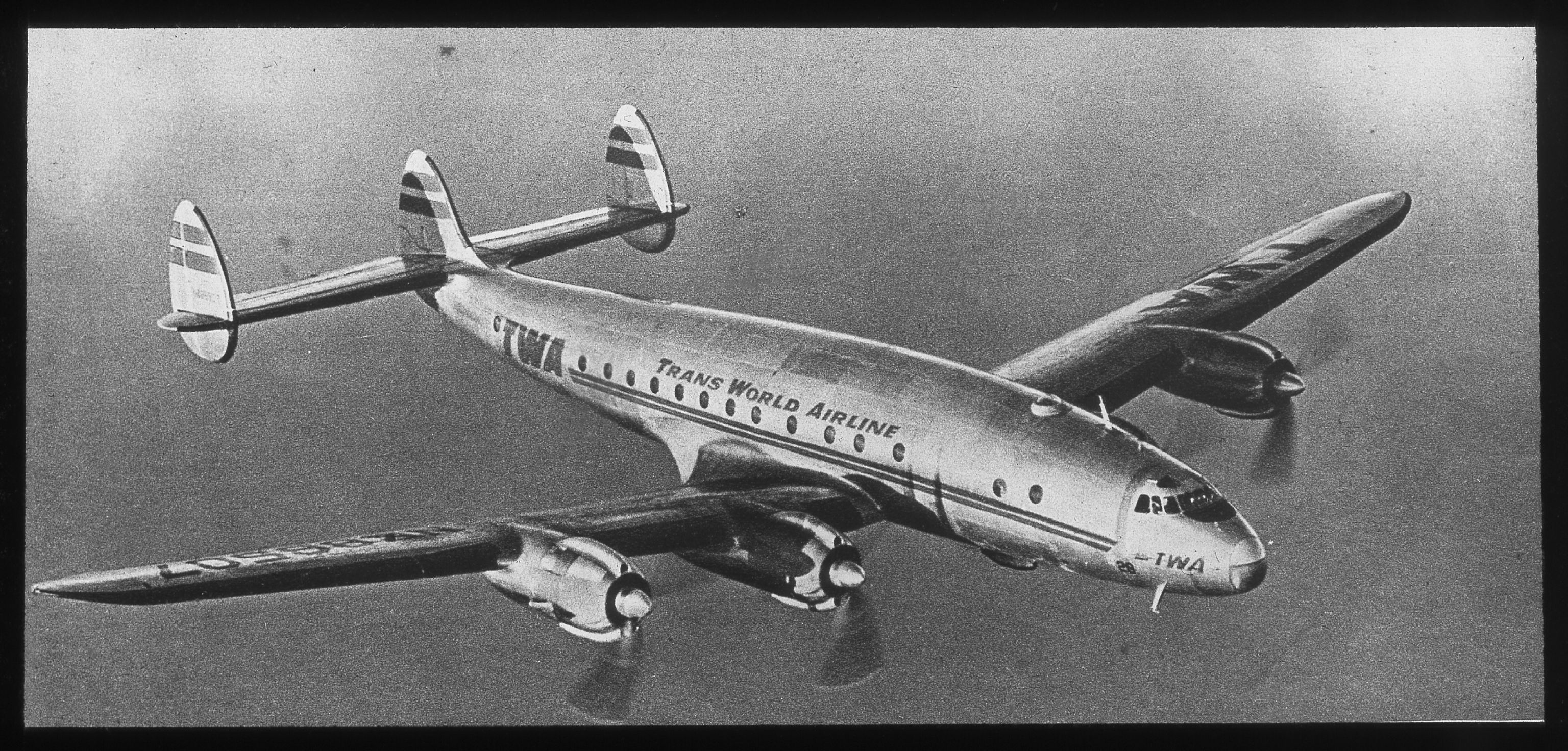
The Constellation L-049 was an engineering marvel and an aesthetic triumph, with its distinctive and unmistakable silhouette. Its "double bubble" or "dolphin" fuselage was not just a stylistic quirk, but an advanced aerodynamic device, designed to maximize internal volume and optimize air flow.
Another iconic feature was the unusual triple vertical fin, which not only gave the aircraft its unique visual signature, but also allowed its overall height to be reduced to facilitate entry into existing hangars. This technical solution reflected the ingenuity of Lockheed designers, capable of combining aesthetics and operational pragmatism.
Under the hood, the "Connie" was powered by four robust Wright R-3350 Duplex-Cyclone radial engines, true power giants that guaranteed exceptional performance in terms of speed and autonomy. These engines, combined with a laminar flow profile wing, allowed the L-049 to fly higher and faster than almost all of its contemporaries, setting new standards for aviation.
Onboard Specifications
- ◆Pressurized cabin: A revolutionary innovation that allowed passengers to travel in comfort at high altitudes, overcoming turbulence and ensuring a superior flight experience.
- ◆Wright R-3350 Duplex-Cyclone engines: Four radials with 2,200 HP each, synonymous with power and reliability, crucial for transcontinental and transoceanic routes.
- ◆Laminar Flow Wing: An advanced aerodynamic design that significantly reduced drag, improving fuel efficiency and cruising speed.
Operational Career & Operators
Once the war was over, the C-69 was quickly converted for civil service, being reborn as the L-049 Constellation. Its inauguration on passenger service for TWA in February 1946 marked the beginning of the golden era of long-haul flights, immediately becoming a symbol of luxury and technological progress.
Several global airlines, including Pan Am, BOAC, Air France and KLM, enthusiastically adopted it, taking advantage of its ability to connect continents with short flight times and unrivaled comfort. The "Connie" became the aircraft of choice for transatlantic travel, ushering in an era of accessibility and glamor for commercial aviation.
Legacy & Cultural Impact
The Lockheed Constellation L-049 was not just an airplane; it was an icon, a tangible symbol of post-war confidence and optimism. Its graceful silhouette and imposing presence in the skies carved an indelible image in the collective imagination, representing the pinnacle of aeronautical design of the time.
Its legacy goes beyond pure technical specifications. The “Connie” shaped passenger expectations, proving that flying could be not only efficient but also comfortable and luxurious. It paved the way for future innovations in aviation, serving as a benchmark for subsequent generations of airliners.
Even today, the Constellation is admired by enthusiasts and historians, celebrated in museums and aeronautical rallies as a witness to a glorious era. Its story is a fundamental chapter in the narrative of aviation, a tribute to human ingenuity and the perennial quest to overcome the limits of the possible.
Telemetria Specs (HUD)
Hangar Trivia & Curiosità
- 💡The Constellation was initially designed to a secret order from Howard Hughes for Trans World Airlines (TWA), demanding an aircraft capable of flying coast-to-coast non-stop.
- 💡Its distinctive triple-tail design was not just aesthetic; it allowed the aircraft to fit into existing hangars with lower roof clearances, despite its large size.
- 💡The L-049 was one of the first airliners to feature a pressurized cabin, significantly improving passenger comfort by allowing flight at higher, smoother altitudes.
Archivio Avvistamenti Spotter
Immagini scattate dalla community in tutto il mondo