Comet 4C
de Havilland
Historical Context & Origins
The de Havilland Comet represents a crucial, and at times tragic, chapter in the history of commercial aviation. As the world's first jet airliner, the original Comet flew in 1949, ushering in an era of fast, quiet air travel that revolutionized passenger expectations.
However, a series of air disasters between 1953 and 1954 revealed a fatal structural flaw related to metal fatigue around the square-shaped windows, leading to a thorough investigation and temporary withdrawal from service. This traumatic event pushed the aviation industry to completely redefine safety and design standards.
From the ashes of that crisis, the Comet 4 series was born, an aircraft radically redesigned to be more robust and safe. The Comet 4C, which made its first flight in 1959, represented the ultimate evolution of this rebirth, combining reliability with greater operational versatility.
Architecture & Technological Design
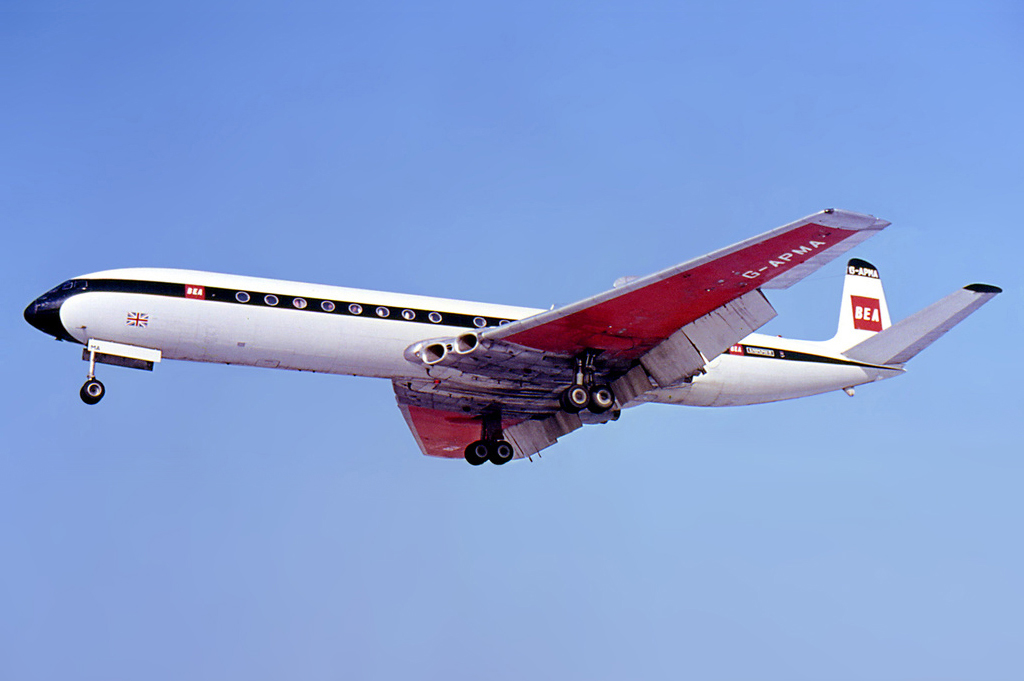
The de Havilland Comet 4C incorporated the hard-learned lessons from the tragedy of its predecessors, with a completely redesigned fuselage to better resist structural fatigue and cyclic stresses. The windows, for example, were redesigned with an oval shape, eliminating the sharp corners that had concentrated tensions on the original model.
This variant combined the wider wing and frame of the Comet 4B with the lengthened fuselage of the Comet 4. This extended fuselage allowed for greater passenger capacity, making it a much more attractive option for medium-range routes that required a greater volume of traffic.
Propulsion was entrusted to four powerful Rolls-Royce Avon Mk 524 turbojets, mounted inside the wing root, a configuration that reduced aerodynamic drag and noise in the cabin. The design ensured not only excellent performance but also an extraordinarily comfortable travel experience for its time.
Onboard Specifications
- ◆Engines: Four Rolls-Royce Avon Mk 524 turbojets, each with 46.2 kN of thrust.
- ◆Passenger Capacity: Up to 101-119 passengers depending on the internal configuration.
- ◆Autonomy: Approximately 4,300 km (2,300 nautical miles), ideal for medium-range transatlantic or intercontinental routes.
- ◆Cruising Speed: Approximately 800 km/h (432 knots), a revolutionary travel time for the time.
- ◆Structure: Strengthened aluminum alloy fuselage, oval windows, and a wingspan of 35.02 meters.
Operational Career & Operators
The Comet 4C entered service in an era of fervent aeronautical innovation, standing out for its reliability and elegance. Although American competition, with the Boeing 707 and Douglas DC-8, had captured most of the long-range jet market, the Comet 4C carved out a significant niche for itself.
Several international carriers chose the Comet 4C for their fleets, including notable names such as Middle East Airlines, Aerolineas Argentinas, and Sudan Airways. These operators appreciated its versatility and its ability to effectively serve medium-range routes with the efficiency and comfort of a jet.
The Comet 4C helped re-establish the reputation of the Comet name, demonstrating that the British aviation industry was capable of learning from its mistakes and producing safe, high-performance aircraft. It remained in service with some companies until the 1980s, testifying to its robustness and operational longevity.
Legacy & Cultural Impact
Despite not achieving the same commercial dominance as its American competitors, the de Havilland Comet 4C has an honored place in aviation history. It represented the triumph of British engineering in the face of adversity, turning a painful lesson into a catalyst for progress.
Its legacy lies in its ability to show the world the untapped potential of jet air travel, pushing design and safety standards to new heights. Every modern jetliner benefits, in part, from the investigations and innovations resulting from the Comet experience.
The Comet 4C remains a symbol of resilience and innovation, a pioneer that helped shape the jet age, making air travel fast, comfortable and, above all, safe for millions of people around the world. It's a powerful reminder of how mistakes can become stepping stones to progress.
Telemetria Specs (HUD)
Hangar Trivia & Curiosità
- 💡The Comet 4C was a direct descendant of the original Comet 1, the world's first commercial jetliner, learning from its predecessors' design challenges.
- 💡Despite its British origins, the Comet 4C was widely adopted by international carriers, including Mexicana and Middle East Airlines.
- 💡The Comet 4C's engines, four Rolls-Royce Avon jet engines, were buried in the wing roots, a unique design feature of the early Comet series.
Archivio Avvistamenti Spotter
Immagini scattate dalla community in tutto il mondo