Comet 4
de Havilland
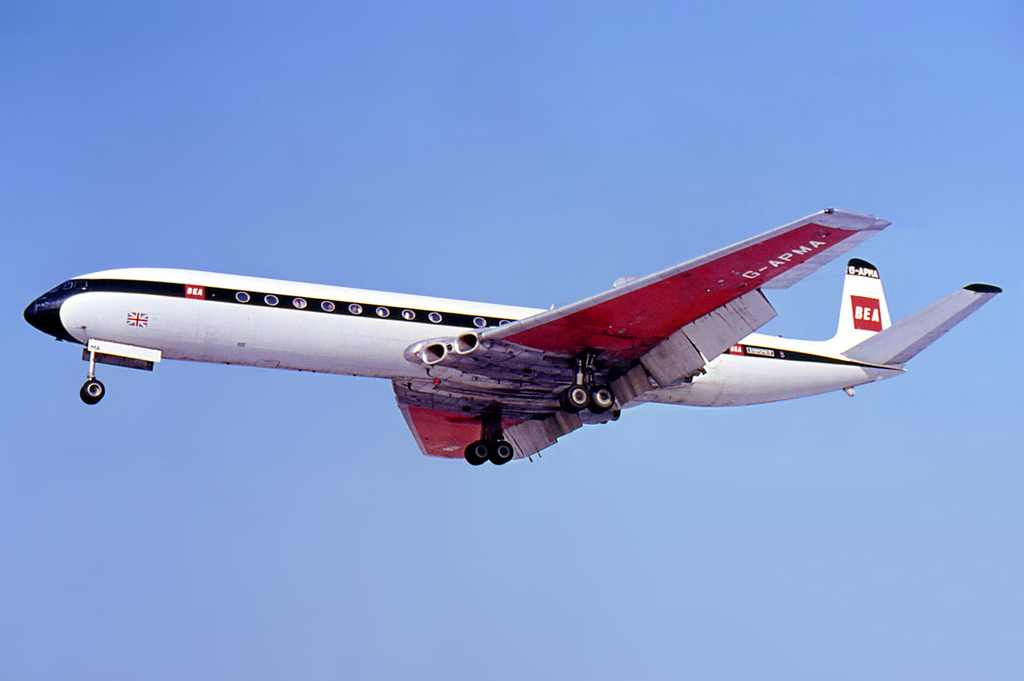
Historical Context & Origins
The de Havilland Comet 4, whose first flight occurred in 1958, represents a crucial and dramatic chapter in the history of commercial aviation. Its birth was the direct consequence of the painful lessons learned from its predecessor, the Comet 1, the world's first jet airliner, which had successfully debuted in 1949.
The Comet 1 had revolutionized the concept of air travel, offering unprecedented speed and comfort, but a series of disastrous accidents between 1953 and 1954, caused by structural failures due to metal fatigue and the shape of the square windows, had marked its premature operational end. These events led to one of the most thorough aeronautical investigations in history, which exposed gaps in the understanding of high-altitude materials engineering.
Comet 4 was born from de Havilland's firm desire to rise from the ashes of this tragedy. It was a massive re-engineering project, a real leap of faith in British innovation, aimed at demonstrating that the idea of jet-powered air transport was not only valid, but also intrinsically safe, if built with the utmost attention to structural detail.
Architecture & Technological Design
The Comet 4 architecture was the poster child for hard-earned safety. The fuselage was completely redesigned, adopting reinforced oval windows and a thicker and more robust structure to better resist cyclic pressurization. New aluminum bonds and revised construction techniques were employed to mitigate fatigue risks.
The Comet 4's propulsive heart consisted of four Rolls-Royce Avon Mk 524 engines, positioned inside the wings close to the fuselage, a configuration that reduced drag and provided a clean aesthetic. These engines guaranteed significantly greater thrust than previous versions, allowing greater autonomy and load capacity.
A key aspect was the adoption of fail-safe design principles, which ensured that a single structural failure would not cause a catastrophic disaster, a revolutionary concept at the time. The Comet 4, with its more extended wings and greater fuel capacity, was a significantly higher performing and safer aircraft.
Onboard Specifications
- ◆Reinforced oval windows and thicker fuselage: Direct solution to the Comet 1's fatigue issues.
- ◆Rolls-Royce Avon Mk 524 engines: Powerful and reliable turbojets, essential for transatlantic performance.
- ◆Fail-safe design principles: Cutting-edge construction technique for maximum structural safety.
Operational Career & Operators
Comet 4 marked the triumphant return of the Comet name to the skies, demonstrating British resilience and ingenuity. British Overseas Airways Corporation (BOAC) was the launch customer and, on 4 October 1958, inaugurated the first scheduled transatlantic jet service, connecting London and New York.
This historic flight not only restored confidence in the Comet brand, but also accelerated the era of global jet aviation. Other carriers, such as Aerolineas Argentinas and East African Airways, adopted the Comet 4, appreciating its performance and reliability. The Comet 4 performed impeccable service, building a strong safety record that contrasted sharply with the reputation of its ill-fated predecessor.
Although the Comet 4 was soon surpassed in terms of capability and range by American giants such as the Boeing 707 and the Douglas DC-8, its operational career was long and honorable, with some examples flying well into the 1980s, such as those operated by Dan-Air. He was a pioneer who paved the way for future jetliners.
Legacy & Cultural Impact
The legacy of the de Havilland Comet 4 is deep and complex. It is not only a symbol of rebirth and perseverance, but also a monument to learning from mistakes. Its history has redefined global standards of aviation safety, profoundly influencing the design and testing of all future commercial aircraft.
Investigations of the Comet 1 and subsequent redesign of the Comet 4 led to fundamental innovations in the understanding of material fatigue, structural stresses and cabin pressurization. These discoveries are the basis of every modern aircraft today, making Comet 4 a silent but essential contributor to the safety of billions of passengers.
Comet 4 remains an icon of British engineering and a powerful reminder that progress often arises from the ability to face and overcome the most daunting challenges. His fascinating story continues to inspire and remind us that, even in the face of failure, innovation and dedication can lead to extraordinary results, cementing his place in aviation history as a truly resilient pioneer.
Telemetria Specs (HUD)
Hangar Trivia & Curiosità
- 💡Fu il primo aereo a reazione commerciale a effettuare voli transatlantici di linea regolari, inaugurando il servizio nel 1958 con BOAC.
- 💡Le sue finestre, a differenza dei modelli precedenti, erano ovali per distribuire meglio lo stress della pressurizzazione, un cambiamento cruciale dopo i disastri del Comet 1.
- 💡Sebbene un pioniere, affrontò una forte concorrenza dai più grandi e veloci Boeing 707 e Douglas DC-8, che presto dominarono il mercato dei jet a lungo raggio.
Archivio Avvistamenti Spotter
Immagini scattate dalla community in tutto il mondo